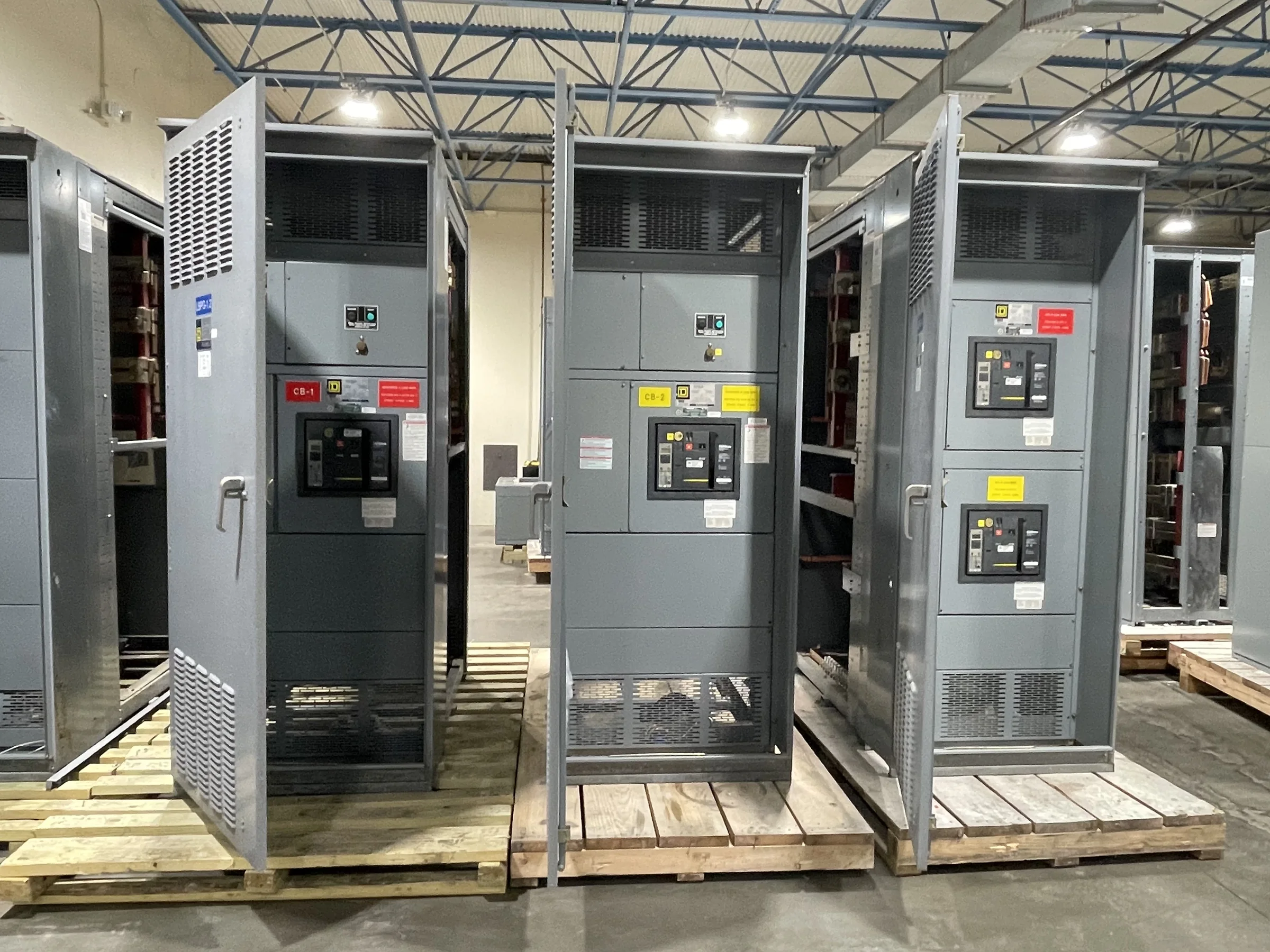
Define the Distribution Point Before Selecting Equipment
A 120/208V system is commonly used for three-phase, four-wire distribution where both line-to-line and line-to-neutral loads must be served. Before requesting a switchboard or related distribution equipment, confirm the source configuration, available fault-current information, incoming service arrangement, and the loads the equipment must support. Those details determine how the assembly is laid out and what protective devices and bus arrangements can be considered. Do not assume that a nominal voltage alone establishes compatibility with an existing service or downstream equipment. For a replacement, document the installed equipment’s nameplate data, drawings, feeder locations, and physical dimensions. For a new installation, provide the one-line diagram and project design criteria. Reviewing these inputs early helps uncover mismatches before procurement and installation planning advance.
Match the Equipment Layout to the Building and Loads
At 120/208V, a distribution assembly may serve a mix of three-phase equipment and single-phase loads, so the feeder schedule and phase loading deserve attention alongside the main rating. Ask the project engineer to identify connected loads, anticipated growth, major motor or electronic loads, and any required spare provisions. The final arrangement depends on the project design and verified equipment compatibility; a convenient breaker count on paper does not ensure that every device fits the selected assembly. Physical constraints matter too. Measure the electrical room, access openings, working space, conduit entry zones, and route from the receiving point to the installation location. Sharing these constraints with the manufacturer can inform a practical custom layout and reduce the risk of a delivered assembly that cannot be positioned or connected as intended.


Coordinate Protection, Fault Ratings, and System Interfaces
Protective-device selection for a 120/208V system must be evaluated against the available fault current, conductor and equipment ratings, and the project’s coordination requirements. These are engineering decisions, not values to infer from the voltage class or from an existing breaker label alone. Provide current utility or upstream-source data where available, the one-line diagram, and relevant downstream device information for review by the responsible design professional. Also identify grounding and bonding expectations, metering needs, control interfaces, and any tie or alternate-source arrangement. Each interface can affect equipment construction and field connections. Confirming these requirements before release for manufacture helps avoid late changes, but final ratings, protective-device combinations, and applicability must be verified for the specific project and installation.
Make Submittals and Scope Clear Before Ordering
A useful request for quotation describes the intended service, not just the phrase “120/208V switchgear.” Include the one-line diagram, load and feeder schedules, required ratings, preferred manufacturer or device constraints when applicable, enclosure and room conditions, and the requested delivery destination. Identify whether the scope is new construction, a replacement, or a retrofit, and state what is expected from the equipment supplier versus the installing contractor. For an existing lineup, photographs and field-verified dimensions can supplement drawings, but they do not replace checking critical interfaces and site conditions. Ask for project-specific submittal information, including arrangement drawings and device details, so the engineer and facility team can review fit and function before approval. Clear scope reduces assumptions that can affect price, schedule, and installation.
Plan Manufacturing Timing Around Review and Site Readiness
A manufacturer can discuss timing after reviewing the equipment configuration and project requirements, but a short lead time is not a universal delivery guarantee. Custom construction, selected components, drawing review, approval cycles, and changes after release can all affect the schedule. Set a procurement milestone that allows the engineering team to review submittals and resolve comments before the equipment is released for manufacture. In parallel, confirm that the electrical room, housekeeping pad, conduit plan, and receiving route will be ready for the expected shipment window. If construction sequencing depends on the equipment, identify that dependency early and ask for a project-specific schedule assessment. This makes timing conversations more useful and helps prevent a completed assembly from arriving before the site can accept or install it.
Coordinate Freight, Receiving, and Installation Safely
Nationwide shipping requires practical coordination at the destination, not just a delivery address. Confirm site access, unloading equipment, delivery-hour restrictions, receiving staff, staging space, and whether the route into the building can accommodate the shipment’s packaging and dimensions. Share any restrictions before freight is arranged so handling and delivery assumptions can be reviewed. Before installation, compare delivered equipment and documentation with the approved submittals, and report discrepancies through the project’s established process. Installation, inspection, testing, and energization should be performed by qualified personnel under applicable project procedures; equipment must be de-energized before work that requires it. For appropriately evaluated low-voltage switchboard assemblies, UL 891 may be relevant to the requested construction, but it is not a blanket certification for every product or voltage class. Confirm the required evaluation and labeling for the specific assembly.