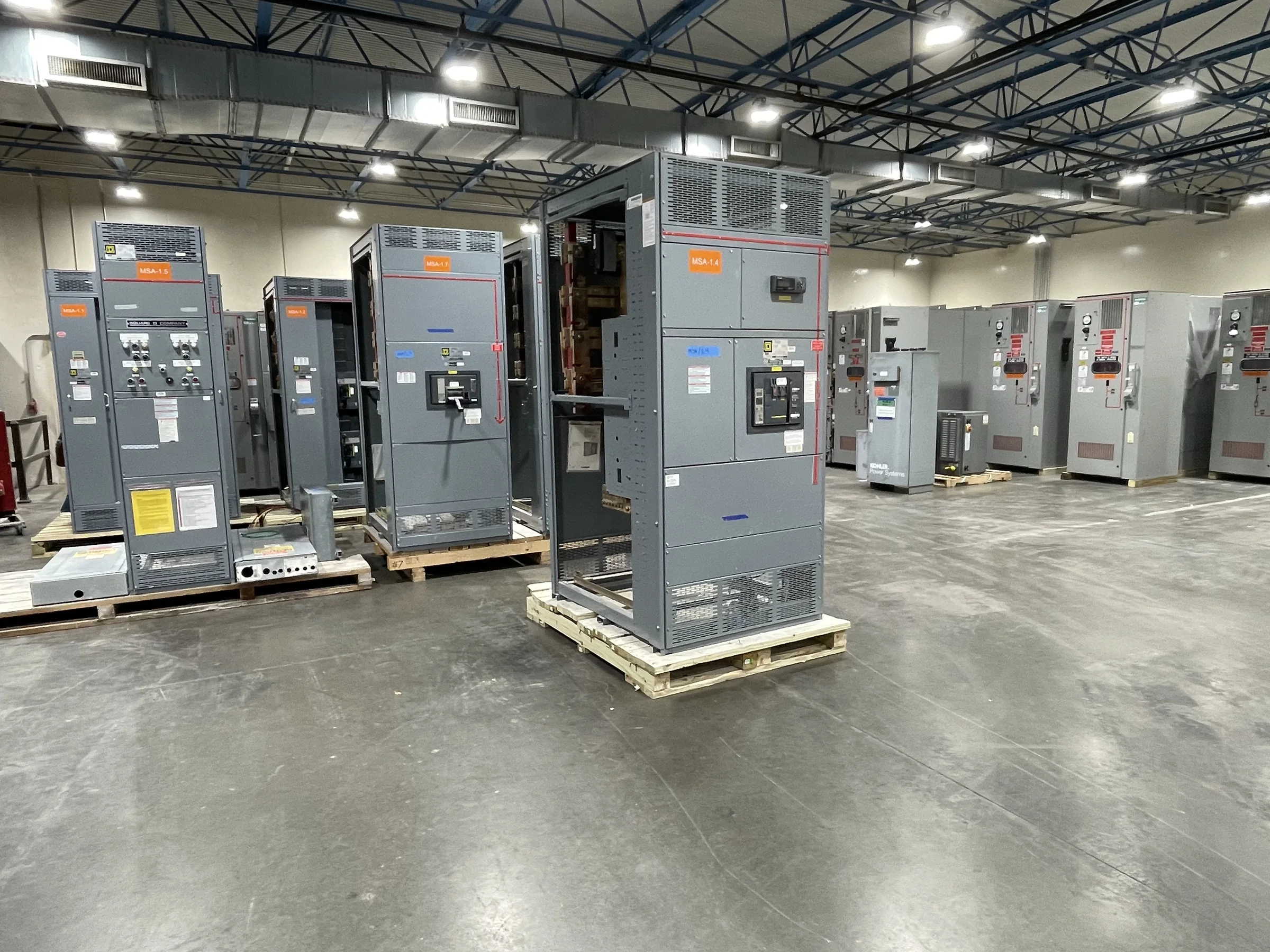
Specify the Distribution Equipment Around the Load
A useful equipment scope starts with what the system must serve, not with a product name alone. Identify the connected loads, available utility or generator sources, operating voltage, phase, frequency, and expected fault-current conditions so the design team can evaluate appropriate distribution equipment. Switchboards, panelboards, motor control equipment, and other assemblies perform different roles; selecting among them depends on the one-line diagram, protection strategy, and operating sequence. Account for anticipated load growth, essential and nonessential circuits, and how operators need to isolate or restore portions of the system. These decisions affect lineup arrangement, protective-device coordination, space allocation, and future maintenance. Requirements and equipment compatibility are project-specific, so submit the latest electrical drawings and load information when requesting a quote rather than relying on a nominal product description.
Choose Switchgear for the System’s Operating Conditions
Equipment selection must reflect the conditions where it will be installed and how the facility expects to operate. Indoor electrical rooms, outdoor locations, process areas, and critical-power spaces can impose different enclosure, access, environmental, and service requirements. Document ambient conditions, available working space, cable-entry direction, conduit locations, room access, and any exposure to dust, moisture, vibration, or corrosive substances. For systems with utility, generator, or other sources, explain the intended normal and alternate operating states; transfer and interlocking requirements cannot be inferred from a generic request for switchgear. Fault-current levels, interrupting and withstand requirements, and protective-device coordination also need qualified review. A manufacturer can build to an approved project specification, but the final design, ratings, and application suitability must be confirmed for the actual installation.


Plan a Build That Fits the Project Specification
Custom equipment is most useful when project requirements are clearly separated into mandatory criteria, preferred options, and unresolved questions. Provide applicable drawings, equipment schedules, specifications, one-line diagrams, control narratives, and the requested standards or evaluation criteria. Identify preferred component manufacturers where required, while allowing the engineering team to flag compatibility or availability concerns for review. A US manufacturer offering American components and custom builds can support specification-driven sourcing, but component origin does not by itself establish an assembly’s listing or suitability. UL 891 applies to appropriately evaluated low-voltage switchboard assemblies; it is not a blanket certification for medium- or high-voltage equipment. Ask which documentation and evaluation apply to the proposed assembly. Resolve deviations in writing before approval, since late changes to devices, arrangement, or connections can affect drawings, coordination, and procurement.
Check Replacement and Retrofit Compatibility Early
Replacing existing distribution equipment is not simply a matter of matching its nameplate. Existing gear may have limited room, unusual cable routing, legacy protective devices, or a connection arrangement that differs from current project drawings. Gather clear photographs, overall and internal dimensions, nameplate data, bus and cable connection information, control wiring details, and available electrical studies before defining the replacement scope. Confirm whether the work calls for a complete new lineup, a specified replacement assembly, or equipment designed around documented interface constraints. Do not assume that a new component will fit or coordinate with retained equipment without engineering review. The result affects outage duration, temporary power planning, contractor sequencing, and acceptance testing. Specify who verifies field dimensions and interfaces, and require discrepancies to be resolved before release for manufacture.
Coordinate Documentation, Review, and Procurement
A technically suitable assembly can still create avoidable project delays if submittals and responsibilities are unclear. Establish who supplies the approved one-line diagram, settings or coordination requirements, cable information, enclosure details, and control-interface criteria. Agree on the submittal review process, required drawing formats, revision control, and how comments or requested deviations will be documented. Procurement teams should compare quotations against the same scope: included assemblies and devices, stated exclusions, required options, shipping assumptions, and project-specific documentation. Short lead times may be offered, but availability and schedule depend on the approved design, component sourcing, review cycle, and production requirements; confirm the current project schedule rather than treating an estimate as a guarantee. Clear approval milestones help engineering, purchasing, construction, and commissioning teams work from the same equipment configuration.
Prepare the Site and Delivery for Installation
Nationwide shipping is most effective when delivery details are established before equipment is ready to leave the manufacturer. Confirm the receiving address, site contact, delivery hours, unloading equipment, access restrictions, staging area, and whether the route includes tight turns, low clearances, stairs, or restricted loading docks. Compare the proposed shipment arrangement with the electrical room layout and installation sequence; a lineup that reaches the site but cannot be moved into position creates costly disruption. Coordinate delivery with the electrical contractor and facility operations, especially where equipment replacement affects critical loads or an outage window. Before installation, verify foundations, clear working space, cable routes, grounding provisions, and interfaces against approved drawings. Plan de-energized work, required safety controls, inspection, and commissioning with qualified personnel. Exact shipment configuration and schedule remain project-specific.