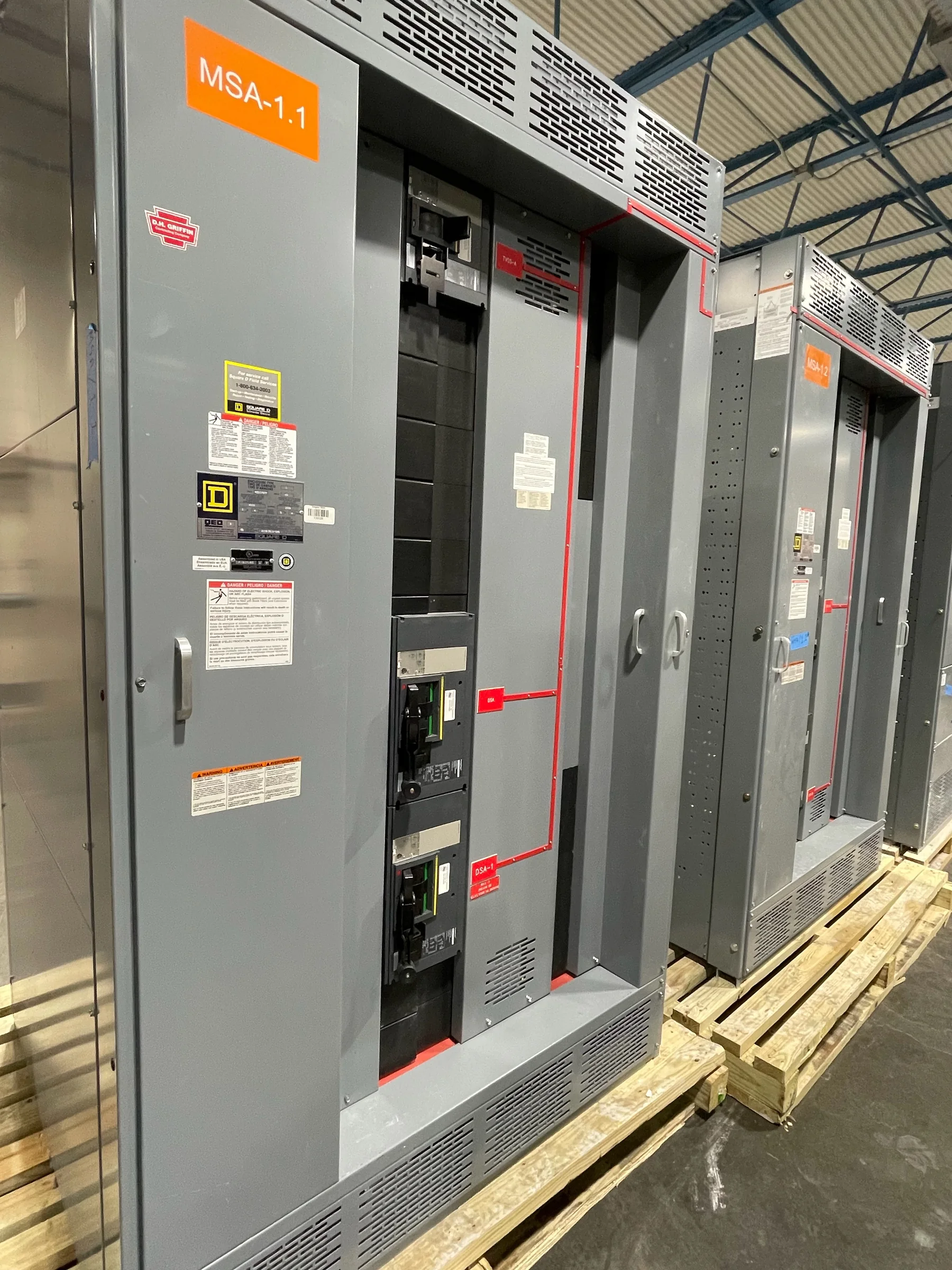
Industrial Plants: Plan for Process Continuity
In Houston-area refineries, chemical plants, terminals, and manufacturing facilities, a switchgear decision starts with the process it serves—not just the equipment nameplate. Engineers and procurement teams should identify connected loads, available fault-current information, system voltage, operating sequence, and the consequence of losing each distribution section. Those details shape bus arrangement, protective-device coordination, metering, and provisions for future circuits. Gulf Coast heat, humidity, corrosive atmospheres, and airborne contaminants can also affect enclosure selection and installation location, so site conditions belong in the specification rather than in a late field note. For replacement work, document existing dimensions, cable entry, bus connections, control interfaces, and outage limits. A coordinated submittal package helps reviewers check compatibility before fabrication and helps site teams plan receiving, rigging, and installation.
Ports, Terminals, and Logistics Facilities: Coordinate the Delivery Path
At Houston Ship Channel terminals, port facilities, and distribution hubs, electrical equipment must fit both the electrical design and the movement of cargo around an active site. Confirm the route from unloading point to electrical room, including doorway clearances, turning space, floor capacity, overhead obstructions, and any limits on delivery hours or vehicle access. These constraints can influence assembly dimensions, shipping splits, and the sequence of installation; confirm them before approving drawings. Operationally, identify which conveyors, pumps, cranes, refrigeration loads, or safety systems need independent feeds or planned restoration priorities. Purchase documents should state the required interface points, delivery location, receiving contact, packaging expectations, and inspection records. Nationwide shipping can support projects across the region, but site access, freight handling, and final placement remain project-specific coordination items.


Petrochemical and Process Sites: Specify for Exposure and Documentation
A coastal process site may expose electrical assemblies to humidity, salt-laden air, chemical vapors, washdown, or dust, with conditions varying between indoor electrical rooms and outdoor installations. Describe the actual environment and enclosure location so the design team can review materials, finishes, ventilation, and access provisions against the project requirements. Avoid assuming that a general-purpose enclosure suits every area, or that area classification is resolved by the switchgear specification alone; coordinate hazardous-area boundaries and installation details with the responsible engineer. Procurement teams should request drawings and data that clearly identify dimensions, incoming and outgoing connections, control wiring, device information, and the applicable evaluation basis. If a low-voltage switchboard is specified for UL 891 evaluation, confirm the exact assembly scope and labeling requirements during design review; that standard does not apply as a blanket claim to medium- or high-voltage equipment.
Water, Wastewater, and Flood-Prone Infrastructure: Protect Serviceability
Water and wastewater facilities depend on distribution equipment serving pumps, treatment processes, ventilation, controls, and site utilities, often with limited tolerance for an unplanned outage. Map the loads that must remain available during maintenance or a fault, and coordinate the one-line diagram with standby generation, transfer equipment, and operating procedures where those systems are part of the project. In low-lying Gulf Coast locations, evaluate the electrical-room elevation, drainage, flood exposure, access during severe weather, and the location of cable entrances; these practical factors can determine whether equipment remains reachable and serviceable after heavy rain. Provide existing drawings, measured room conditions, cable schedules, and control-interface requirements when requesting a replacement or custom build. Clarifying these inputs early reduces field conflicts and supports a realistic installation and commissioning plan.
Healthcare, Research, and Commercial Campuses: Match Distribution to Critical Loads
Hospitals, laboratories, campuses, and large commercial buildings around Houston can contain loads with very different consequences when power is interrupted. Separate essential systems, sensitive equipment, life-safety interfaces, and ordinary building loads in the project documentation, then have the responsible engineer establish distribution architecture and coordination requirements. The equipment scope should identify voltage, service arrangement, feeder destinations, metering needs, spare-circuit expectations, and any connection to emergency or standby sources. Room access is equally important: verify working clearances, heat removal, service access, door swing, and the path for removing or installing major sections without disrupting adjacent occupied spaces. During purchasing, align the approved one-line, bill of materials, equipment drawings, and field connection details so changes are traceable. Replacement projects also need a shutdown sequence and a verified plan for temporary service, if required.
Transportation and Public Infrastructure: Build Around Phasing and Future Work
Transportation facilities, public buildings, and regional infrastructure projects may need electrical upgrades while roads, transit operations, maintenance shops, or nearby services remain in use. Define the work limits, access windows, temporary-power responsibilities, and required handoffs before equipment is released, because an assembly that fits electrically can still be difficult to install under site restrictions. For new construction, document expected future feeders and available space without treating projected expansion as a guaranteed load or rating. For modernization, verify the existing equipment’s manufacturer data where available, dimensions, bus and cable interfaces, protection scheme, and current site conditions before selecting a replacement approach. Houston-area projects may also need delivery coordination around weather disruptions, traffic controls, and restricted receiving hours. Clear submittals, inspection requirements, shipping arrangements, and commissioning responsibilities help owners, contractors, and engineers manage those dependencies.