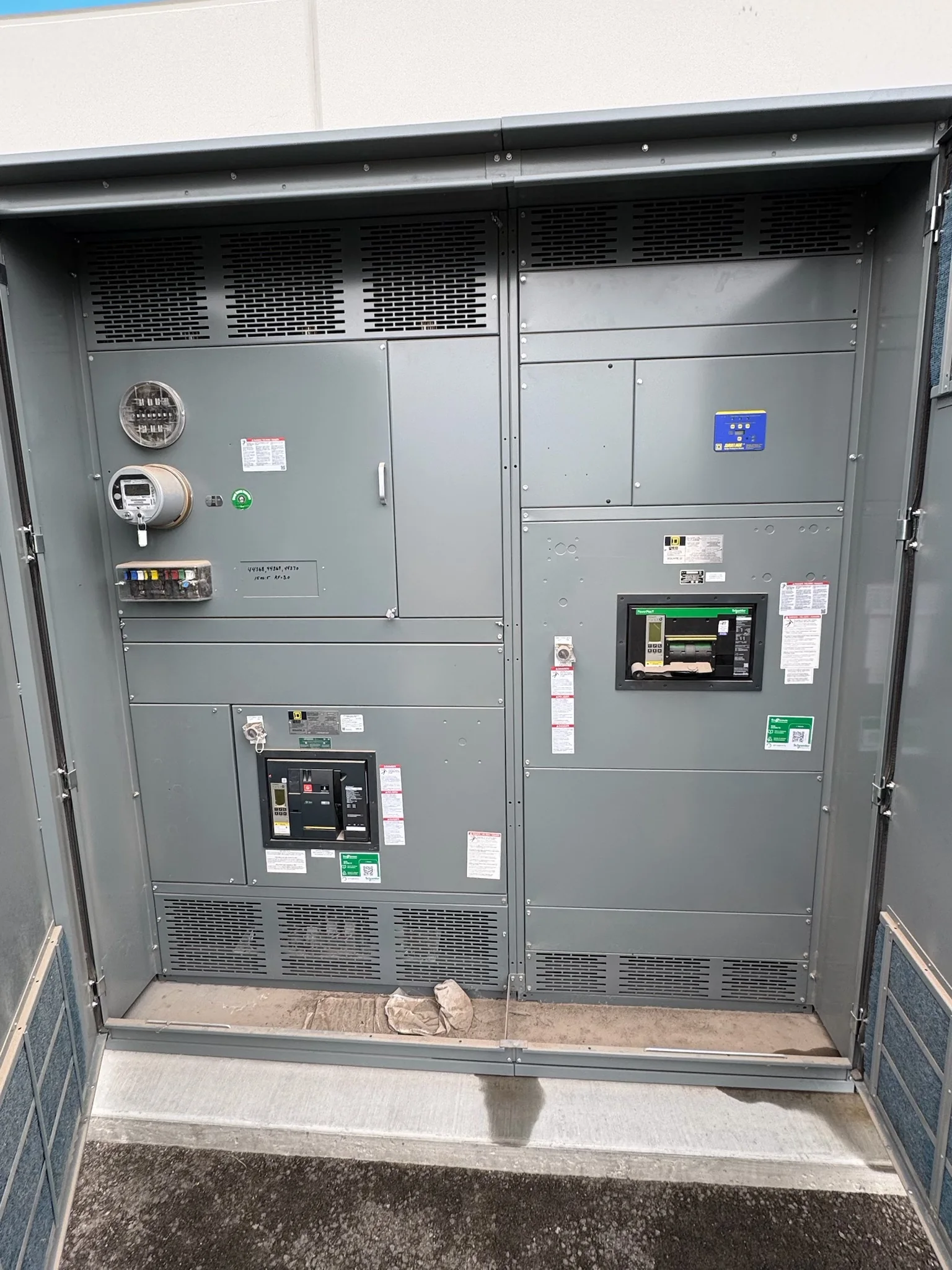
Manufacturing Around the Project Requirements
Switchgear selection begins with the electrical system it must serve, not with a generic product description. Our U.S. manufacturing team works from project requirements such as system voltage, available fault current, service configuration, incoming and outgoing circuits, and the equipment’s intended role. Those details influence the lineup arrangement, bus design, protective devices, and space needed for future connections. A specification that leaves key items unresolved can create redesigns or mismatches with upstream and downstream equipment, so procurement teams benefit from identifying open questions early. Share the one-line diagram, equipment schedule, applicable project specifications, and known site constraints when requesting a quote. Final ratings, configuration, compatibility, standards, and availability remain specific to the application and must be confirmed for the project.
Engineering Choices That Affect Fit and Operation
A switchgear lineup must fit both the electrical design and the room where it will be installed. Engineers and facility teams should review lineup dimensions, access clearances, cable entry, conduit locations, working space, ventilation, and the route from the receiving point to the final position. A unit that meets the electrical schedule may still be difficult to place if a doorway, elevator, turning radius, or floor loading limits the move. Electrical coordination matters just as much: protective-device selections and settings need to align with the system study and adjacent equipment, while control and metering requirements should be clear before the build is released. These decisions can affect enclosure arrangement, connections, and documentation. Confirming them together reduces avoidable field changes and supports a safer, more orderly installation.


Custom Builds, Components, and Documentation
Project-specific construction depends on complete, reviewed information. American components are available as part of our offering, and custom builds can be developed around defined electrical, mechanical, and control requirements. Procurement documents should identify required component makes or approved alternatives, instrumentation, control wiring, communications interfaces, spare provisions, and any special enclosure or finish needs. Engineers should also establish which drawings and submittals are required for review, such as general arrangements, elementary diagrams, wiring diagrams, and bills of material, where applicable. Reviewing these documents before fabrication helps resolve questions about interfaces, terminations, and field wiring while changes are still practical. The exact package depends on the project scope; required document formats, review cycles, component compatibility, and final construction details should be agreed upon rather than assumed.
Lead-Time Planning Without Guesswork
Short lead times are an offering, not a universal delivery promise: schedule depends on the approved design, component availability, scope, and production requirements. A useful purchasing plan distinguishes the date a complete specification is available, the time needed for submittal review, the release for fabrication, and the requested ship date. Late changes to breaker selections, control schemes, or connection details can affect both engineering and material planning, so identify decision-makers and review deadlines at the outset. If the project has a shutdown window, phased construction, or a required outage sequence, tell the manufacturer and contractor early. Ask for a project-specific schedule and clarify what assumptions it uses. That gives the team a practical basis for coordinating procurement, installation labor, and commissioning without relying on an unverified lead-time estimate.
Delivery Coordination for the Receiving Site
Nationwide shipping still requires site-level planning. Before the lineup is released for delivery, confirm the receiving address, access hours, unloading responsibility, staging space, and whether the carrier can reach the intended unloading area. Equipment dimensions, shipping sections, handling points, and lifting requirements need to be coordinated with the approved product information and the site’s rigging plan. A narrow access route or unavailable crane can turn a scheduled delivery into storage costs or installation delays. Facility managers should also determine whether the electrical room is ready, dry, accessible, and clear of conflicting construction when equipment arrives. Packaging, shipment configuration, delivery appointments, and site readiness are project-specific details to verify with the manufacturer and logistics team; they should not be inferred from a nationwide shipping capability.
UL 891 and Application-Specific Verification
Standards and evaluation requirements must match the equipment category and project specification. UL 891 applies to appropriately evaluated low-voltage switchboard assemblies; it is not a blanket certification for medium- or high-voltage equipment, nor does a manufacturer’s general offering establish that every assembly carries a UL label. When a project calls for a particular listing or standard, state that requirement in the inquiry and confirm the exact equipment scope, evaluation, labeling, and documentation before purchase. Application review should also cover environmental conditions, system grounding, fault-duty requirements, protection coordination, and interfaces with existing distribution equipment. These checks matter because a product’s suitability depends on the installed system and specified use, not just its nominal voltage. Our team can discuss new equipment and replacement or retrofit requirements, with final applicability confirmed for each project.