Start With the Equipment You Actually Need
A search for “switchgear suppliers near me” should lead to a clear equipment scope, not an assumption that every supplier offers the same product. Identify whether the project calls for a low-voltage switchboard, medium-voltage switchgear, or a replacement section for existing gear; these are not interchangeable categories. Record the system voltage, phase, frequency, available fault-current information, bus requirements, incoming and outgoing circuits, and intended service conditions. The engineer of record should confirm design criteria and applicable codes. For low-voltage switchboard assemblies, UL 891 may be relevant when the assembly is appropriately evaluated; it is not a blanket certification for medium- or high-voltage equipment. Confirm the required evaluation, ratings, and project-specific applicability before comparing proposals.
Build a Quote Package That Can Be Reviewed
A useful request for quotation gives the manufacturer enough information to identify open engineering questions before they become schedule problems. Include the one-line diagram, equipment schedule, site voltage, utility or upstream-device data, load and feeder details, fault-current requirements, and the project specification. Attach existing nameplate photographs and dimensions when replacing installed gear, but have qualified personnel gather them under the facility’s safety procedures. Mark required options, metering, protective devices, control power, communications, and any coordination or arc-flash study interfaces. If documents conflict, list the discrepancy instead of silently choosing one value. A complete package lets the supplier identify assumptions, exclusions, and items needing confirmation, so procurement can compare technically aligned quotations rather than treating unlike scopes as equivalent.


Verify Existing-System and Replacement Compatibility
Replacement work often turns on details that are easy to miss in a catalog description. Compare the existing gear’s manufacturer, model, lineup arrangement, bus configuration, voltage, ratings, breaker types, connection locations, and available installation space with the proposed equipment. An apparent match in voltage or cabinet width does not establish electrical or mechanical interchangeability. Confirm whether the scope is a complete lineup, a new section, or a retrofit involving existing components, and identify which interfaces require field verification. Review cable entry, termination space, grounding, conduit paths, access clearances, and how the equipment will connect to upstream and downstream systems. Compatibility decisions belong in the engineered submittal and must be confirmed for the actual installation; do not rely on a supplier search result or a verbal description alone.
Coordinate Schedule Around Engineering and Approvals
A manufacturer’s short-lead-time offering can support a project, but it is not a delivery guarantee for every configuration. Timing depends on the approved design, component availability, review cycles, required options, and any changes after submittal. Ask the supplier to identify the schedule basis, information needed to release the build, approval milestones, and how revisions affect the quoted timing. Establish who reviews drawings and how quickly comments will be returned; delayed approval can hold production even when procurement is complete. Also check whether the construction sequence requires staged shipments, temporary power planning, or coordination with a planned outage. Keep the project schedule tied to written, project-specific confirmation rather than a general estimate, and avoid committing to an outage date until engineering, delivery, and installation plans align.
Plan Delivery for the Actual Site
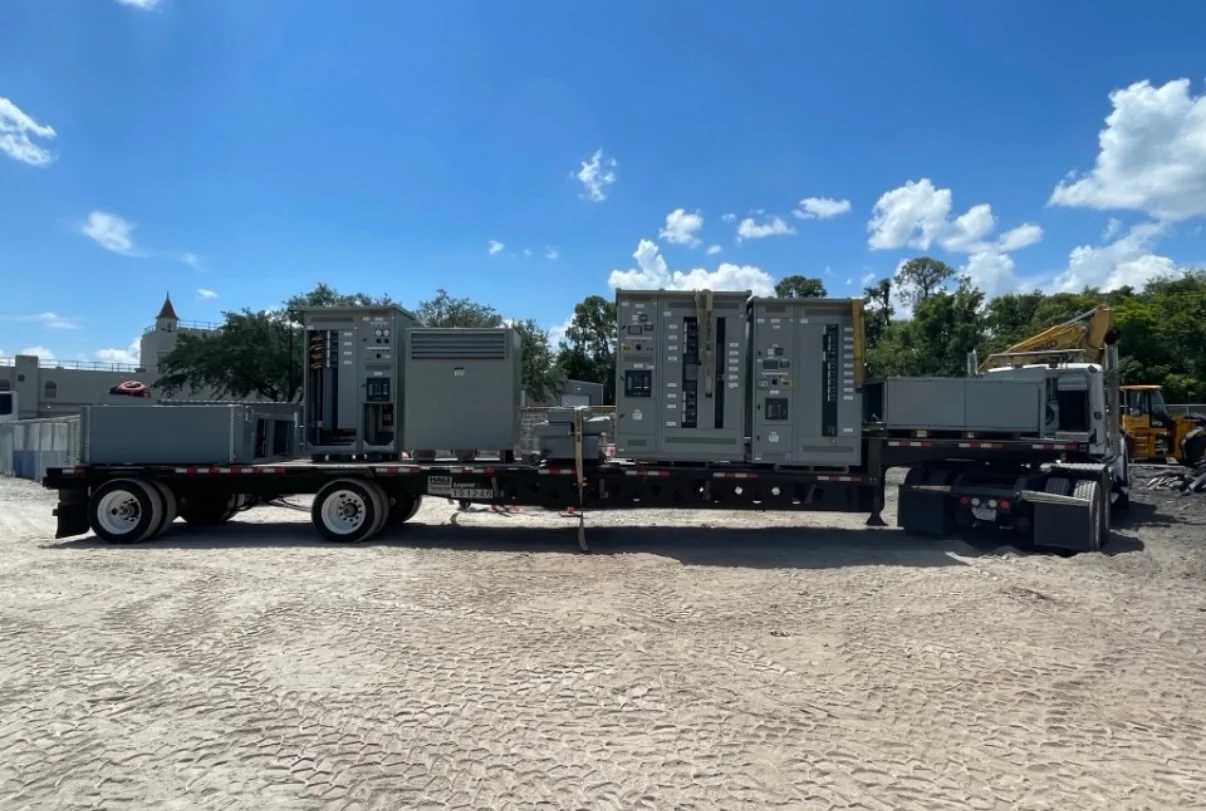
Nationwide shipping does not remove the need to plan the final leg of delivery. Confirm the destination, receiving hours, truck access, unloading equipment, staging area, and any restrictions on vehicle size or site entry before the equipment ships. Large assemblies may arrive in sections, so the receiving plan should identify each piece, its destination, and who will inspect it for shipping damage or missing items. Check doorway, corridor, elevator, and floor-loading constraints against the approved equipment dimensions and handling plan. For an occupied facility, coordinate deliveries around production, tenant access, security, and crane or lift activity where applicable. A delivery appointment, clear access route, and designated receiver reduce the risk of a truck arriving when the site cannot safely accept or move the equipment.
Review Submittals, Scope, and Commissioning Interfaces
Before releasing an order, compare the proposal and submittal against the specification, one-line diagram, and approved equipment schedule. Resolve differences in ratings, protective-device functions, metering, controls, communications, enclosure requirements, and included accessories in writing. Confirm whether drawings, operation and maintenance information, factory documentation, and testing records are part of the project scope; do not assume an item is included because it is commonly requested. Establish who is responsible for field connections, settings, coordination studies, installation, and commissioning, since gaps between vendor and contractor scopes can delay startup. The responsible engineer and qualified installation team must verify final suitability and follow required safety procedures, including de-energizing equipment for work. Clear scope boundaries help procurement evaluate the complete deliverable, not just the equipment price.