Map Campus Loads to Transfer Priorities
A university transfer-switch schedule should start with the loads each source must support, not simply a list of buildings. Life-safety systems, research equipment, data infrastructure, residence halls, dining operations, and central utility plants can have different continuity needs and transfer sequences. Confirm which loads are legally required to receive emergency power, which are operational priorities, and which can remain disconnected until capacity is available. That distinction affects switch arrangement, source capacity, load sequencing, and coordination with generators or other alternate sources. Gather one-lines, panel schedules, demand information, and existing controls details before requesting a proposal. Where a campus has multiple electrical services or generation systems, define the boundaries of each transfer scheme so procurement, engineering, and commissioning teams evaluate the same operating scenario.
Specify Transfer Behavior and System Compatibility
Transfer mode is an operating decision with consequences for both equipment and connected loads. Open-transition switching briefly disconnects the load as the source changes; closed-transition operation requires sources to be synchronized and permitted to overlap, subject to the project design and utility requirements. Do not assume one mode suits every campus building. Identify the normal and alternate sources, voltage and phase, available fault-current information, grounding arrangement, control interfaces, and any required source-monitoring functions. Existing generators may have controls or protective devices that constrain the transfer sequence, while sensitive research or computing loads may have separate ride-through provisions. Provide drawings and equipment data for review rather than relying on a model name alone. Final ratings, features, and compatibility must be confirmed for the particular installation.


Coordinate the Work Around Academic Operations
Campus access and outage windows can be as consequential as the switch itself. Installation may need to avoid move-in, examinations, laboratory schedules, clinical operations, or major events, and some buildings have limited shutdown opportunities during the academic year. During planning, establish who can authorize an outage, how affected departments will be notified, and what temporary power or phased cutover arrangements the project team will evaluate. These are planning questions, not assumptions that energized work is acceptable; electrical work must be performed under appropriate safe-work procedures, including de-energization where required. Confirm room access, working clearances, equipment-removal paths, elevator or loading-dock restrictions, and construction-hour rules early. Aligning these constraints with the procurement schedule reduces the risk that a delivered assembly cannot be moved into place or installed during the approved outage.
Verify Room, Feeder, and Environmental Conditions
An automatic transfer switch can be electrically suitable yet impractical for its assigned room. Measure the available footprint and service access, check door and corridor dimensions, and account for cable entry, bending space, conduit routes, and the ability to remove or service components. Older campus buildings may contain additions, tight electrical rooms, or feeder routes that differ from legacy drawings, so field verification is valuable before the design is released. Record indoor conditions such as heat, moisture, dust, and ventilation limitations because they can affect enclosure and installation requirements. Also review seismic or other site criteria when applicable to the project. Provide these constraints with the request for quotation; final equipment dimensions, construction, ratings, and suitability require project-specific engineering review.
Build a Reviewable Procurement Package
A complete inquiry helps the manufacturer and campus design team resolve scope before purchase. Include the one-line diagram, equipment schedule, source and load descriptions, available fault-current data, control and alarm expectations, applicable project standards, and any required submittal format. Identify whether the switch is new construction, a replacement, or part of a broader distribution upgrade, and describe interfaces with generators, switchboards, building automation, and fire or life-safety systems. Request proposed deviations or open questions in writing so reviewers can distinguish confirmed requirements from assumptions. For low-voltage switchboard assemblies, UL 891 may be relevant when the assembly is appropriately evaluated; it is not a blanket designation for every transfer switch or for medium- and high-voltage equipment. Confirm exact standards and labeling requirements for the specified equipment.
Plan Delivery, Installation, and Acceptance Together
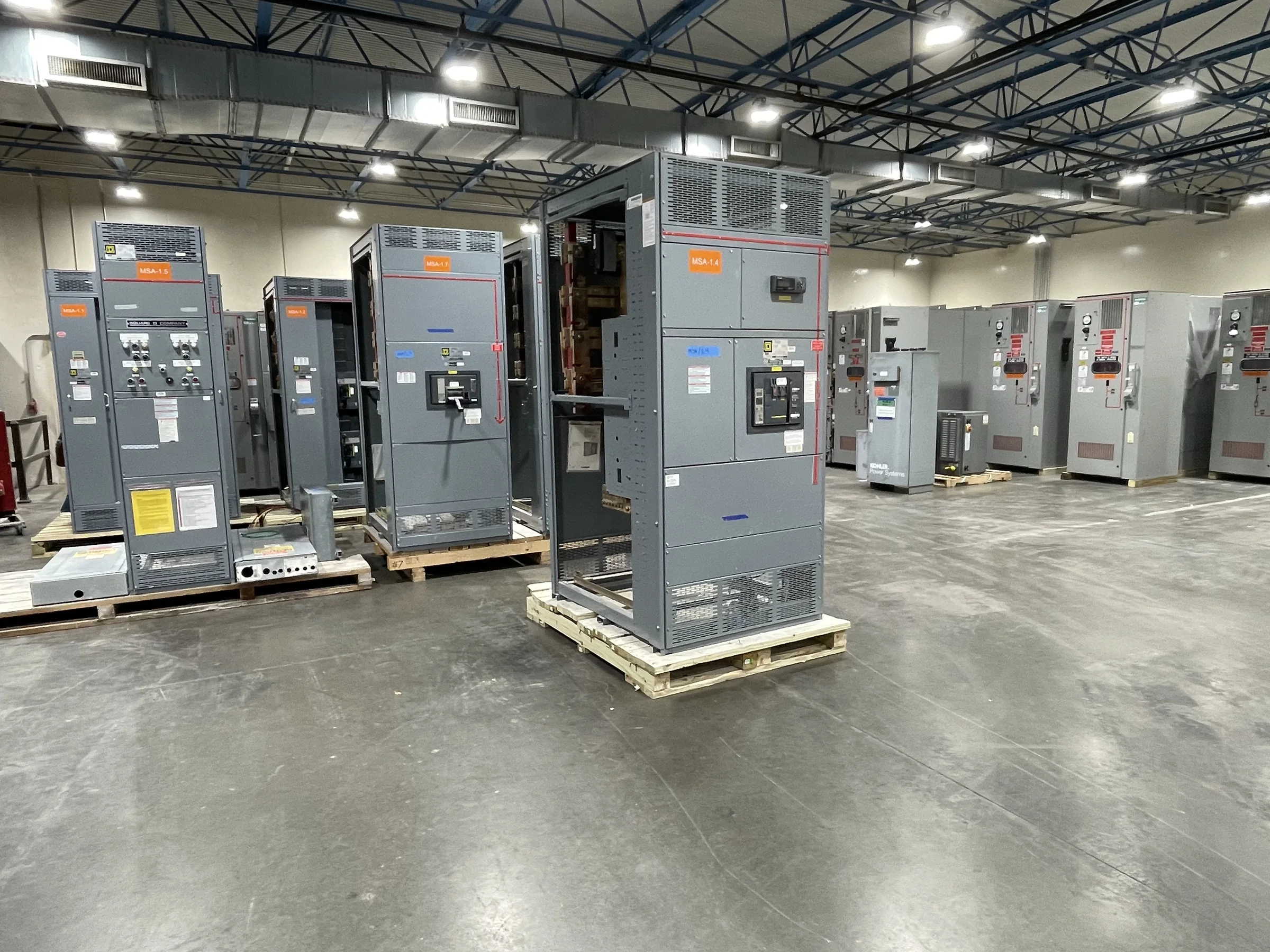
Delivery planning should follow the campus construction sequence, not an assumed standard lead time. Share the required on-site date, submittal and approval milestones, installation window, receiving hours, staging limits, and any restrictions on truck access or escorts. Universities may have controlled entrances, pedestrian-heavy areas, and limited laydown space, so a shipment that arrives without a receiving plan can obstruct work or require rescheduling. The manufacturer offers custom-built equipment, American components, short lead times, and nationwide shipping; actual configuration, availability, schedule, and freight coordination depend on the project and should be confirmed in the quotation and order documents. Before turnover, coordinate inspection, testing, control verification, and documentation with the responsible engineering and commissioning teams. Define acceptance records and training needs early so the installed system can be reviewed against the approved design.