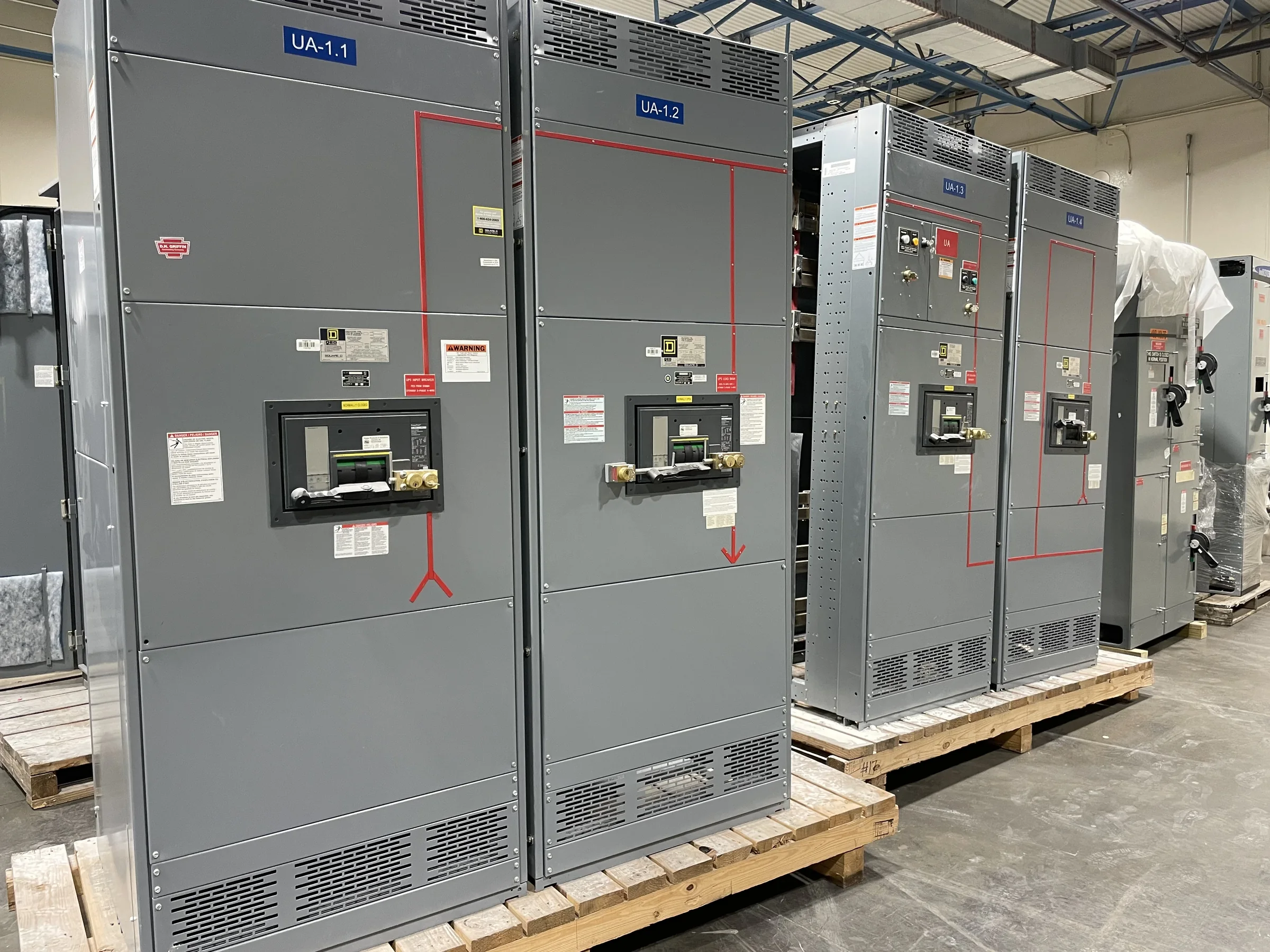
Start With the Plant’s Electrical Requirements
A manufacturing plant’s switchgear specification should begin with the actual distribution task, not a catalog description. Document the service voltage, available fault current, system grounding, incoming source arrangement, bus requirements, and the loads the assembly must serve. Include motor starting, variable-frequency drives, welders, furnaces, or other equipment that may affect demand and power quality. These details influence the appropriate construction and ratings, but the final design depends on project-specific engineering and coordination. Identify applicable codes, standards, and owner requirements for review rather than assuming one assembly configuration fits every facility. A complete load and one-line package helps the manufacturer evaluate the request, flag missing information, and develop equipment suited to the plant’s electrical system.
Coordinate Switchgear With Production and Expansion Plans
Manufacturing distribution often has to accommodate equipment that operates on different schedules and may be added in phases. Ask plant engineering to identify critical processes, planned production changes, spare capacity expectations, and the consequences of an interruption. Those priorities can inform lineup arrangement, feeder provisions, metering needs, and future connection points; they do not eliminate the need to verify ratings or protection coordination. Where shutdown windows are limited, clarify which portions of the project are new, replacement, or part of a broader retrofit, and establish who is responsible for field verification. Early coordination helps prevent a design that meets today’s load list but leaves no practical path for a planned production line or makes future maintenance harder.


Resolve Existing-System Interfaces Before Release
Replacement and expansion projects depend on accurate information about the equipment already in the plant. Gather existing one-line diagrams, switchgear and breaker nameplates, control schematics, cable schedules, and available dimensions. Verify field conditions, including entry direction, conduit locations, cable bend space, room clearances, anchorage, and the route from the receiving area to the electrical room. Older drawings may not reflect later modifications, so qualified site personnel should confirm critical measurements and interfaces. Compatibility is not established by matching a voltage or manufacturer name alone; bus connections, protection devices, control wiring, and installation constraints all require project review. Resolving discrepancies before fabrication reduces redesign risk and helps the installation team plan for a controlled outage.
Make Timing Part of the Procurement Specification
A short requested delivery window is useful only when the project team also defines the dates and decisions that control it. Share the required in-service date, planned shutdown period, drawing review milestones, site readiness, and any sequencing constraints for phased construction. Ask for current, project-specific schedule information and identify which approvals, engineering inputs, or component selections must be completed before the build can proceed. Customization can affect engineering and procurement, so avoid treating an early budget discussion as a confirmed production or delivery commitment. Document assumptions and responsibility for resolving open items. This gives procurement, engineering, and plant operations a common basis for evaluating the proposed schedule and deciding whether temporary operating arrangements or a different installation window need consideration.
Prepare the Electrical Room and Delivery Route
A switchgear assembly must reach its final location and fit the room in which it will operate. Provide the manufacturer and installer with verified door and corridor dimensions, turning points, floor elevations, lifting restrictions, and the planned unloading area. In an operating plant, coordinate receiving with production traffic, forklifts, overhead handling equipment, and restricted-access zones. Nationwide shipping does not by itself establish that a particular truck, delivery date, offloading method, or room entry will work at a site; those arrangements must be confirmed for the project. Review lineup dimensions, section weights, access clearances, working space, ventilation, and environmental conditions against the installation plan and applicable requirements. Resolving logistics early can prevent equipment arriving before the site is ready.
Review Drawings, Ratings, and Applicable Standards
Before approving a custom build, compare the proposed drawings and data against the plant’s design basis and purchasing documents. Review the one-line diagram, front elevation, section arrangement, nameplate information, incoming and outgoing connections, metering, control interfaces, and specified protective devices. Confirm that fault ratings, bus ratings, enclosure details, and other selected characteristics are appropriate to the application through the project’s engineering process. For low-voltage switchboard assemblies, UL 891 may be relevant when specified and when the assembly is appropriately evaluated; it is not a blanket certification for medium- or high-voltage equipment, nor should it be assumed for every offering. Record exceptions and approvals, then coordinate installation, testing, and turnover documentation with the responsible electrical professionals.