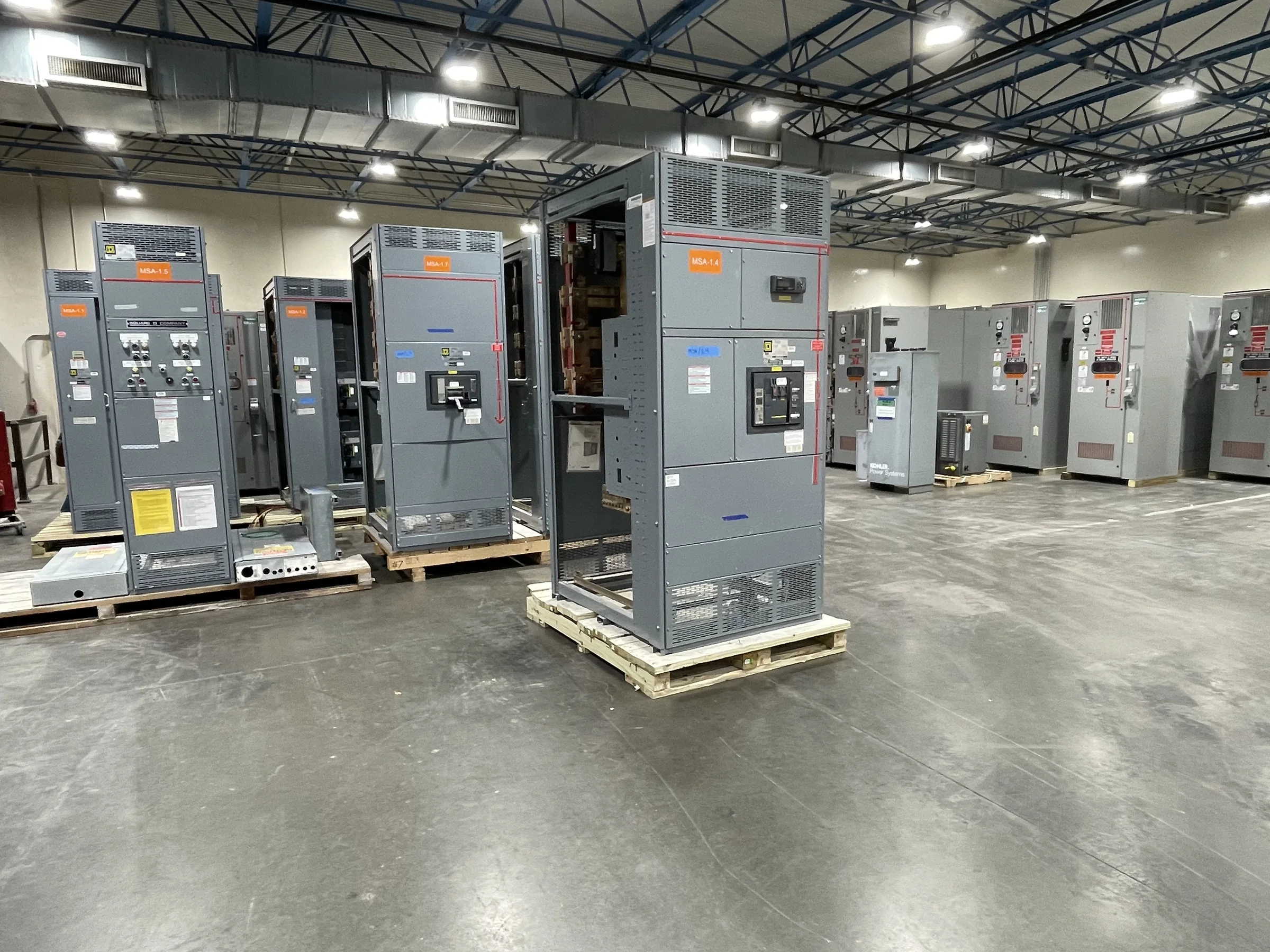
Start With the Electrical Scope
Petrochemical projects can involve process units, tank farms, utilities, loading areas and support buildings, each with different loads and operating priorities. Define which equipment the switchgear must serve before selecting a lineup: identify incoming sources, transformers, feeders, large motors, standby generation, tie points and planned future connections. The one-line diagram should show the intended distribution arrangement and normal operating states, while load schedules help distinguish continuous process demand from intermittent or starting loads. These details affect bus and protective-device selection, physical layout and coordination with upstream and downstream equipment. Flag redundant feeds, critical loads and required transfer arrangements early. A U.S. manufacturer can develop a new custom assembly around the project brief, but ratings, configuration and suitability must be confirmed against the actual design and applicable requirements.
Match the Assembly to the Environment
A petrochemical site’s electrical room may sit near process areas where heat, humidity, dust, corrosive agents or vibration influence equipment selection and enclosure details. Confirm indoor or outdoor placement, ambient conditions, elevation, ventilation, housekeeping practices and any expected washdown or chemical exposure. Also establish the room’s access, clearances and cable-entry direction before approving the arrangement; a lineup that fits electrically may still conflict with doors, structural steel, conduits or maintenance routes. Hazardous-area classification is a separate design consideration: identify classified boundaries and coordinate equipment locations with the responsible electrical and process engineers. Do not assume a switchboard is suitable for installation within a classified area merely because it serves a petrochemical facility. Document the site conditions and review them with the project team before finalizing construction.


Coordinate Protection and System Interfaces
Protection decisions depend on the complete electrical system, not just the new switchgear. Gather available fault-current information, source and transformer data, protective-device settings, grounding details and relevant upstream and downstream equipment information. The project engineer can use these inputs to evaluate interrupting ratings, protective coordination and equipment withstand requirements; the appropriate design cannot be inferred from a facility’s industry or voltage alone. For interconnected sources, document normal and alternate configurations, including generator operation, bus ties and any operating restrictions. Controls and metering may also need to exchange signals with plant systems, so identify required indications, alarms, communication protocols and interface ownership. Resolving these boundaries during submittal review helps prevent late changes, mismatched devices and uncertainty about who supplies field wiring or verifies system operation.
Define Documents and Review Milestones
A clear purchasing package gives the manufacturer and engineering team a shared basis for design. Include the latest one-line diagram, load schedule, project specifications, equipment location, cable and conduit information, operating sequence, required accessories and any owner standards. Identify the governing codes and standards in the project documents rather than assuming a particular edition or approval applies. For low-voltage switchboard assemblies, UL 891 may be relevant when specified and when the assembly is appropriately evaluated; it is not a blanket certification for medium- or high-voltage equipment. Request drawings and submittals for review, and assign reviewers for electrical, controls, civil and operations interfaces. Record deviations, open questions and approval status. Timely, consolidated comments matter because unresolved details can affect fabrication planning and the fit of the equipment at the site.
Plan Timing Around Project Dependencies
Discuss schedule needs while the electrical scope is still being developed. A requested delivery date is not a guarantee: timing depends on the confirmed design, component availability, approved submittals, manufacturing sequence and project-specific requirements. Procurement teams should identify bid and release dates, drawing-review windows, construction milestones and any site access restrictions when requesting a quote. Changes to ratings, device selections, enclosure conditions, controls or connection points after approval can require engineering and schedule reassessment. If the project includes phased construction, clarify whether equipment must arrive together or align with separate installation windows. The manufacturer offers custom builds and short lead times, but the achievable schedule must be confirmed for the specific order. Early communication about long-range planning assumptions gives the team a chance to identify conflicts before they affect installation.
Coordinate Shipping, Receiving and Installation
Nationwide shipping does not remove the need for site-specific delivery planning. Petrochemical facilities may require scheduled gate access, driver qualification, delivery appointments, escorts, restricted routes or coordination with construction contractors. Confirm the receiving location, unloading responsibility, available lifting equipment, staging conditions and route from the unloading point to the electrical room. Check doorway dimensions, floor capacity, turning space and any limits on moving large assemblies through operating areas. Packaging, shipment configuration and handling instructions should be aligned with the approved equipment arrangement and the site’s logistics plan. Before dispatch, verify who will receive and inspect the shipment, how visible damage or missing items will be documented, and where components will be protected until installation. Installation, inspection and energization must follow approved project procedures and be performed by qualified personnel.