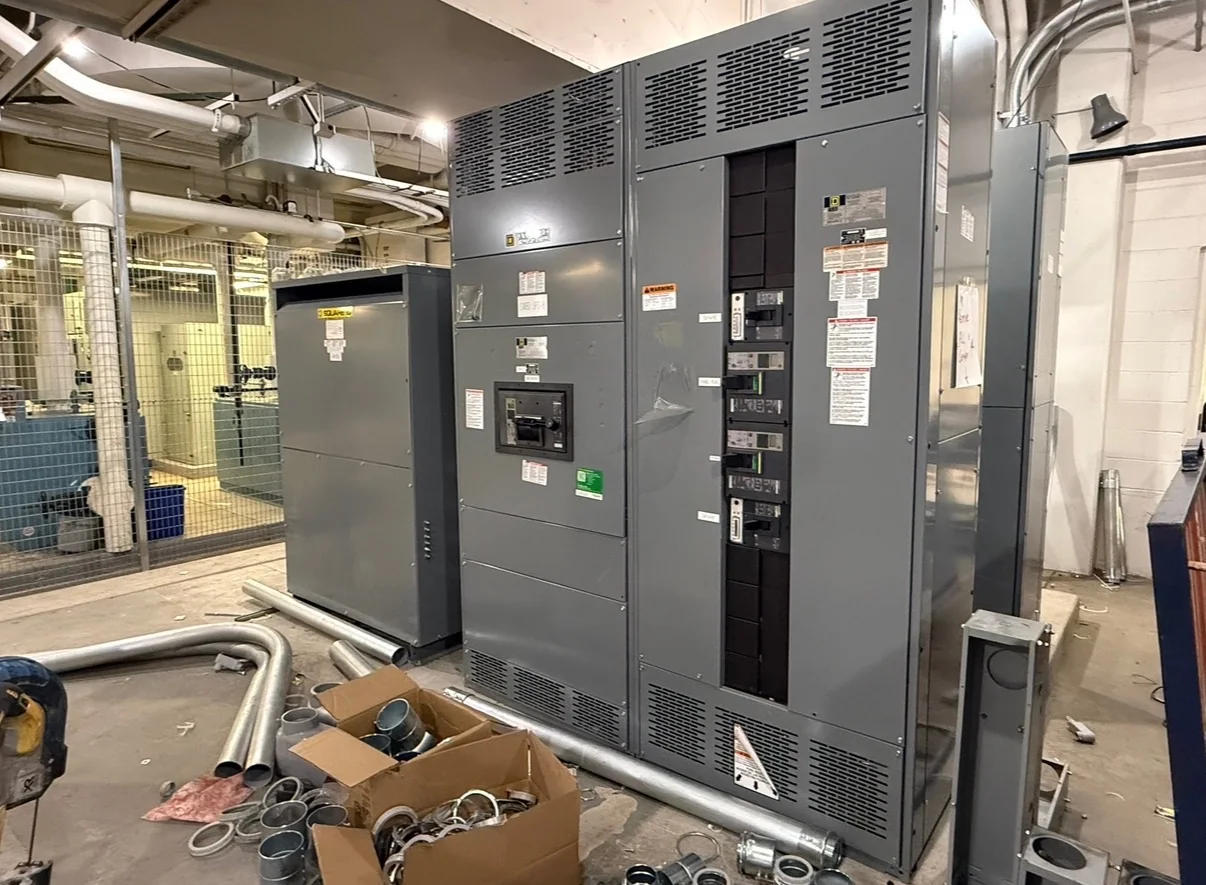
Define the Distribution Scope Before Selecting Equipment
For a Humble facility, a custom switchgear request should start with the distribution problem the equipment must solve—not a preferred enclosure size or a catalog description. Identify the source, system voltage, available fault current, connected and future loads, grounding arrangement, and the number of feeders or sections required. Note whether the project involves a new service, a capacity increase, replacement of aging gear, or a retrofit that must interface with existing equipment. These details affect the lineup, protective-device coordination, bus arrangement, and space allowances. A one-line diagram and current equipment information help the manufacturer assess the request; assumptions about an existing system can lead to mismatched connections or a design that does not support the intended operating plan.
Resolve Electrical Ratings and Protection With the Project Team
Electrical ratings should be confirmed against the actual system and utility information, not selected from a general description of the site. The engineer and procurement team should establish nominal voltage, continuous current requirements, interrupting or withstand requirements as applicable, and the protection scheme before approving a configuration. Ask for the basis of any proposed ratings and identify coordination requirements with upstream and downstream devices. An incorrect fault-duty assumption can affect personnel safety, equipment selection, and approval, while an overly broad specification may add cost or constrain available options without improving the design. The applicable standards and evaluation depend on equipment type and project scope. UL 891 applies to appropriately evaluated low-voltage switchboard assemblies; it should not be treated as a blanket certification for medium- or high-voltage equipment.


Coordinate Custom Design, Schedule, and Submittal Reviews
Custom construction can address project-specific bus, section, metering, protection, and control needs, but those decisions must be settled early enough to support engineering review and manufacturing planning. Provide the required drawings, specification, utility criteria, and interface details when requesting a quote, and ask which items remain open or require confirmation. Review submittals for dimensions, cable entry, device arrangement, controls, and connection points before releasing the design for production. Late revisions can affect both the build sequence and the site schedule, so document approvals and clarify who can authorize changes. The manufacturer offers short lead times, but the actual schedule depends on the approved scope, components, review cycle, and availability. Confirm project timing directly rather than treating an estimate as a guaranteed delivery date.
Check Humble Site Conditions and Existing Connections
Humble projects may involve industrial, commercial, municipal, or other facilities, so site conditions should be documented rather than inferred from the city or building type. Measure the equipment room or outdoor pad, access openings, overhead clearance, working space, and the route from the receiving point to the installation location. Confirm cable approach, conduit stub-ups, termination space, ventilation needs, and any environmental exposure that may affect enclosure selection. For replacement work, record existing lineup dimensions, bus and cable connections, control wiring, and available shutdown windows. A new assembly that fits electrically but cannot pass through a doorway—or align with existing conductors—can trigger costly field changes. Have the responsible engineer and installer verify interfaces and installation requirements before the final configuration is approved.
Plan Delivery Around Receiving, Access, and Installation
Nationwide shipping makes delivery coordination part of procurement, not a task to leave until the equipment is ready to leave the factory. For a Humble-area site, confirm the receiving address, site contact, unloading method, truck access, delivery-hour restrictions, and whether the equipment can be moved from the drop point to its final location. Ask how the approved assembly will be divided for shipment, what handling requirements apply, and which accessories or loose components need separate tracking. Align the delivery window with the contractor’s installation plan, available lifting equipment, and any required outage. Avoid scheduling around an assumed arrival date: confirm the current project schedule and transport arrangements, and leave a workable buffer for receiving inspection and site preparation.
Build a Complete Package for Review and Future Maintenance
A well-defined purchase package reduces ambiguity now and gives the facility team useful records after installation. Specify the required drawing and submittal format, equipment identification, metering and control points, protective-device information, labels, and any project-specific documentation. Request confirmation of what is included in the quoted scope and identify responsibilities for field terminations, installation, testing, and commissioning; these services should not be assumed unless explicitly agreed. For a replacement or retrofit, preserve existing drawings and record verified field dimensions and connection details so the new design can be checked against the installed system. Before energization, qualified personnel should complete the required inspections, testing, and commissioning under approved procedures. Clear records support acceptance, troubleshooting, and maintenance throughout the equipment’s service life.