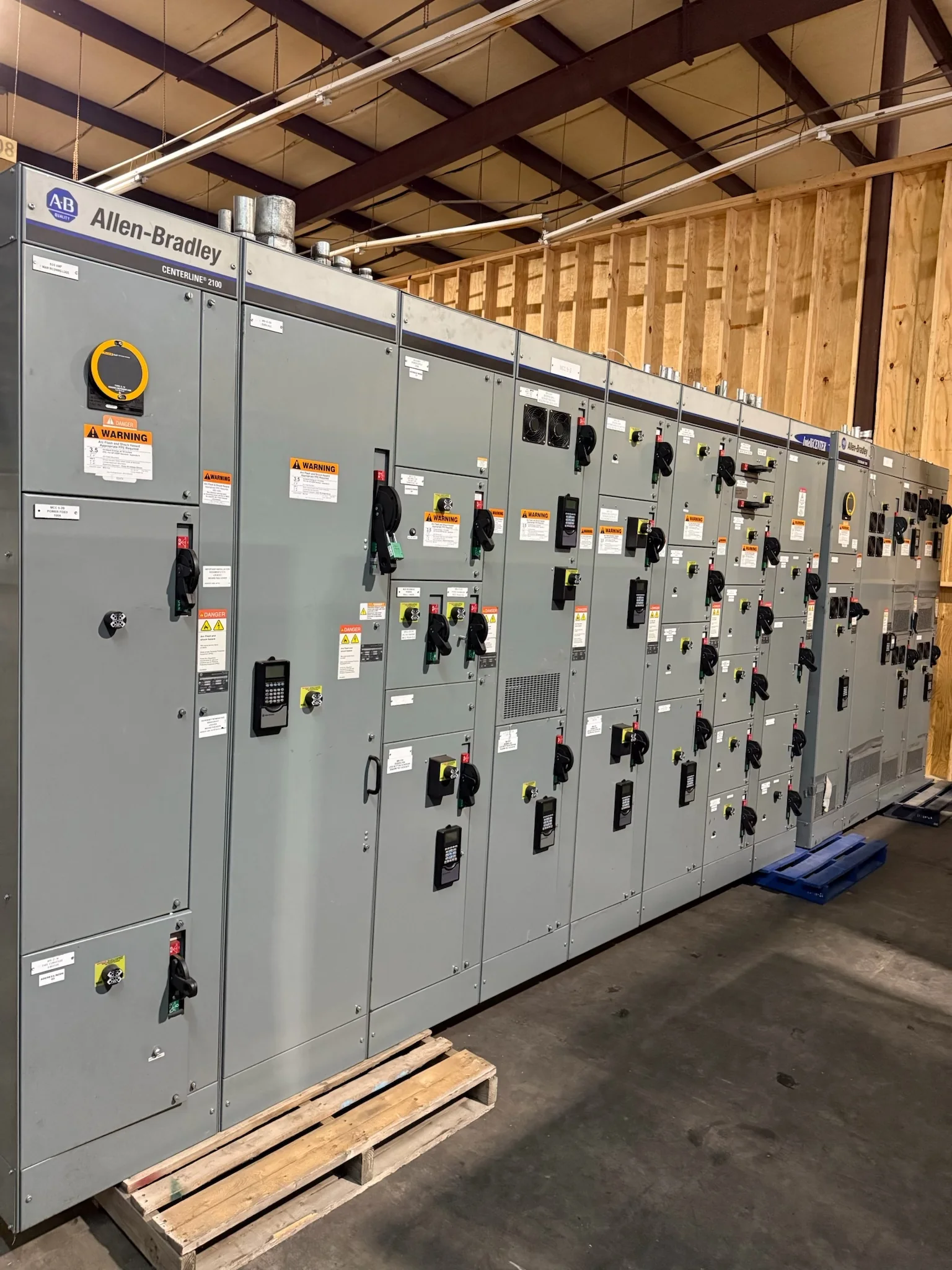
Start with the Plant’s Load Profile
Manufacturing loads rarely behave like a simple, steady building load. Production lines may start large motors, operate variable-frequency drives, switch between shifts, or add equipment in stages. Those patterns affect how a switchboard is arranged and how its bus, protective devices, metering, and spare capacity are specified. Gather equipment schedules, motor and drive data, expected operating modes, and planned expansions before requesting a quote. Include existing one-line diagrams and panel schedules when available; they help the engineering team understand how the proposed assembly must connect to the plant’s distribution system. Do not assume that spare spaces alone provide useful future capacity. Available electrical capacity, fault-current requirements, coordination, and compatibility with upstream and downstream equipment all need project-specific review.
Account for Process Loads and Power Quality
A board serving welders, induction equipment, large drives, or other changing process loads may face conditions that differ substantially from those of general lighting and receptacle distribution. Harmonics, voltage fluctuation, load imbalance, and repeated starts can influence monitoring needs and the wider system design. Identify sensitive controls, critical production equipment, and any power-quality concerns reported by plant staff. Where an existing system has nuisance trips or voltage problems, share event records and study results rather than assuming the switchboard alone will resolve them. Protective-device selection and coordination should reflect the actual system and operating priorities, including which loads must remain available when a fault occurs. These details help define a practical scope and avoid treating every manufacturing application as electrically interchangeable.


Match the Assembly to the Room and Work Sequence
A sound electrical design still has to fit through the plant and into its final location. Check room dimensions, door and corridor clearances, floor loading, overhead obstructions, cable entry points, and the space needed for operation and maintenance. Existing plants can impose constraints that are not visible on a one-line diagram, such as fixed process machinery or limited access for material handling. Share layout drawings, photographs, and site measurements early, and confirm dimensions against approved submittals before construction or shipment. Plan how the new equipment will be positioned and connected without obstructing required working access. Installation and replacement work must be performed under an appropriate safety plan by qualified personnel, with equipment de-energized when required; sequencing should be coordinated with production and facility operations.
Specify Protection, Ratings, and Interfaces Clearly
Procurement documents should identify the intended system voltage, phase, frequency, available fault current, grounding arrangement, incoming and outgoing connections, and the loads each section will serve. Also clarify the required enclosure conditions, metering, control interfaces, protective-device functions, and any connection to generators, transfer equipment, or other sources. These are design inputs, not details to infer from a generic description of a manufacturing plant. Verify proposed equipment against the existing upstream protection and downstream devices, and have qualified project professionals assess applicable codes and coordination requirements. For low-voltage switchboard assemblies, UL 891 may be relevant when the assembly is appropriately evaluated for that standard. It is not a blanket certification for all equipment or a substitute for confirming the project’s exact ratings, configuration, and approval requirements.
Prepare a Quote Package That Supports Review
A complete inquiry helps the manufacturer identify open questions before pricing and submittal review. Provide the project one-line diagram, load information, equipment schedules, site and room drawings, requested delivery destination, and a clear description of new construction, replacement, or retrofit scope. Note the required approval milestones, preferred shipment window, who reviews drawings, and any owner or engineer documentation requirements. If the existing assembly is being replaced, include nameplate information, dimensions, connection details, and known interface constraints; do not rely on a model number alone to establish compatibility. The manufacturer can use the supplied information to develop a project-specific proposal, but final design details, availability, standards, ratings, and delivery timing must be confirmed for the actual order. Clear assumptions also make bid comparisons more meaningful.
Coordinate Manufacturing, Shipment, and Startup
A manufacturing project can be schedule-sensitive because electrical work often sits between equipment installation and production turnover. Discuss the requested schedule early, including drawing approval, release of final requirements, site readiness, receiving hours, unloading arrangements, and any restrictions on delivery access. Short lead times and nationwide shipping are available offerings, not guaranteed dates; actual timing depends on the approved configuration, components, and order conditions. Confirm packaging, shipment handling, and receiving responsibilities with the project team, especially when the plant has limited laydown space or must coordinate around active production. Before startup, verify that installation, connections, protection settings, inspections, and commissioning responsibilities are defined by the project’s qualified professionals. A manufacturer-built replacement or custom assembly can support a plant’s needs, but safe integration depends on verified site conditions and coordinated work.