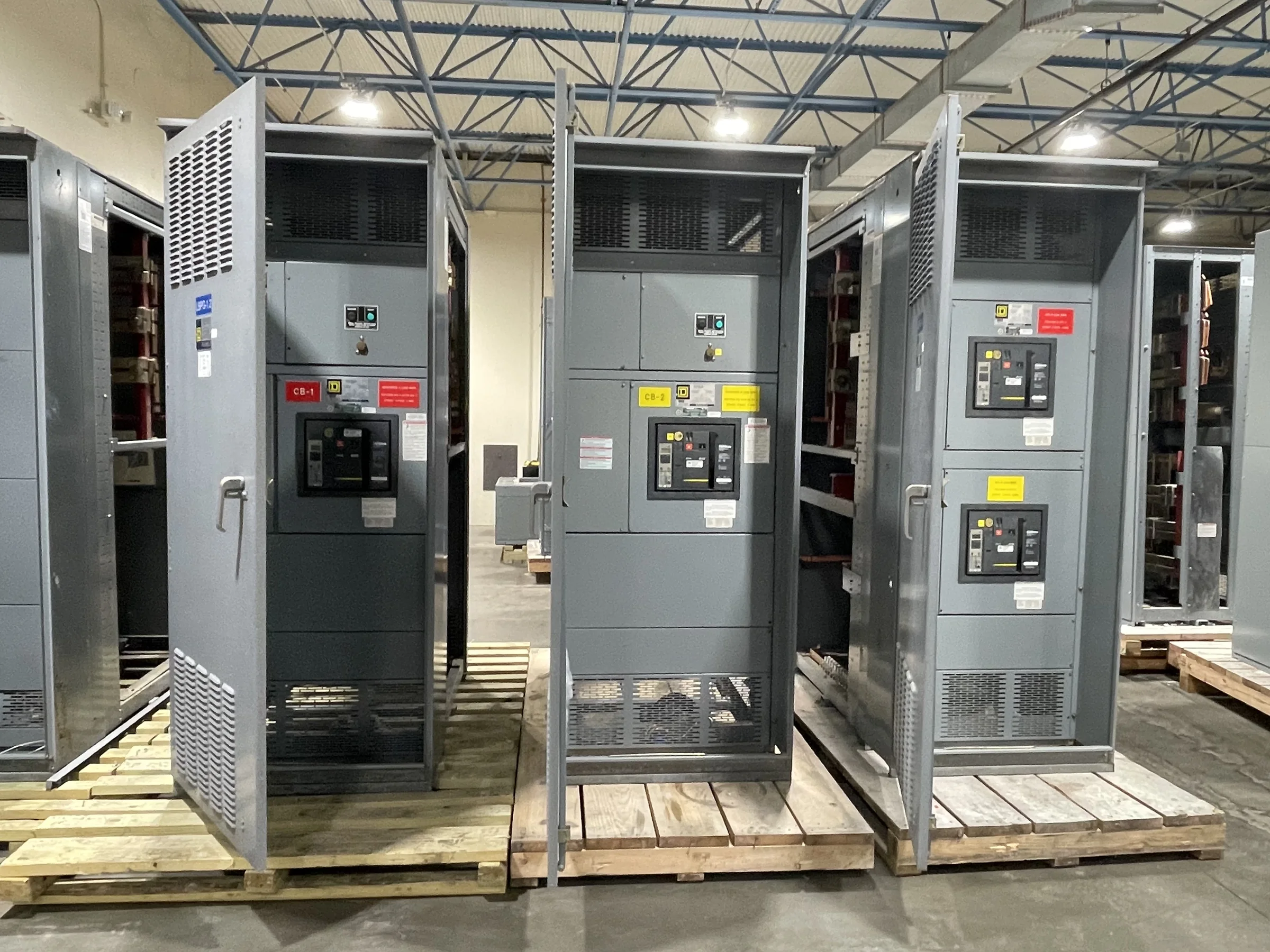
Define the Refinery Load and Distribution Scope
A refinery switchboard project starts with the electrical one-line diagram and the loads the assembly must serve—not simply a requested ampere rating. Identify incoming sources, bus arrangements, feeder functions, normal and emergency operating modes, and connections to adjacent equipment. Process units can contain motors, heaters, pumps, instrument systems, and building services with different continuity requirements; grouping them without understanding operating consequences can make maintenance or a fault affect more equipment than intended. Share available fault-current information, system voltage, grounding method, and protective-device coordination criteria so the manufacturer and project engineer can evaluate the proposed configuration. Confirm which loads are in scope and which belong to separate motor-control centers or packaged systems. Final ratings, device selections, and arrangement depend on documented site conditions and engineering review.
Account for Hazardous Locations and Refinery Conditions
Refinery service can involve corrosive atmospheres, airborne contaminants, vibration, heat, moisture, and classified areas, but those conditions are not uniform across a facility. Locate the switchboard in relation to process equipment and establish whether the installation area is classified; do not assume a standard indoor assembly is appropriate merely because it will be inside a building. Provide the project’s environmental criteria, enclosure location, ventilation or air-conditioning assumptions, and any specified coating or material requirements for review. Switchboard construction does not by itself make a location safe for hazardous-area installation, and area classification does not replace equipment-specific evaluation. These details matter because unsuitable environmental assumptions can affect enclosure selection, component life, maintenance access, and approval. Confirm requirements with the responsible electrical engineer and applicable authorities before procurement.


Coordinate Protection, Arc-Flash Inputs, and Switching Needs
Protection decisions depend on more than the breaker frame size shown on an early schedule. Provide the latest available utility or generator fault-current data, transformer information, conductor details, and upstream and downstream protective-device settings so the project team can assess interrupting ratings and coordination. Refinery process continuity may make selective isolation important: a fault on one feeder should not unnecessarily interrupt unrelated loads, where the system design can support that objective. Arc-flash analysis and labels require project-specific system data and engineering responsibility; do not treat a switchboard quotation or factory build as a substitute for that analysis. Identify the required trip functions, metering, communications, interlocks, and operating arrangement in the specification. Final settings and protective-device suitability must be verified against the completed system before energization.
Resolve Footprint, Access, and Installation Constraints
Refinery electrical rooms are often shaped by existing foundations, cable trenches, overhead obstructions, adjacent process equipment, and narrow routes between the unloading area and the final location. Before approving a layout, compare proposed section dimensions and access clearances with verified room drawings, cable-entry direction, working-space requirements, door swings, and the path used to move equipment into position. Check floor capacity and anchorage assumptions with the project’s structural team rather than relying on a general arrangement drawing alone. These checks matter because a board that fits electrically may still be impossible to position, terminate, or maintain safely. Tell the manufacturer whether the project needs shipping splits or other handling accommodations; confirm what can be provided for the specific design and coordinate field assembly, lifting, and installation responsibilities early.
Prepare Submittals and Procurement Information Early
A useful request for quotation includes the one-line diagram, load and feeder schedules, project specifications, applicable standards, site environmental criteria, preferred manufacturer or component requirements, and the current equipment-room layout. Flag open engineering decisions instead of presenting preliminary values as approved, and identify who will resolve each item. Request drawings and technical submittals needed for review, including the proposed arrangement, device schedule, connection details, and any required communications or metering information. For low-voltage switchboard assemblies, UL 891 may be relevant when specified and when the particular assembly is appropriately evaluated; it is not a blanket certification for medium- or high-voltage equipment. Clear document responsibilities and approval milestones help prevent late revisions, procurement gaps, and mismatches between the switchboard, site wiring, and connected refinery systems.
Plan Build Timing, Delivery, and Replacement Work
Schedule discussions should begin with the project’s required-on-site date, drawing-review cycle, construction sequence, and any planned outage window. A U.S. manufacturer can discuss a custom build, American components, short lead times, and nationwide shipping, but timing and availability depend on the approved configuration, component supply, engineering changes, and current production conditions. Ask for the assumptions behind the quoted schedule and identify the point at which approved drawings and a complete purchase release are needed. For replacement or retrofit work, document existing equipment dimensions, bus and cable interfaces, control wiring, and removal constraints; compatibility must be confirmed rather than inferred from a nameplate or photograph. Coordinate shipment access, offloading capacity, storage conditions, and installation responsibility with the refinery team so delivery supports the site plan without promising a guaranteed date.