Define the Distribution Scope Before Requesting a Quote
For a Beaumont project, start by documenting what the switchboard must serve, not just its desired ampere rating. Identify the incoming source, system voltage and phase, available fault current, feeder quantities, load types, and any planned expansion. Note whether the equipment is new construction, a capacity addition, or a replacement, since each situation changes connection points and outage planning. Include one-line diagrams, load schedules, equipment location, and known utility or upstream protective-device information with the request. These details let the manufacturer assess the intended configuration and flag missing inputs before drawings are developed. Final ratings and protective-device coordination depend on project conditions and engineering review; a preliminary equipment description alone cannot establish suitability.
Match the Assembly to Its Application and Evaluation
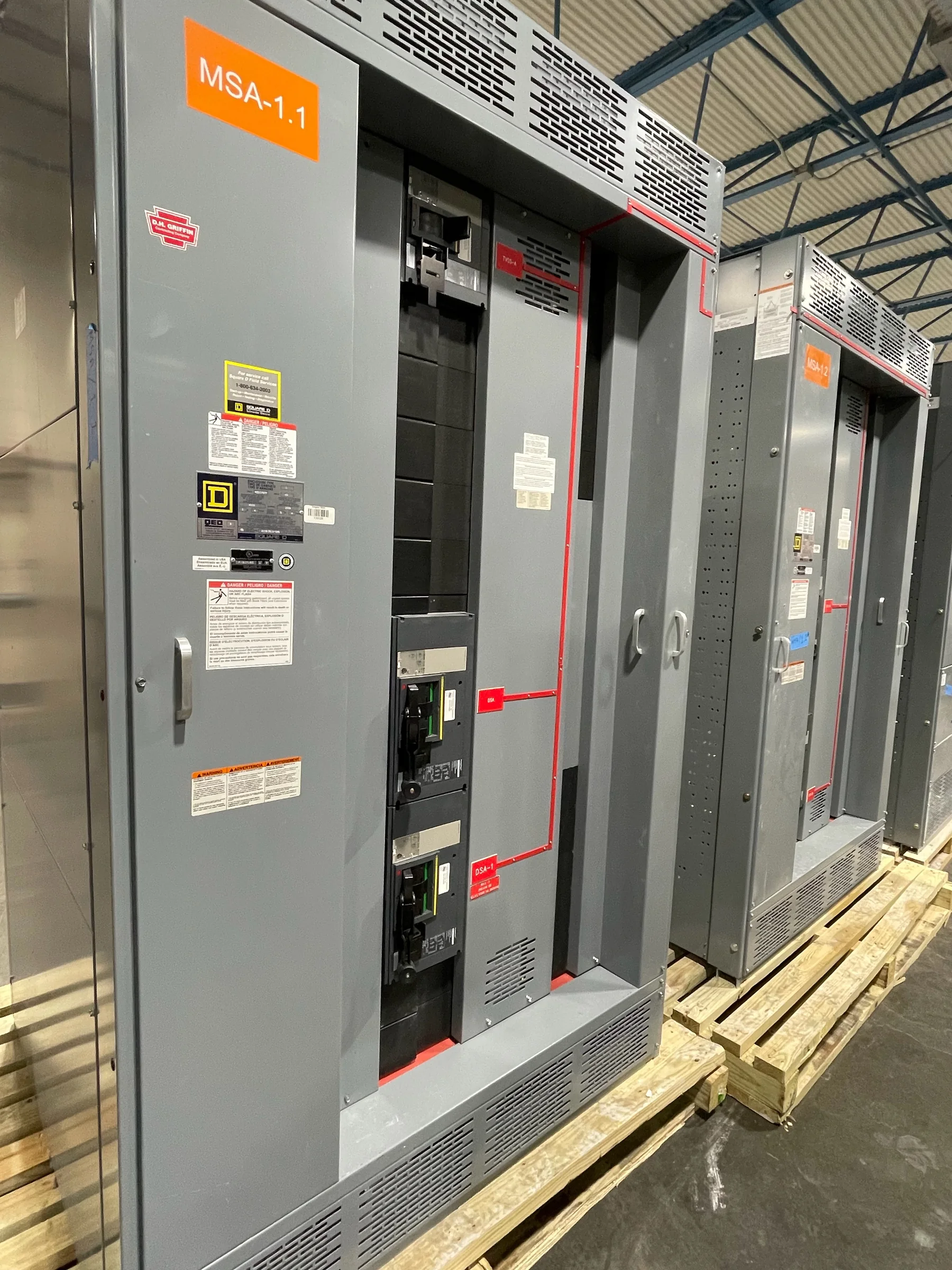
The term switchboard can cover different arrangements, so specify the intended function and applicable project standards rather than assuming one construction fits every facility. A low-voltage switchboard assembly may be evaluated to UL 891 when its design and evaluation support that application; this does not make UL 891 a blanket qualification for medium- or high-voltage gear. Beaumont-area industrial and commercial sites may have motor loads, process equipment, or mixed-use distribution, each affecting feeder arrangement and protection decisions. Ask the manufacturer to confirm the proposed assembly’s scope, ratings, and documentation against the project specification. Where a replacement must interface with existing equipment, provide verified nameplate data and connection details so compatibility can be reviewed before procurement.


Account for Heat, Humidity, and the Equipment Location
Southeast Texas heat, humidity, and storm exposure make the planned installation environment important to equipment selection and site preparation. An indoor electrical room, a ventilated process area, and an outdoor enclosure present different demands for environmental protection, access, and maintenance. Share the expected ambient conditions, exposure to moisture or corrosive contaminants, enclosure location, and any cooling or ventilation limits. Also confirm the available floor area, working clearances, cable-entry direction, and route from the receiving point to the final position. These constraints can affect enclosure configuration and installation planning; they should be reviewed against the project requirements rather than handled through assumptions about a standard design. Final environmental suitability is project-specific.
Resolve Existing-System Interfaces Before Replacement
When replacing a switchboard at an operating Beaumont facility, the difficult work is often matching the existing system, not choosing a new cabinet. Record bus arrangement, incoming and outgoing conductor sizes, termination space, breaker types, control wiring, and physical dimensions where they can be verified safely. Photographs and nameplate records can help, but they do not replace engineering review of the one-line diagram and field conditions. Identify whether existing conduits, cable lengths, grounding, and adjacent gear can remain, or whether modifications are expected. This information can reveal fit or connection conflicts before fabrication. Plan required outages and all electrical work with qualified personnel; the equipment must be de-energized and verified safe before inspection, removal, or installation.
Coordinate Drawings, Approvals, and Procurement Timing
A realistic procurement schedule begins with complete technical inputs and a clear approval path. Request the proposed equipment scope, submittal drawings, component information, and any project-required documentation early enough for the engineer and facility team to review them. Track open decisions—such as feeder counts, metering, protective devices, cable entry, and enclosure details—because late revisions may affect both design and manufacturing sequence. The manufacturer offers custom builds and short lead times, but actual timing depends on the approved configuration, component availability, drawing turnaround, and current production schedule. Ask for a project-specific schedule and clarify when it begins, what approvals are needed, and how changes are handled. Do not treat an early estimate as a delivery guarantee.
Plan Delivery and Installation at the Beaumont Site
Before shipment, confirm the delivery address, receiving hours, unloading equipment, staging area, and route to the electrical room. A large assembly may need to pass through gates, corridors, doorways, or around process equipment, so check dimensions and handling limits against the actual route—not merely the room footprint. Coordinate freight access with site security and construction management, especially when deliveries share space with ongoing industrial operations. The U.S. manufacturer offers nationwide shipping; the project team should confirm shipment configuration, handling responsibilities, and delivery timing for its site. Keep the approved drawings and equipment documents available for installation and commissioning. Lifting, placement, terminations, testing, and energization require qualified personnel following approved procedures and applicable project requirements.