Define the Freeport Load and Operating Conditions
For a Freeport facility, start switchboard selection with the actual distribution task: incoming source, system voltage, available fault current, connected and demand loads, and the way the equipment will serve downstream panels, motors, or process loads. Gulf Coast heat, humidity, salt-laden air, and industrial contamination can influence enclosure location, ventilation, corrosion protection, and maintenance access. Record whether the board will be indoors, in a conditioned electrical room, or exposed to outdoor conditions; do not assume one enclosure or finish suits every site. Engineers should also identify future load growth and any standby or alternate source arrangements. These details matter because they shape bus, protective-device, compartment, and environmental requirements. Final ratings, configuration, and suitability depend on project engineering and equipment evaluation.
Coordinate Protection, Interrupting Duty, and Selectivity
A switchboard is not specified by amperage alone. The engineer should establish the available fault current at the installation point and coordinate protective devices with upstream sources and downstream equipment. Confirm interrupting ratings, short-circuit withstand requirements, ground-fault protection where applicable, and whether selective coordination is required for critical loads. If utility service, generators, or other sources can operate in different configurations, each relevant operating condition may affect fault duty and protection settings. These checks matter because an assembly and its devices must be suitable for the system conditions, while poor coordination can expand an outage or leave downstream equipment inadequately protected. Provide the manufacturer with current one-line diagrams, utility data, and protective-device preferences. Final device selection and coordination remain project-specific and should be reviewed by the responsible design professional.


Resolve Room Layout and Service Access Before Release
Freeport projects may place new distribution equipment within an operating plant, a retrofit room, or a new building, and each setting creates different access constraints. Before approving a layout, verify available wall length, ceiling height, aisle and working-space clearances, door swings, cable-entry direction, conduit routes, and the path from the receiving point to the final room. Consider how large sections will pass through gates, corridors, equipment openings, or around existing process lines. These checks matter because a board that fits electrically may still be impossible to move into place or maintain safely. Share dimensioned room plans, photographs, access restrictions, and any lift or handling limits during quotation and design review. Required clearances and installation arrangements must be confirmed against applicable codes, site conditions, and the final equipment configuration.
Specify a Build That Matches the Application
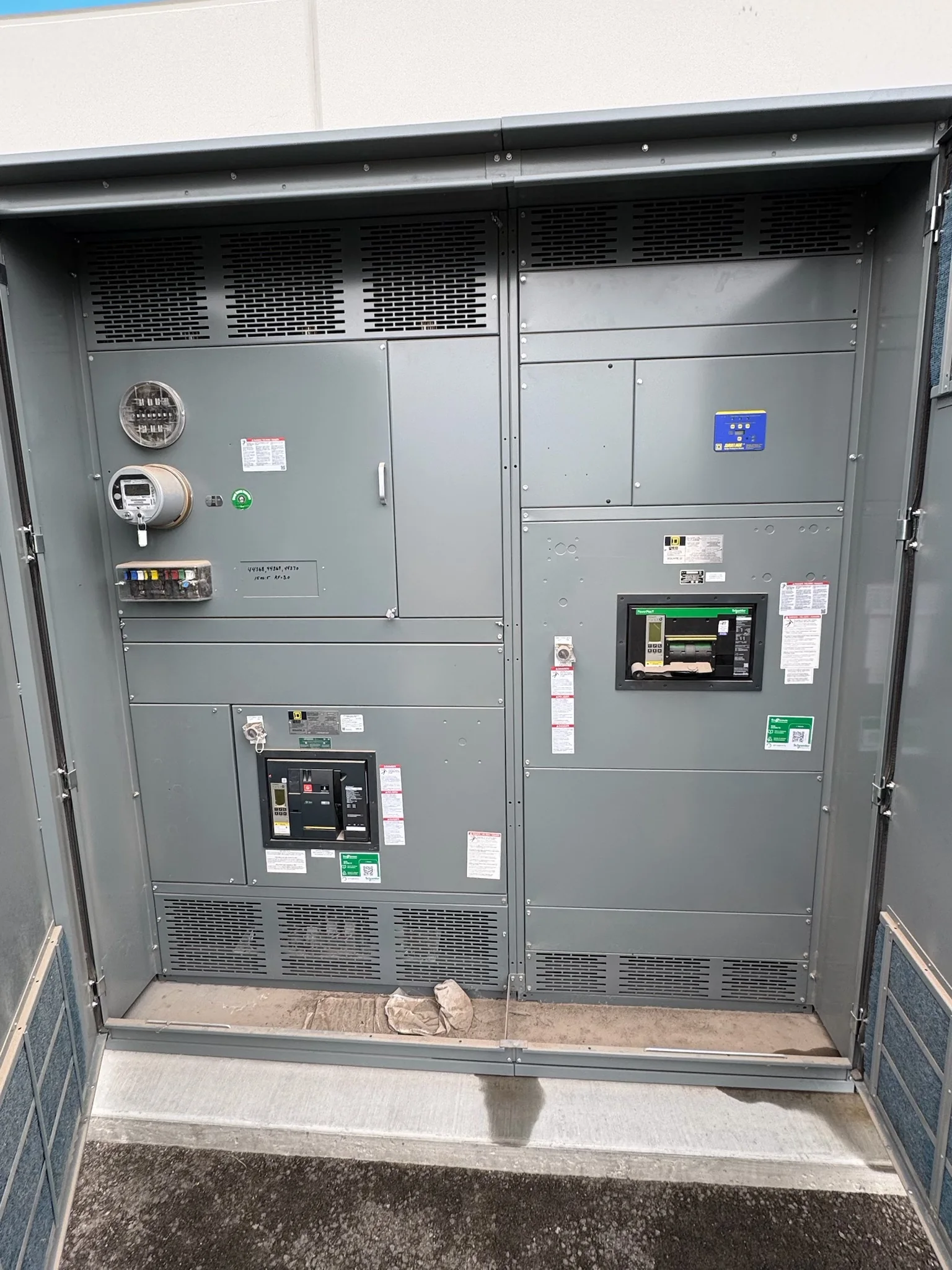
A useful purchase specification describes how the switchboard must function, not merely its preferred appearance. Identify the service entrance role, feeder and branch-circuit needs, metering or monitoring provisions, control interfaces, enclosure environment, and any preferred device families or component requirements. If the project calls for American components, state the expectation clearly and identify any owner or engineer-approved exceptions. For low-voltage switchboard assemblies, UL 891 may be relevant when the specified assembly is appropriately evaluated; it should not be treated as a blanket claim for all equipment or voltage classes. Medium- and high-voltage applications require their own applicable standards and evaluation. These distinctions matter during submittal review and procurement. Ask the manufacturer to confirm the proposed construction against the project documents, with exact standards, ratings, labeling, and availability verified for the specific assembly.
Align Submittals, Approvals, and Schedule Decisions
Discuss timing early, while the design can still accommodate component choices and review comments. A custom build may depend on finalized electrical data, approved drawings, selected devices, and resolution of exceptions; incomplete or changing inputs can affect the production sequence. Request a project-specific schedule rather than assuming a standard lead time, and clarify what milestones depend on submittal approval, release to production, or receipt of missing information. Procurement teams should compare the quotation with the specification line by line, noting inclusions, exclusions, alternates, and any owner-furnished items. Engineers can use the review to confirm dimensions, one-line alignment, device functions, and cable access before fabrication proceeds. This discipline matters because late discrepancies can lead to redesign, added coordination, or installation delays. Actual timing and availability should be confirmed for the selected configuration.
Plan Delivery and Installation Around Freeport Site Logistics
Delivery planning in Freeport should account for the destination’s receiving rules and the equipment’s route to the electrical room, not just the distance from the manufacturer. Confirm the site contact, receiving hours, unloading responsibility, truck access, staging area, weather protection, and whether shipments must be sequenced with construction or outage windows. Coastal weather and exposed staging can make prompt, protected handling important; coordinate storage conditions with the equipment documentation and site team. Before shipment, reconcile the approved shipping configuration with door and aisle dimensions, lifting provisions, and the installation plan. These details matter because receiving a large assembly without an accessible unloading area or protected storage can disrupt work and risk damage. A U.S. manufacturer can discuss nationwide shipping and project-specific delivery coordination, but routing, packaging, timing, and final installation conditions must be confirmed for each order.