Specify the Board Around the Building’s Actual Loads
For a Spring project, start with the one-line diagram, load schedule, and expected changes to the facility—not a presumed standard board configuration. Confirm system voltage, phase, available fault current, service or feeder function, main and branch-device requirements, and whether loads include motors, HVAC, elevators, or sensitive electronic equipment. These details shape the assembly and its protection, space, and connection requirements. Ask the design team to identify future capacity needs and any required metering or control interfaces; unused space, spare devices, and provisions for later expansion are not interchangeable. Accurate inputs help the manufacturer develop a build suited to the project and reduce avoidable revisions. Final ratings, compatibility, code requirements, and product suitability must be reviewed for the specific installation.
Coordinate Ratings, Protection, and System Interfaces
A switchboard must work as part of the electrical system, so procurement should resolve more than the nominal voltage and ampere rating. Provide available fault-current information and the intended overcurrent-protection arrangement for engineering review; protective-device selection and coordination can affect the assembly and connected equipment. Confirm whether the project requires service-entrance construction, a particular enclosure, ground-fault protection, metering, or integration with existing distribution. Where equipment connects to a generator, transfer switch, transformer, or another manufacturer’s gear, document the interface and obtain compatibility review rather than assuming components will fit or function together. UL 891 applies to appropriately evaluated low-voltage switchboard assemblies; it is not a blanket certification for all distribution equipment. Confirm applicable evaluation and labeling for the specified assembly.


Plan Equipment Access and Installation Space
Spring-area sites may combine established commercial buildings, newer developments, and industrial facilities, each with different access and layout constraints. Before finalizing the board, verify the electrical-room dimensions, working clearances, ceiling height, doorway and corridor widths, floor and anchorage conditions, and the route from the delivery point to the final position. Identify overhead obstructions, nearby piping, doors, and equipment that could limit installation or later servicing. Room temperature, moisture exposure, dust, and other environmental conditions can influence enclosure and installation decisions; do not treat a room as suitable solely because existing equipment is located there. Give the manufacturer and installing contractor the current room drawings and site restrictions so section arrangement and delivery planning can be checked against actual conditions.
Make Drawings and Submittals Part of Procurement
A clear submittal package gives the engineer, contractor, facility team, and manufacturer a common basis for review. Include the one-line diagram, electrical schedules, project specifications, service requirements, equipment-room layout, cable-entry preferences, and notes on existing gear or interfaces. Request review drawings that show dimensions, section arrangement, connection locations, and relevant device information, then resolve comments before release for production. Check that revisions are coordinated across architectural, structural, and electrical documents; a late change to conduit routing, feeder size, or room layout can affect the board design. Record approved exceptions and open questions rather than relying on verbal assumptions. This review does not replace the project engineer’s responsibility to verify design and code compliance for the installation.
Discuss Build Timing and Delivery Before Release
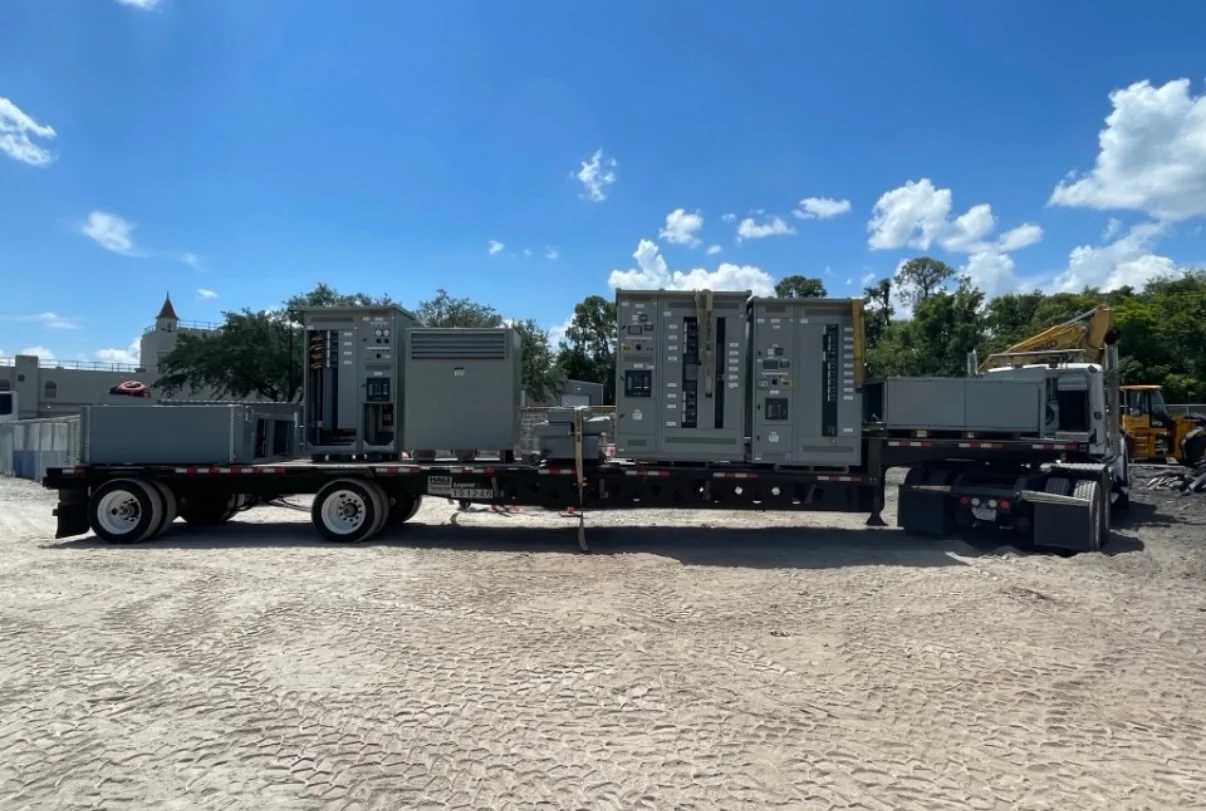
Custom switchboard timing depends on the approved design, component selection, project changes, and current availability, so request a project-specific schedule rather than assuming a standard turnaround. Share the required in-service date, approval milestones, site readiness, and any constraints on receiving or storing equipment. American components and custom builds may be options to discuss with the U.S. manufacturer, but component origin, configuration, and availability should be confirmed for the actual order. Nationwide shipping does not settle the details of unloading: establish who receives the shipment, what equipment is available at the site, whether a loading dock or lift is present, and where the board can be staged. Confirm packaging, delivery access, and responsibilities before shipment to avoid a preventable site delay.
Prepare for Installation, Inspection, and Future Service
Before the equipment arrives, align the electrical contractor, facility representative, and project engineer on the approved drawings, delivery route, receiving plan, foundation or housekeeping-pad details, conduit locations, and installation responsibilities. The switchboard must be installed, connected, and inspected in accordance with its approved documentation and applicable project requirements. Electrical work requires appropriate qualified personnel and a de-energized, controlled work condition; energization should follow the project’s established inspection and commissioning process, not an assumption that delivery means readiness. Keep final drawings and equipment identification accessible to maintenance staff, and record changes made during installation. A serviceable result depends on clear access for operation and maintenance as well as correct initial fit. Confirm the exact assembly, documentation, and project requirements before placing the order.