Specify the Beaumont Installation Before Selecting Equipment
For a Beaumont project, start with the one-line diagram and the actual conditions at the installation point, rather than choosing equipment by nominal voltage alone. Document system voltage, available fault current, service or feeder purpose, bus arrangement, incoming and outgoing connections, and the protective devices required. The site team should also identify whether the equipment serves a process area, utility interface, commercial building, or expansion, since each can impose different operating and coordination needs. Confirm indoor or outdoor location, environmental exposure, access for maintenance, and any hazardous-area requirements with the responsible engineer. These details help the manufacturer assess a suitable configuration and flag missing information before fabrication planning. Final ratings, compatibility, and applicable standards must be verified for the specific project.
Coordinate Switchgear With Existing Beaumont Facilities
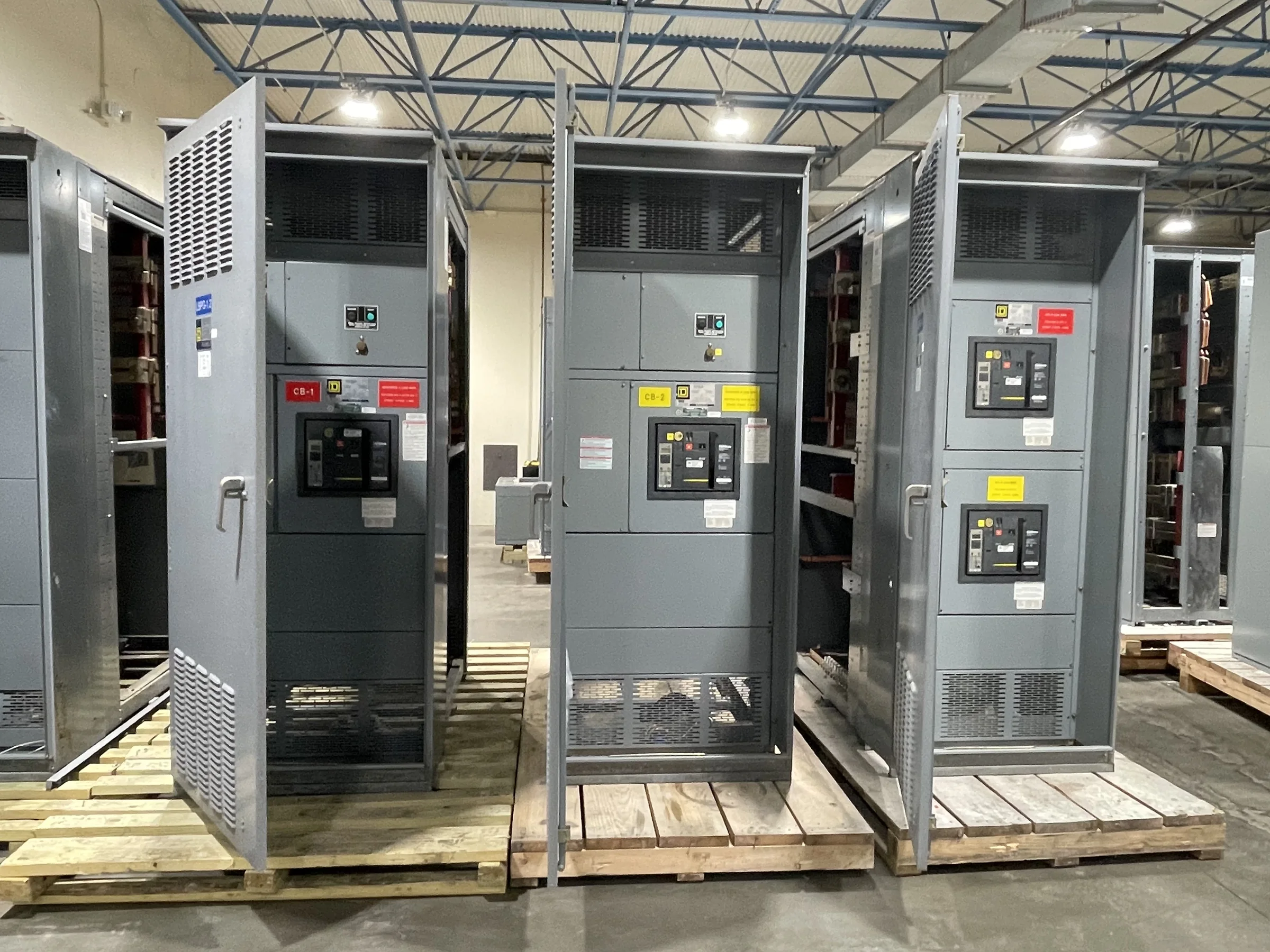
Replacement work in an operating Beaumont facility often has to fit an established electrical room, existing raceways, and equipment that cannot be moved casually. Provide measured room dimensions, doorway and corridor clearances, ceiling obstructions, floor conditions, and the location of cable trenches or overhead entries. Include clear photographs and verified dimensions where drawings may no longer reflect field conditions. For a retrofit, identify the existing lineup, connection orientation, cable approach, control interfaces, and what equipment is intended to remain; a visual resemblance does not establish electrical or mechanical compatibility. These records let the project team review fit and connection assumptions before committing to a build. Plan outages and field verification with qualified personnel, and ensure all work is performed de-energized under the site’s safety procedures.


Review Ratings, Protection, and System Coordination
Equipment selection depends on how the assembly will perform within the complete distribution system, not just on the rating printed on a nameplate. Engineers should review the available fault-current study, protective-device settings, selective-coordination objectives, grounding arrangement, and upstream and downstream equipment. Confirm whether the project calls for a low-voltage switchboard, switchgear, or another assembly; terminology and construction are not interchangeable in every application. For low-voltage switchboard assemblies, UL 891 may be relevant when the specific assembly is appropriately evaluated, but it does not apply as a blanket claim to medium- or high-voltage equipment. Ask for the proposed documentation and evaluation basis for the actual configuration. Final application, ratings, and compliance depend on the engineered design and project requirements.
Set a Realistic Schedule Around Submittals and Site Readiness
A useful schedule separates engineering review, submittal approval, material coordination, fabrication, inspection, shipment, and field installation instead of treating delivery as a single date. Share the required in-service milestone, approval process, decision-makers, and any planned outage window when requesting a quote. Late changes to breaker selections, cable entry, metering, or lineup arrangement can require renewed engineering review and affect the project sequence. Beaumont projects tied to plant shutdowns or construction phases should also account for receiving, staging, rigging, and access approvals before equipment ships. A U.S. manufacturer can discuss available build timing, but a specific lead time is not assured until project scope and component availability are reviewed. Keep schedule assumptions visible and confirm them as submittals and site conditions develop.
Plan Delivery, Unloading, and Equipment-Room Access
Nationwide shipping can bring new equipment to a Beaumont jobsite, but successful delivery depends on more than the destination address. Before release, confirm the receiving hours, truck access, unloading equipment, staging area, security procedures, and whether the shipment can reach the electrical room or only a laydown point. Check door widths, turning space, floor loading, lift paths, and restrictions on cranes or forklifts with the site coordinator. In humid or weather-exposed conditions, agree on suitable receiving and storage arrangements so packaging and equipment are protected until installation. Clarify who inspects the shipment, records visible damage, and coordinates any required handling. These logistics are project-specific; verify shipment configuration and delivery arrangements against the actual site and the carrier’s requirements.
Prepare a Complete Quote and Submittal Package
A well-organized request helps procurement compare equipment on scope and engineering basis rather than on price alone. Include the one-line diagram, specifications, load or feeder schedule, fault-current information, equipment location, existing-system details for replacement work, preferred delivery milestone, and requested options. State what documentation is needed for review, such as outline drawings, connection details, bills of material, or device information, without assuming every item is available for every design. Identify exclusions, by others’ responsibilities, and any site-specific acceptance or inspection steps early. The manufacturer can review the package, discuss American component options and custom-build considerations, and identify open questions before a proposal is finalized. Request a quote with requirements clearly marked; confirm final scope, timing, compliance basis, and compatibility in project documents.