Start With the Electrical System, Not a Catalog Rating
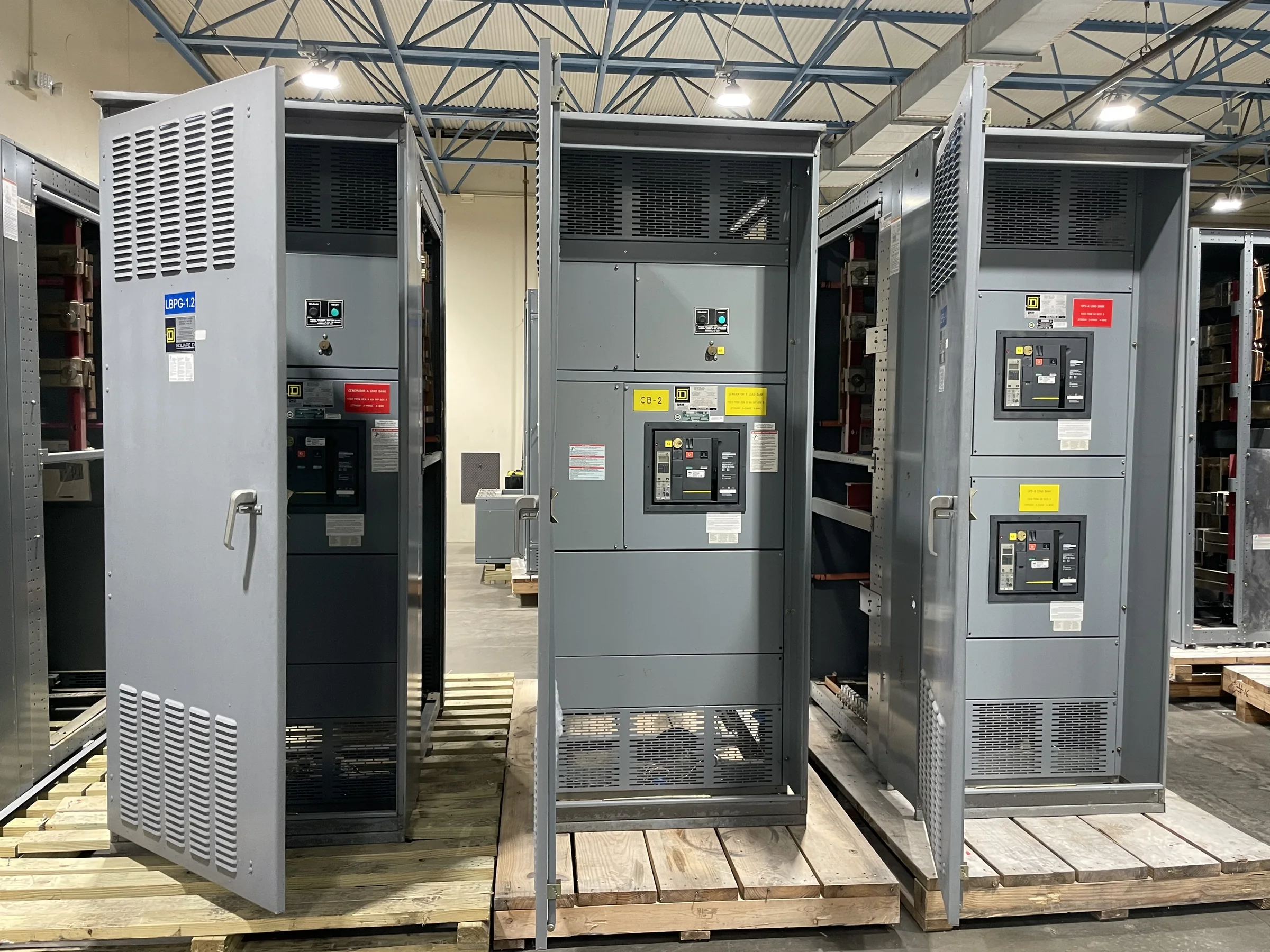
For a Cypress facility, selecting new switchgear begins with the one-line diagram and the actual service conditions—not simply the nameplate on equipment being replaced. Confirm nominal voltage, phase and wire configuration, available fault current, service-entrance requirements, and the loads expected at startup and in future phases. Those details shape the equipment rating, protective-device selection, bus arrangement, and whether a switchboard or another assembly is appropriate. If the installation has generators, transfer equipment, multiple utility sources, or large motor loads, identify those relationships early; they affect coordination and operating sequences. A U.S. manufacturer can build around defined project requirements and American components, but final ratings and compatibility must be reviewed for the specific system by the responsible engineer and project team.
Coordinate Protection and Expansion Before Releasing the Design
Protective-device coordination is a project decision with direct consequences for fault response and service continuity. Provide the engineer’s coordination and arc-flash study requirements, upstream device information, and downstream load schedule so the proposed arrangement can be checked against the intended system. Where selective coordination, ground-fault protection, metering, or future feeder space matters, show it in the specification rather than assuming it can be added later. Spare space is useful only when the bus, enclosure, and planned connections support the intended expansion. For Cypress sites adding production equipment, HVAC capacity, or tenant loads in stages, a documented growth allowance can reduce disruptive redesign. Final breaker types, settings, short-circuit ratings, and coordination remain subject to engineering review and equipment compatibility.


Make the Equipment Fit the Electrical Room and the Route In
A switchgear lineup must fit both its final room and the path used to deliver it. Share dimensioned room plans, ceiling and doorway clearances, floor and housekeeping-pad details, cable trench or conduit locations, and required working space. The drawings should also show whether conductors enter from above or below and where terminations need room for bending and pulling. These constraints matter especially in existing Cypress buildings, where a door, corridor turn, overhead obstruction, or occupied neighboring area can limit delivery and placement. Confirm whether the assembly must be divided into shipping sections and how those sections will be moved from the truck to the room. The final arrangement and handling plan depend on actual site measurements and equipment configuration.
Review Drawings and Submittals Before the Build Is Released
A complete submittal review helps prevent avoidable changes after fabrication begins. Check the general arrangement, one-line and wiring diagrams, equipment schedule, device descriptions, terminal provisions, and interface points against the contract documents. Verify that control power, metering, communications, and any generator or transfer-system connections match the project’s sequence of operation. Resolve naming conventions, circuit labels, spare provisions, and utility or inspector requirements in writing; a mismatch can delay approval or complicate commissioning. For low-voltage switchboard assemblies, UL 891 may be an applicable requirement when the design and project call for it, but it is not a blanket certification for every product or for medium- and high-voltage gear. Confirm exact scope, evaluation, and labeling needs before purchase.
Discuss Schedule, Components, and Delivery Constraints Early
Custom equipment timing depends on the approved design, selected components, and the project’s release and review process. Share the required in-service date, decision deadlines, site readiness milestones, and any shutdown window when requesting a quote; these details help the manufacturer discuss a realistic schedule without treating a lead time as guaranteed. American components and short lead times are offerings, but actual availability is configuration-specific and should be confirmed against the current bill of materials. For Cypress delivery, identify truck access, receiving hours, unloading equipment, laydown space, security procedures, and weather-related contingencies. Heavy rain or roadway disruptions can affect site access and receiving plans in the Houston area, so agree on a communication point and rescheduling process rather than assuming a delivery appointment can never change.
Plan Installation, Verification, and Turnover as One Project
Procurement is not complete when the equipment reaches the site: installation, system verification, and records must align with the approved design. Assign responsibility for foundations, anchorage, conduit, field connections, protective-device settings, and any required inspections before delivery. Work on electrical equipment must be performed by qualified personnel under the project’s safety procedures, with equipment de-energized and properly controlled for the work. Ask for the documentation required at turnover, which may include final drawings, device information, operating instructions, and applicable evaluation or listing records for the specific assembly. Coordinate commissioning with the engineer, installer, utility where applicable, and facility team so testing and energization occur in the planned sequence. Clear ownership of these tasks helps avoid schedule gaps and leaves maintainers with records that match the installed system.