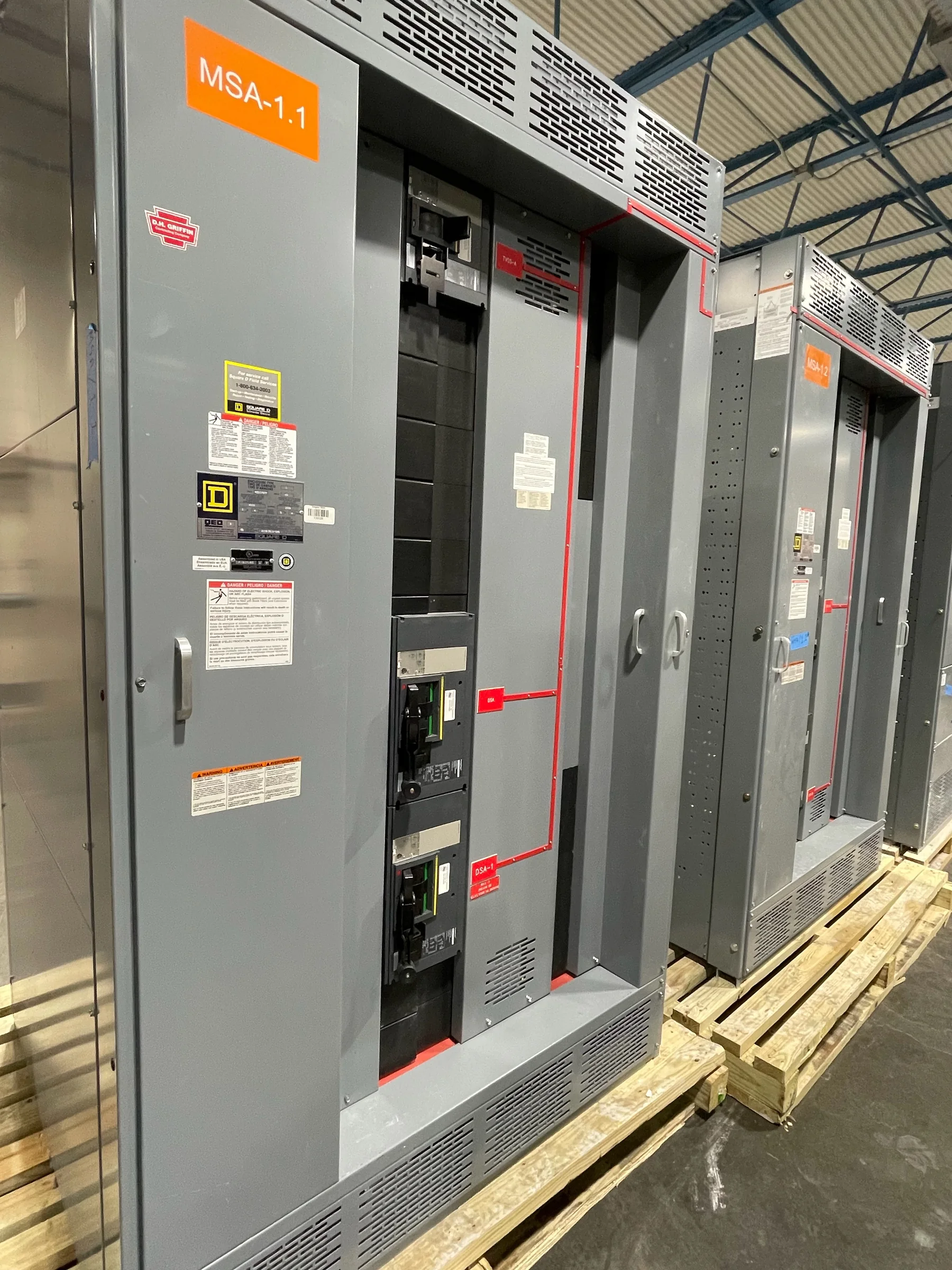
Specify the Distribution System Before Selecting Equipment
For a new facility or an expansion in Tomball, begin with the one-line diagram and the electrical service requirements—not a preferred lineup size. The design team should identify system voltage, available fault current, main and feeder arrangements, connected loads, and any metering or protective-device requirements. Those inputs determine whether the project calls for low-voltage switchboards or a different class of distribution equipment; the term switchgear should not blur that distinction. Confirm how generators, transformers, parallel sources, or future feeders will connect, since late changes can affect bus design and compartment layout. Our U.S. manufacturing team can build new equipment around project specifications using American components. Exact ratings, component compatibility, applicable standards, and evaluation requirements must be reviewed for the specific assembly before a quote is finalized.
Match the Assembly to the Site and Its Operating Conditions
A technically sound lineup also has to fit the room where it will operate. Share room dimensions, ceiling height, access-door clearances, working-space requirements, cable entry direction, and the planned route from the unloading point to the equipment location. In Tomball and the wider Houston area, heat, humidity, and seasonal heavy rain make it especially useful to establish whether the switchboard will sit in conditioned indoor space or face outdoor exposure during storage or operation. That distinction can affect enclosure and environmental requirements, but no enclosure suitability should be assumed without review. Identify dust, corrosive agents, washdown, or other unusual conditions as well. Resolving these details during specification helps avoid field modifications, blocked access, and delivery-day surprises.


Plan Protection, Coordination, and Future Expansion
Protection choices should follow a documented study, not a guess based on the size of the incoming service. Provide available fault-current information and the project’s coordination requirements so engineers can assess breaker or fuse selection, interrupting ratings, and selective coordination where required. If the installation includes critical loads, emergency power, or multiple sources, explain the intended transfer and operating sequence; control and interlocking details depend on the actual system design. Consider spare feeder provisions and anticipated load growth while the lineup is being arranged, because reserving space now may be simpler than replacing equipment later. The manufacturer can review the requested configuration, but final protective-device settings and system coordination remain project-specific and should be confirmed by the responsible electrical engineer.
Use Submittals to Resolve Questions Before Fabrication
A complete procurement package makes review faster and reduces ambiguity between the electrical engineer, contractor, and equipment supplier. Include the current one-line diagram, equipment schedule, project specifications, utility requirements, and any control schematics or sequence-of-operation documents that affect the assembly. Ask for submittal drawings showing the proposed lineup arrangement, dimensions, connection details, and equipment identification so the project team can check interfaces before release. For a low-voltage switchboard, UL 891 may be relevant where the assembly is appropriately evaluated; it is not a blanket certification for medium- or high-voltage equipment, nor should a label be presumed for every configuration. Resolve deviations, approved equals, and documentation expectations in writing. Requirements and evaluation applicability depend on the specific project and assembly.
Discuss Schedule and Delivery Constraints Early
Short lead times may be available, but a project schedule should be built around confirmed scope, component availability, drawing review, and approval milestones rather than an assumed delivery date. Identify when approved submittals are needed, who can authorize changes, and whether the site has a firm outage or energization window. For a Tomball-area delivery, provide the precise receiving location, gate and access instructions, delivery-hour restrictions, unloading equipment, and a contact who can coordinate with the carrier. Confirm whether the route from the truck to the electrical room includes ramps, narrow corridors, or limited turning space. These practical details matter because a lineup that arrives without a workable unloading plan can delay installation even when the equipment itself is ready. Timing and shipping arrangements require project-specific confirmation.
Request a Quote for the Equipment Your Project Needs
When requesting a quote, send the latest drawings and specifications together with the required ship-to location, requested schedule, and any known scope exclusions. Flag whether the purchase is for a new installation, a replacement, or a retrofit, and describe existing gear interfaces if the new assembly must connect to installed equipment. Replacement work should include available nameplate information, connection details, and field-verified dimensions; an old designation alone may not establish compatibility. Tell the manufacturer about site access limits and planned outages so the proposal can reflect the actual coordination needs. The U.S. manufacturer offers custom builds, American components, short lead times, and nationwide shipping; exact configuration, pricing, timing, standards, and availability are determined for each project. Request a quote to review fit and next steps.