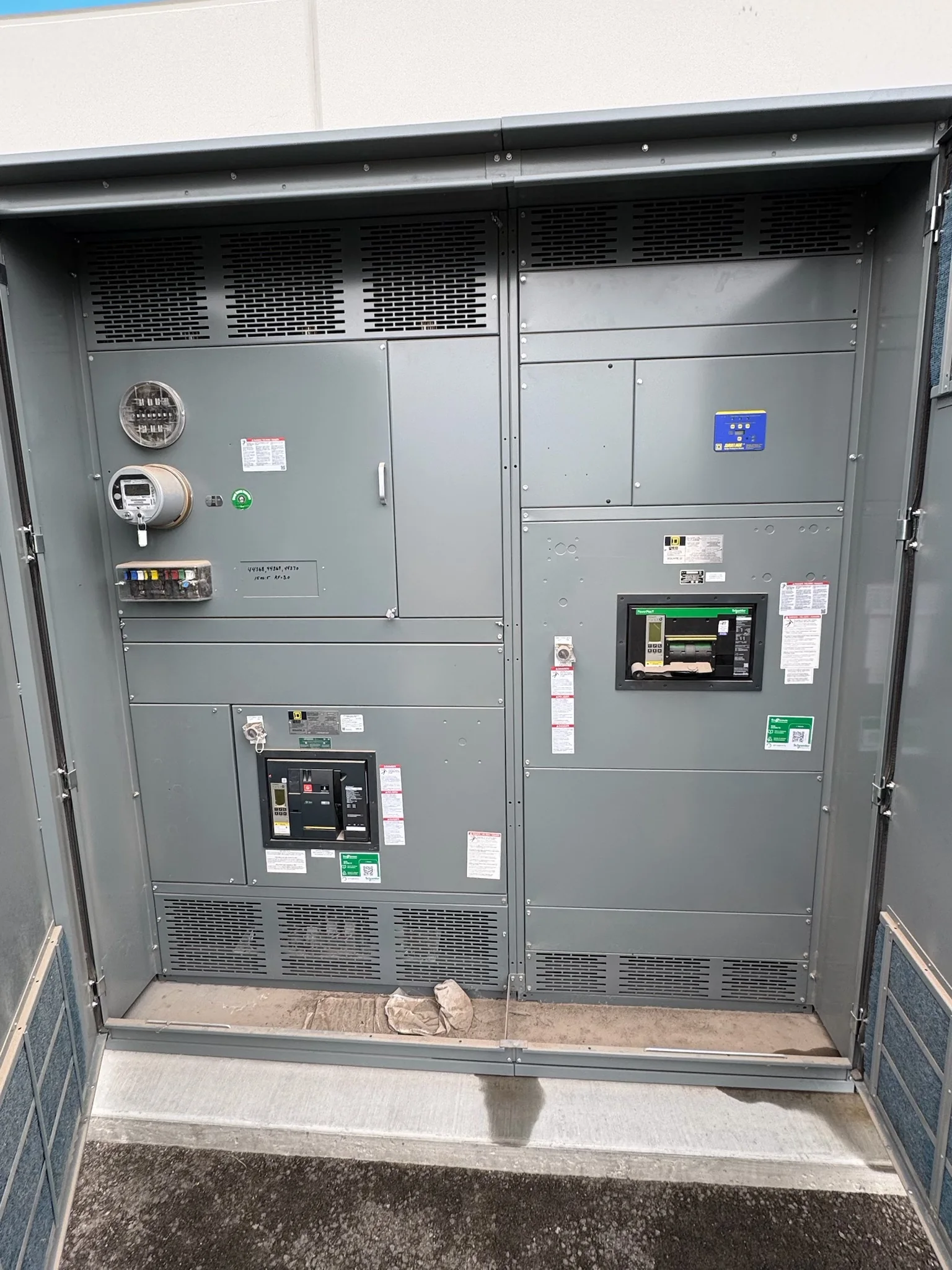
Compare the Electrical Scope Before the Price
A switchgear quote is only comparable when each supplier is pricing the same electrical scope. Start with the one-line diagram and identify the service voltage, system configuration, main and feeder devices, bus arrangement, metering, protective functions, and required accessories. Check that quoted quantities and ratings align with the project documents, and list every assumption or exclusion that could shift work back to the owner or electrical contractor. A low total may omit control wiring, transition sections, provisions for future circuits, or coordination with existing equipment. Ask each manufacturer to identify deviations rather than relying on a general statement of compliance. Confirm that the proposed equipment is new and purpose-built for the application; replacement and retrofit interfaces should be reviewed against actual site conditions.
Check Ratings, Fault Duty, and System Compatibility
Compare electrical ratings against the available system data, not just the equipment nameplate values shown in an early schedule. Review voltage, continuous current, interrupting or withstand requirements, frequency, grounding arrangement, and the available fault current at the installation point. The engineer of record should resolve discrepancies between the short-circuit study, utility information, and project specifications before equipment is released for design. Confirm how protective devices, trip settings, metering, and any requested arc-flash-related features are addressed in the submittal. Do not assume two assemblies are interchangeable because their nominal voltage and amperage match; dimensions, bus connections, device frames, and protection can differ. Ratings and applicable standards depend on the actual configuration and project evaluation, so request written confirmation for the proposed assembly.


Read Exceptions, Options, and Standards Carefully
A quotation’s exceptions page can affect compliance as much as its equipment schedule. Compare each listed deviation with the specification, including enclosure type, finish, environmental provisions, control voltage, communications, labeling, and required factory documentation. Ask the manufacturer to distinguish included features from options and to identify any information still needed from the project team. If a low-voltage switchboard is specified to meet UL 891, confirm that the quoted assembly is being evaluated for that application; do not treat UL 891 as a blanket certification for medium- or high-voltage equipment. Likewise, a reference to a standard does not establish that every requested feature or rating is covered. Resolve exceptions in writing before purchase so procurement, engineering, and the installer share the same scope.
Evaluate Drawings, Submittals, and Approval Steps
A useful quote explains what technical documents will support review and what decisions the customer must make. Compare the proposed submittal package with the project requirements for outline drawings, one-line or schematic information, device data, terminal details, and installation or operation documentation. Check who is responsible for interface dimensions, cable entry locations, control connections, and coordination with adjacent equipment. These details matter because late changes to room layout, conduit routing, or existing bus connections can force revisions after approval. Establish the review sequence among the engineer, owner, contractor, and manufacturer, including how comments and revised documents will be tracked. Ask whether the quoted schedule begins at order, receipt of approved drawings, or another defined milestone; do not treat an unqualified timing statement as a delivery commitment.
Compare Lead-Time Assumptions and Delivery Scope
Quoted timing is meaningful only when its starting point, dependencies, and delivery endpoint are clear. Ask what project information, approvals, and component selections must be complete before the schedule can be confirmed, and whether changes after approval may affect it. Compare shipping terms, freight responsibilities, unloading arrangements, and whether delivery is to a dock, curbside, or another agreed location. Switchgear can be heavy and difficult to maneuver, so verify door clearances, turning paths, floor capacity, receiving hours, staging space, and the availability of suitable lifting equipment with the site team. A U.S. manufacturer may offer nationwide shipping and short lead times, but exact availability and timing remain project-specific. Confirm packaging, shipment sequencing, and who will inspect equipment and report transit damage.
Compare Total Project Cost and Closeout Needs
Look beyond the quoted equipment total to compare the full cost of getting an accepted, installable assembly to the site. Identify exclusions for engineering, drawings, special tests, freight, unloading, storage, field connections, startup support, and spare parts, then assign each item to a responsible party. Confirm payment milestones, quote validity, change-order handling, and warranty terms without assuming that similar wording means identical coverage. For replacement or retrofit work, ask what dimensions, photographs, nameplate data, connection details, and outage constraints the manufacturer needs to assess fit; compatibility should be verified rather than inferred. Before award, prepare a side-by-side comparison of scope, ratings, exceptions, documents, schedule assumptions, shipping, and open questions. A written clarification now can prevent cost disputes, installation delays, and equipment that does not suit the application.