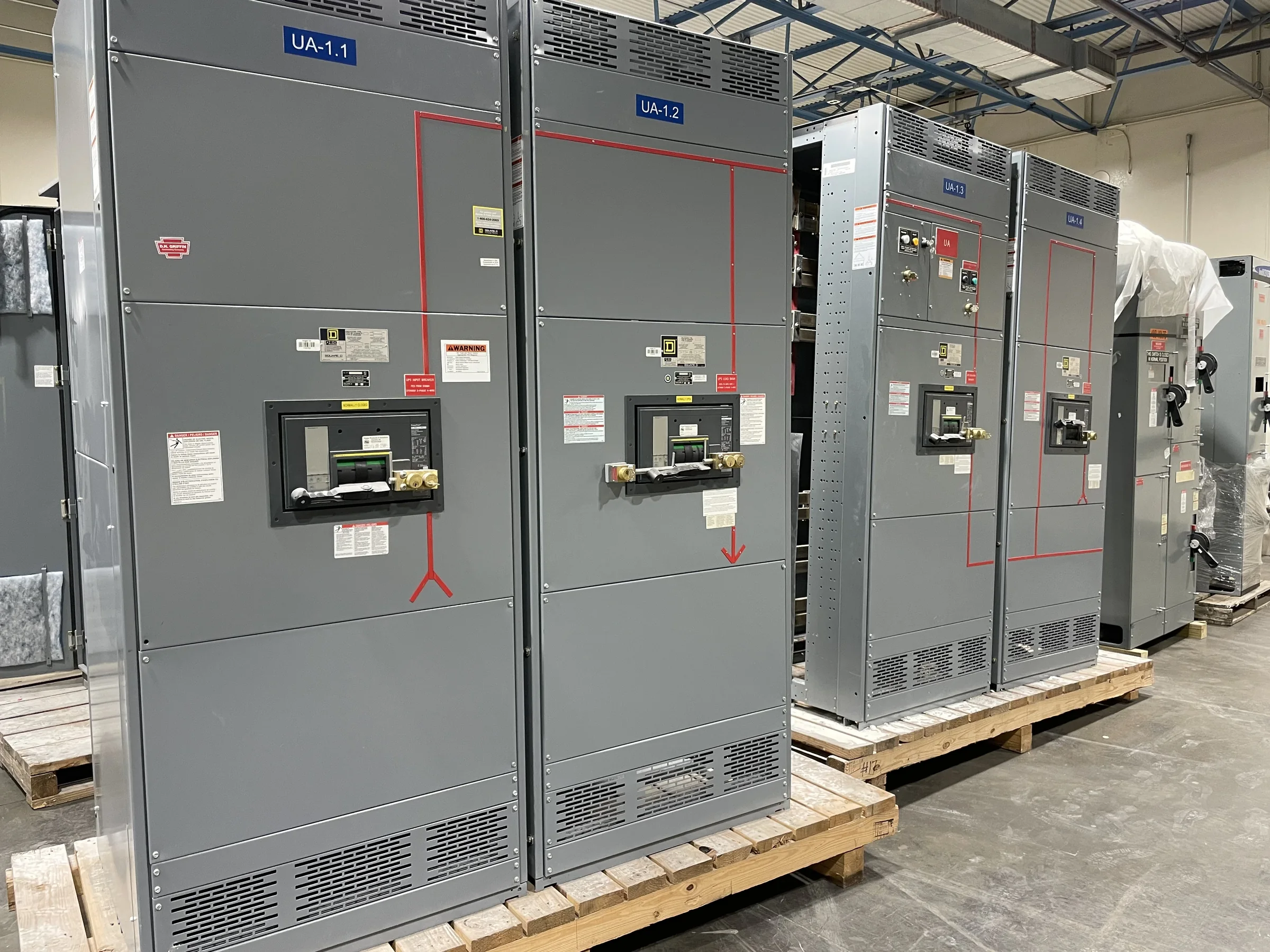
Start With the Load and Operating Plan
A useful distribution plan begins with what the facility must power, how those loads behave, and what happens when equipment is unavailable. Document connected loads, expected demand, motor starting, process duty cycles, and planned expansions rather than relying on a single total kilowatt figure. Identify critical loads, acceptable outage windows, and whether operations require alternate sources or sectionalized distribution. These decisions shape the lineup arrangement, protective-device requirements, and space reserved for future circuits. Ask engineering and operations teams to reconcile drawings with actual equipment schedules early; mismatches can lead to omitted feeders or costly redesign. Final ratings, configuration, and protection must be established for the specific system and verified by qualified project professionals.
Define the Electrical Scope Before Requesting a Quote
A quote is easier to compare when the request identifies the system conditions and the boundaries of supply. Provide available voltage and frequency, phase and wire configuration, grounding approach, system fault information, source arrangement, and the intended location of the equipment. Include one-line diagrams, load schedules, feeder and branch circuit requirements, control interfaces, and any specified protective-device functions. State applicable project standards and required submittals, while distinguishing mandatory requirements from preferred options. If existing equipment is being replaced or a retrofit is being considered, document its manufacturer, model, nameplate data, dimensions, bus arrangement, and field conditions; compatibility cannot be assumed from appearance alone. The manufacturer and project engineer can then clarify exceptions before commercial comparisons begin.


Coordinate Ratings, Protection, and System Interfaces
Equipment selection depends on how the assembly connects to the wider power system, not just on nominal voltage. Confirm the available fault-current basis, overcurrent coordination objectives, source and tie arrangements, neutral and grounding requirements, and any metering, communications, or control interfaces. Protection settings and device selections may affect upstream and downstream equipment, so review them against the project study and operating philosophy. For low-voltage switchboard applications, UL 891 may be a relevant assembly standard; it should not be treated as a blanket certification for medium- or high-voltage equipment, or as proof that every proposed assembly carries a UL label. Request project-specific confirmation of applicable evaluations, markings, and documentation. Resolve these details before release to reduce late changes and commissioning conflicts.
Plan the Room, Access, and Installation Route
A lineup that fits on a drawing may still be difficult to install or service. Verify room dimensions, ceiling and floor conditions, housekeeping pads, working clearances, ventilation, doors, and access to adjacent electrical equipment. Map the full delivery route, including dock dimensions, elevators, turns, ramps, and any restrictions on moving or lifting sections. Confirm whether the equipment must be shipped as a complete assembly or in sections, and coordinate that choice with site handling capacity and final connections. Review conduit or cable entry direction and locations before construction closes walls or pours concrete. Where the site is operating, schedule access and outages with facility personnel. These checks help prevent blocked access, field modifications, and avoidable disruption.
Align Submittals, Procurement, and the Project Schedule
Set the procurement schedule around the decisions that control release to production: approved drawings, confirmed ratings, interface details, and resolved exceptions. Ask which documents are needed for review, installation, and turnover, and identify the responsible reviewers and approval dates. Track long-lead project dependencies without treating an estimated production window as a guaranteed delivery date; timing depends on the final scope, component availability, approvals, and changing project conditions. U.S. manufacturing, American components, and custom builds may be relevant options, but confirm their applicability to the specified assembly and schedule. Agree on how revisions will be submitted and authorized so that late drawing changes do not quietly alter the order. Keep procurement, engineering, construction, and operations aligned on the same document revision.
Coordinate Delivery, Startup, and Future Changes
Delivery planning should connect the manufacturer’s shipping plan with the site’s receiving, storage, and installation sequence. Confirm the delivery window, unloading responsibility, lifting equipment, staging area, weather protection, and inspection process with the project team; nationwide shipping does not remove site-specific handling needs. Compare the shipping configuration with doorway and route clearances, and arrange protected storage if installation will not follow immediately. Before energization, qualified personnel should verify installation, connections, equipment condition, and required testing against approved project documents, with all electrical work performed under applicable safety procedures and with equipment de-energized where required. Retain final drawings, device information, settings, and maintenance records. Clear records support troubleshooting and make later load additions or replacement planning more reliable.