Start with the Facility’s Distribution Conditions
Industrial loads rarely fit a generic switchgear schedule. Motors, process heaters, welders, variable-frequency drives, and large electronic loads can impose different starting currents, duty cycles, and power-quality demands. Begin with the facility’s one-line diagram, utility service information, available fault-current data, and a load list that distinguishes existing equipment from planned additions. These records help the project team evaluate bus and protective-device requirements without assuming that an old lineup’s ratings remain suitable after a service change or expansion. Identify whether the equipment will serve a main service, a unit substation secondary, or a downstream distribution point; each position affects the required arrangement and coordination. Final ratings and construction depend on verified project conditions and engineering review.
Specify Ratings and Protection for the Actual System
Voltage, continuous current, short-circuit withstand, and interrupting ratings are related but distinct selection criteria. A procurement package should identify system voltage and frequency, grounding arrangement, available fault current at the equipment, and the intended protective-device functions. For industrial systems, coordination with upstream and downstream devices can affect both continuity of production and the consequences of a fault. Sharing the latest coordination study—or noting that it is still in progress—helps prevent a quote from relying on incomplete assumptions. Record anticipated load growth, critical feeders, and any requirements for metering, communications, or selective tripping. The responsible engineer must confirm the final design against applicable codes, standards, utility requirements, and system studies; equipment suitability cannot be established from nominal voltage alone.


Plan the Lineup Around Operations and Maintenance
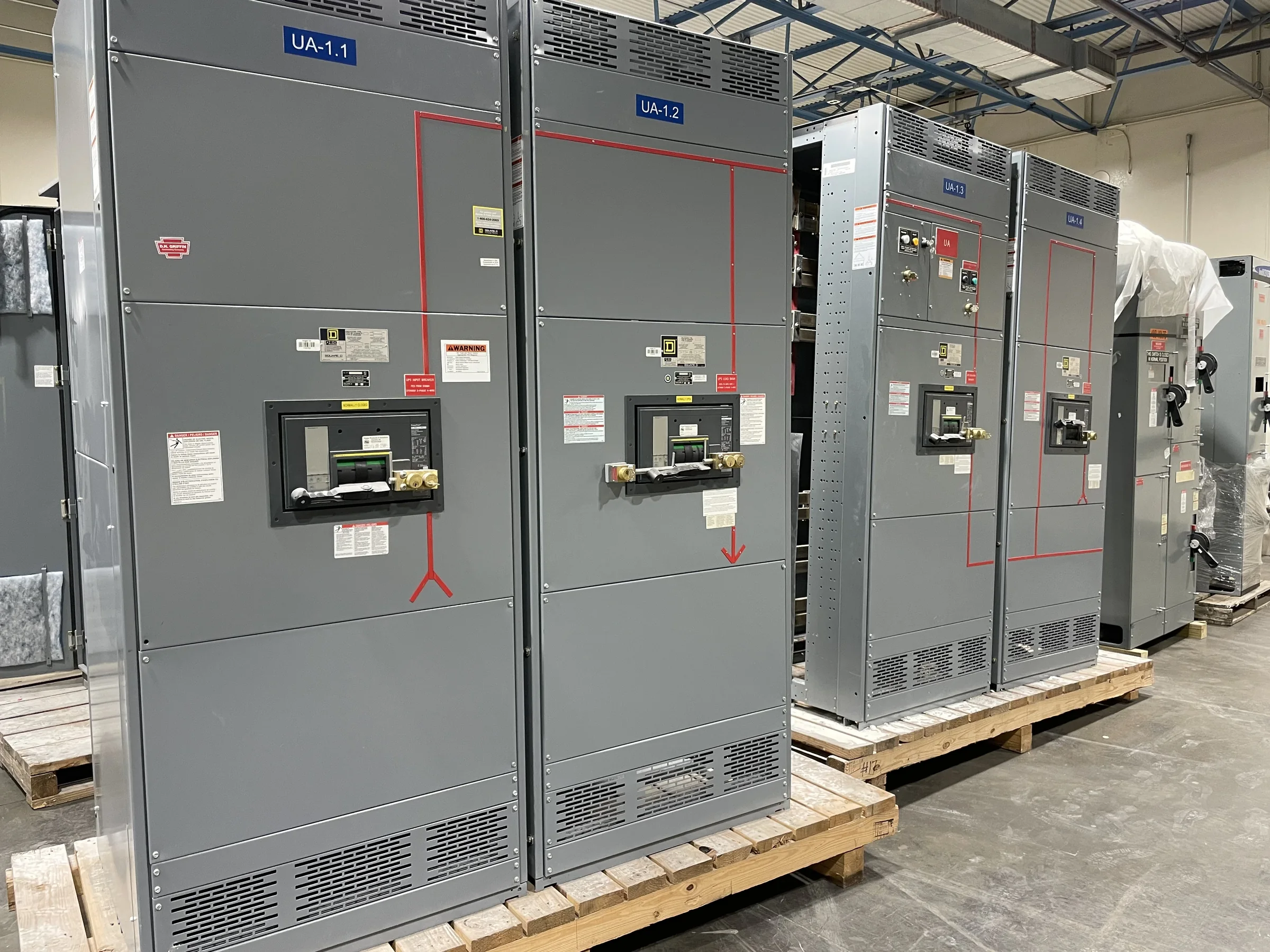
A lineup can meet electrical requirements yet still be difficult to operate if its arrangement conflicts with the room or process. Map incoming service, bus connections, feeder destinations, cable entry, and the sequence operators use to identify circuits. Confirm working clearances, access to doors and removable components, ventilation, ceiling height, and the route from the receiving point to the electrical room. Dust, moisture, corrosive atmospheres, heat, vibration, and washdown exposure may affect enclosure and component choices, so describe actual conditions rather than relying on a general label such as “industrial.” Consider whether outages can be scheduled for installation and future maintenance. Layout drawings and verified site dimensions help expose access conflicts before fabrication, when changes are typically easier to assess.
Build a Complete, Comparable RFQ Package
A useful request for quotation gives suppliers enough information to identify the intended scope and clearly marks unresolved items. Include the one-line diagram, equipment schedule, site and room drawings, connection details, and applicable project specifications. State which devices, metering, control wiring, communications, and accessories are included, and identify interfaces supplied by others. Note required submittal formats, review milestones, inspection expectations, and any project-specific documentation. For low-voltage switchboard assemblies, specify whether UL 891 evaluation or labeling is required for the particular assembly; it should not be assumed to apply to medium- or high-voltage equipment. Ask the U.S. manufacturer to identify assumptions, exceptions, and information needed to finalize the design. A clear scope makes bids easier to compare and reduces avoidable clarification late in the process.
Coordinate Schedule, Approvals, and Delivery Early
A short stated lead time is not a substitute for a schedule tied to approved drawings, component availability, and site readiness. When requesting a quote, provide the required-on-site date, decision and submittal milestones, and any outage window that constrains installation. Ask which project inputs or approvals govern the proposed schedule, and confirm timing and availability for the specific build rather than treating them as guaranteed. Nationwide shipment also requires practical planning: verify the delivery address, unloading equipment, receiving hours, dock or gate restrictions, and whether the route into the building can accommodate the shipment. Establish who will receive, inspect, and store the equipment if construction is not complete. Early coordination helps prevent a finished lineup from arriving before the room, crew, or lifting plan is ready.
Review Submittals Before the Equipment Is Built
Before approving fabrication, compare the submitted drawings and data against the purchase requirements—not just the equipment tag. Check the lineup dimensions, device and feeder designations, bus arrangement, cable landing space, connection points, metering, control interfaces, and any specified labeling or documentation. Confirm that open technical items, deviations, and owner-furnished interfaces are resolved in writing. If replacement work is involved, verify field measurements and existing connection details; similar-looking equipment does not establish electrical or mechanical compatibility. Plan installation, inspection, testing, and energization with the responsible qualified personnel, following approved procedures and keeping required work de-energized. A disciplined review creates a traceable record for procurement, construction, and future maintenance, while giving the manufacturer a clear basis for building equipment to the project’s confirmed requirements.