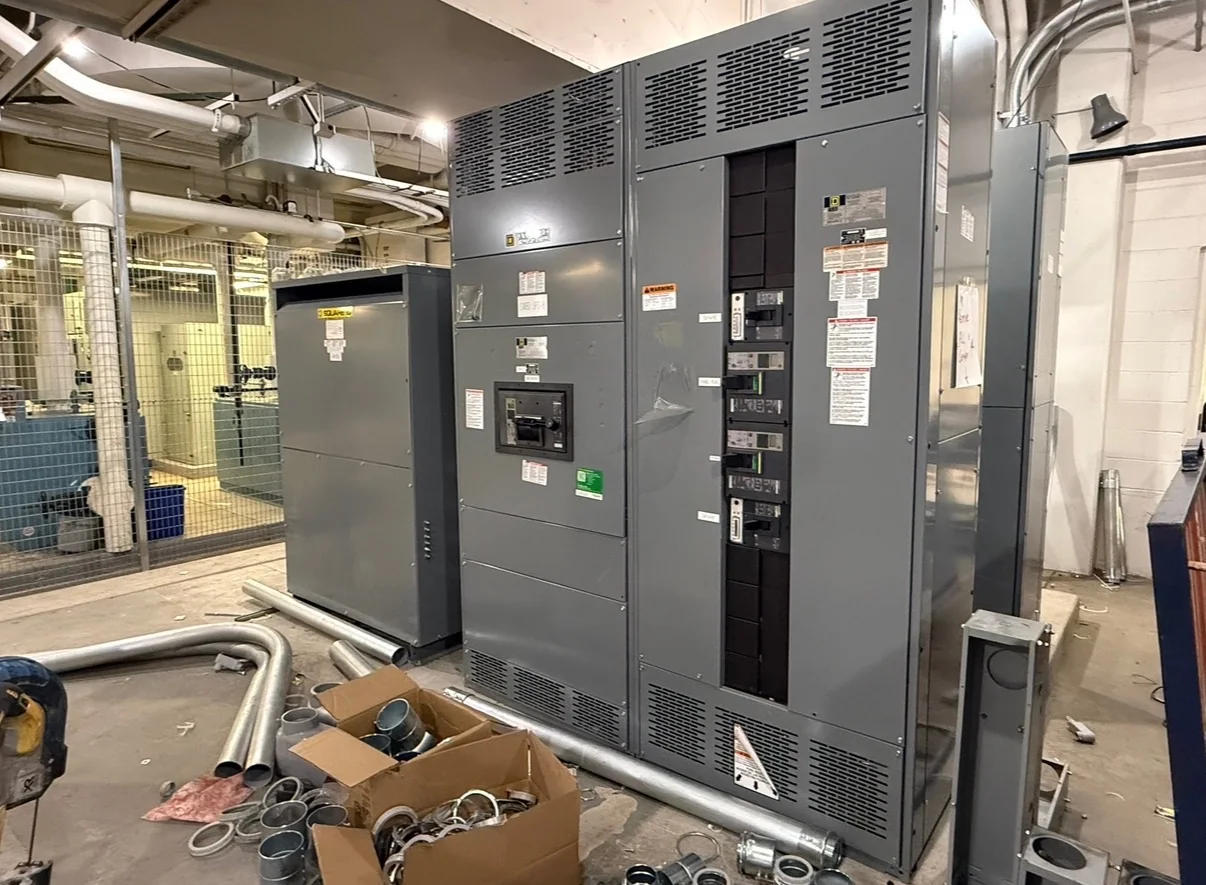
Start With the Terminal’s Distribution Scope
A port’s low-voltage distribution system may serve container cranes, reefer outlets, terminal buildings, workshops, lighting, pumps, and shore-side support loads. These duties can have different operating schedules and consequences when power is interrupted. Before specifying a new switchboard or switchgear lineup, identify which feeders are essential, which loads start or change sharply, and where the equipment sits in the existing one-line arrangement. Confirm system voltage, available fault-current information, service entrance requirements, grounding method, and expected future connections with the project engineer and utility or owner representatives. These details shape the equipment configuration and protective-device coordination; assumptions can lead to a design that does not fit the electrical system or intended operating plan.
Account for Crane and Reefer Load Behavior
Cargo-handling equipment can introduce large motor loads, variable-speed drives, and changing demand as cranes move through operating cycles. Reefer connections, by contrast, may create a substantial number of distributed, continuously supplied circuits. The switchgear specification should describe these loads and their intended feeder arrangement rather than rely on a single peak-demand estimate. Engineers can then evaluate bus loading, feeder capacity, protective-device selection, and coordination with upstream and downstream equipment. Harmonic considerations, starting characteristics, and load diversity should be reviewed where applicable to the actual equipment and power system. Provide motor and drive data, reefer distribution plans, and operating assumptions when available; final ratings and configuration depend on verified project conditions and engineering review.


Choose an Enclosure and Layout for the Site
Marine terminals expose electrical rooms and outdoor equipment areas to conditions that differ from protected indoor spaces. Salt-laden air, humidity, wind-driven rain, dust, vibration, washdown practices, and temperature variation may affect enclosure selection, corrosion protection, ventilation, and maintenance access. Describe the proposed location precisely: indoor or outdoor, distance from the waterfront, room conditions, nearby process activity, and any known environmental controls. Also verify equipment access routes, working clearances, ceiling height, floor loading, cable entry direction, and door or removable-panel travel. These constraints matter because a lineup must be transported into position, installed safely, and serviced without obstructing terminal operations. The appropriate construction and layout are project-specific; site conditions should be confirmed before drawings are approved.
Coordinate Replacement Work With Port Operations
A distribution upgrade at an active port must account for operating windows as well as electrical design. Identify outage restrictions, temporary power needs, sequencing boundaries, and the loads that cannot be interrupted without affecting cargo handling or site safety. Replacement equipment dimensions and connection points should be checked against field measurements and existing drawings; older installations may differ from records. Plan for qualified personnel to perform installation and testing under the project’s approved safety procedures, with equipment de-energized before work where required. Include the responsible parties for shutdown approval, switching coordination, and return-to-service acceptance in the project plan. A manufacturer can discuss a proposed build schedule, but timing depends on confirmed scope, approvals, component availability, and delivery coordination.
Develop a Complete Submittal and Procurement Package
Clear procurement documents help the owner, engineer, contractor, and manufacturer resolve scope before fabrication. A useful package typically identifies the one-line diagram, equipment schedule, system data, feeder list, protective-device requirements, metering and control needs, cable termination details, and applicable project specifications. Add enclosure and access constraints, site environmental conditions, preferred shipping destination, and required review milestones. Request drawings and documentation appropriate to the project, and establish who will review and approve them before release. If UL 891 assemblies are specified, confirm that the particular low-voltage switchboard assembly is to be evaluated for the applicable requirements; that designation is not a blanket certification for all equipment or voltage classes. Final compliance, ratings, and included documents depend on the approved scope.
Plan Shipping and Delivery to the Terminal
Delivery planning matters where equipment must pass through a port’s security controls, restricted roads, or limited-access electrical rooms. Share the destination, receiving hours, site contact, unloading arrangements, access restrictions, and any carrier or documentation requirements early in procurement. Confirm shipping dimensions and weights against the route from receiving to the installation area, including turning space, door openings, floor capacity, and available lifting equipment. A U.S. manufacturer can discuss nationwide shipment and project-specific timing, but transit arrangements, schedule, and availability must be confirmed for the actual order. For terminals near the coast, coordinate delivery with weather exposure and suitable protected storage so equipment is not left in damaging conditions. Agree on packaging, inspection at receipt, and how shipping damage or missing items will be reported.