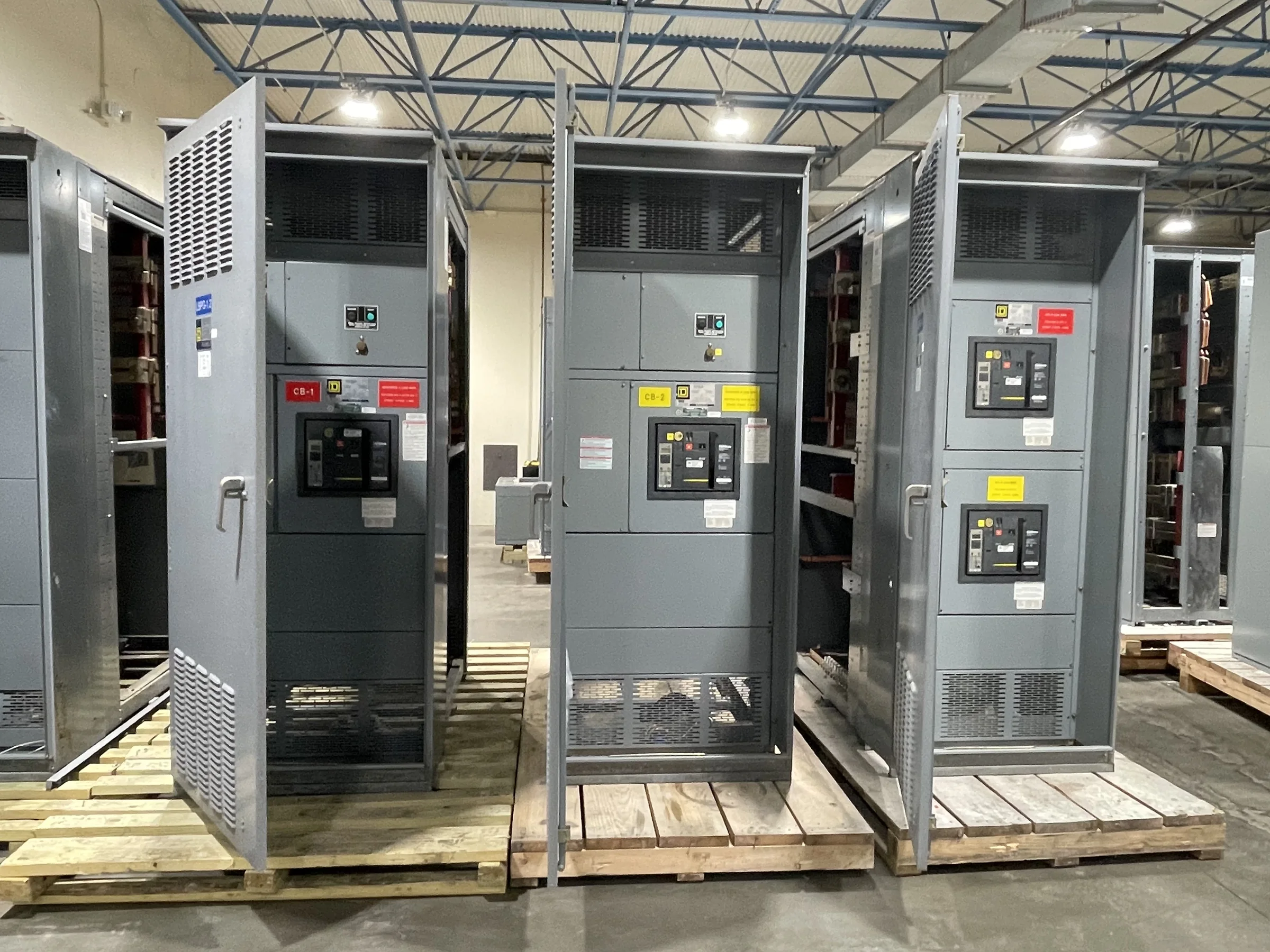
Coordinate Distribution with the Plant’s Electrical Architecture
Low-voltage switchgear in a power plant must fit the actual distribution scheme, not simply the available floor space. Start with the one-line diagram and identify each source, bus section, tie, transformer, generator auxiliary supply, and outgoing feeder that the assembly must serve. Confirm whether loads require normal, standby, or alternate-source arrangements and how transfer or paralleling functions are handled elsewhere in the system. These choices affect bus configuration, protective-device coordination, metering, controls, and compartment layout. A mismatch can complicate commissioning or leave operators without the intended isolation and operating options. Provide the manufacturer with current drawings, load information, fault-current data, and design criteria so the proposed equipment can be reviewed against the project’s electrical requirements.
Account for Auxiliary Loads and Operating Priorities
Plant auxiliary systems can include pumps, fans, compressors, cooling equipment, fuel-handling systems, and control or instrumentation power. Their importance varies by plant type and operating mode, so feeder schedules should distinguish essential loads from loads that may be shed or restarted in stages. Share motor characteristics, starting methods, expected duty, and any requirements for selective coordination; these details can influence breaker selection and settings studies. Also clarify which loads must remain available during startup, shutdown, maintenance, or a source transition. If priorities are left implicit, the switchgear design may not support the operating sequence the plant expects. Engineers and procurement teams should resolve these assumptions early and document them in the equipment specification and load list.


Specify Protection, Monitoring, and Control Interfaces
Protective devices must be selected and coordinated with the plant’s available fault current, upstream protection, downstream equipment, and operating philosophy. Provide the latest system studies where available, and identify any study updates still pending rather than treating preliminary values as final. Define requirements for metering, alarms, communications, and interfaces to plant control or supervisory systems, including the signals that operators need and the protocols or interface details established by the project. Clarify whether controls and wiring are furnished within the assembly or by another contractor. These boundaries matter: unclear ownership can leave gaps in control wiring, configuration, or checkout. Final device ratings, settings, functions, and compatibility depend on project engineering and must be confirmed before release for manufacture.
Resolve Room Conditions, Access, and Maintainability
A switchgear room’s environment and access route can constrain the assembly as much as its electrical design. Confirm ambient conditions, ventilation, dust or moisture exposure, elevation, seismic criteria where applicable, and any site requirements for enclosure construction. Provide room plans showing doors, columns, cable trenches, overhead services, and working clearances so equipment dimensions and cable entry arrangements can be reviewed. Verify how sections will move from the receiving point to the final location, including turning space, floor capacity, lifting access, and restrictions on delivery vehicles. A layout that fits on paper may still be impossible to position or maintain safely. Review the installation plan with the electrical contractor and site team before approving drawings.
Build the Procurement Package Around Review and Release
A useful request for quotation includes the one-line diagram, equipment schedule, load and cable information, fault-current basis, applicable project standards, and a clear list of required accessories and interfaces. State which documents are needed for review, such as arrangement drawings, elementary diagrams, wiring information, bills of material, and operation or maintenance documentation. Identify approval milestones, required submittals, witness or inspection expectations, and the date information is needed to support the project schedule. Early release of incomplete or conflicting documents can trigger clarification cycles and affect manufacturing coordination. A U.S. manufacturer can discuss custom build requirements and American component preferences, but exact design, component compatibility, compliance, and availability are project-specific and should be resolved in the approved submittals.
Plan Delivery, Installation, and Verification Together
Delivery planning should account for the plant’s construction sequence, receiving capacity, storage conditions, and the point at which the room will be ready for installation. Confirm shipment access, unloading responsibility, staging space, packaging needs, and coordination with the electrical contractor; nationwide shipping does not remove site-specific handling constraints. Discuss the target schedule and required approval dates with the manufacturer early, without treating a preliminary timing estimate as a guarantee. Before energization, the project team must complete appropriate installation inspections, testing, protection review, and commissioning under the approved procedures. Keep final drawings, device data, settings records, and operating documentation with plant records so future maintenance teams can identify the installed configuration. Scope and timing depend on the project’s requirements and approved design.