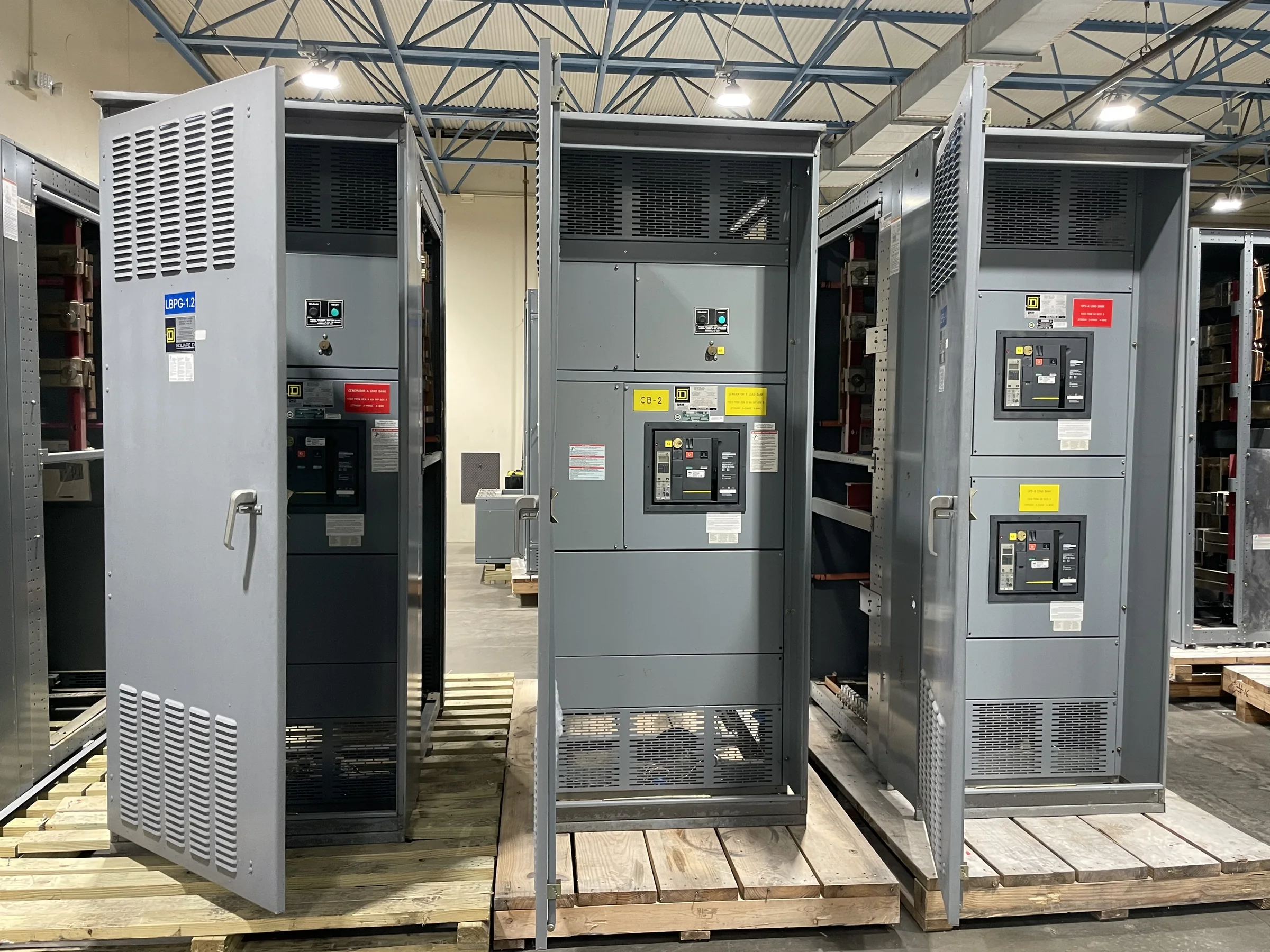
Start with the Humble Facility’s Electrical Requirements
For a Humble project, begin with the one-line diagram and the loads the switchgear must serve, not a catalog description. Confirm system voltage, phase, frequency, available fault current, main and feeder requirements, and whether the equipment will supply motors, HVAC, process loads, or a mix. These details affect bus arrangement, protective-device selection, metering, and space for future circuits. Ask the engineer of record or facility team to identify applicable code and project standards, and have the equipment design reviewed by qualified professionals. A new assembly should be specified for the actual distribution system and duty; assumptions carried over from another building can lead to mismatched connections, ratings, or protection. Final ratings and compliance depend on project-specific evaluation.
Coordinate Switchgear Interfaces Before Replacing or Expanding Equipment
When new low-voltage switchgear must connect to existing distribution, document the interfaces early. Collect equipment nameplates, dimensions, cable or busway entry locations, conductor sizes, grounding arrangement, control schematics, and available shutdown windows. A replacement lineup may need to fit a defined footprint while matching upstream and downstream electrical characteristics; a retrofit plan may also require transition sections or field-verified connection details. In Humble facilities that cannot tolerate an unplanned outage, unresolved interface questions can delay installation or extend downtime. Do not assume an existing breaker, bus connection, or protective setting is suitable simply because it served the previous lineup. Have qualified engineering and electrical personnel verify compatibility, coordination, and the de-energized work plan before equipment is ordered or connected.


Specify an Assembly That Fits the Room and the Work
Room conditions can determine whether a lineup that is electrically suitable is practical to install and maintain. Provide clear room dimensions, door and corridor widths, floor and housekeeping-pad details, ceiling height, access routes, and the intended working and service clearances. Note ventilation, ambient conditions, moisture exposure, dust, corrosive influences, and any need for a particular enclosure or finish. In the Humble area, heat and humidity make it especially useful to document indoor environmental conditions and cooling arrangements rather than leave them to assumption. Also confirm whether the equipment arrives as shipping sections, how sections will be moved into position, and where lifting or staging is possible. The manufacturer and project team can then review layout and construction requirements; final suitability remains project-specific.
Resolve Protection, Metering, and Control Details Before Release
A switchgear quote is more useful when protection and control requirements are defined alongside the power ratings. Identify the intended protective-device functions, trip-unit features, metering points, communications needs, control power, alarms, and interlocks. Provide the coordination study or its status, plus the latest one-line diagram and device schedule, so reviewers can identify mismatches before manufacturing documents are finalized. If the lineup will support generators, transfer equipment, or critical loads, describe the operating sequence and interfaces instead of relying on a broad application label. These details matter because device selection and control wiring affect both system behavior and field connections. Request drawings for review and resolve comments through the project’s approval process. Settings, devices, and communication compatibility must be verified for the specific system.
Compare Quotes by Scope, Documentation, and Schedule Assumptions
When comparing proposals for new equipment, check that each one addresses the same lineup scope, ratings, accessories, metering, enclosure, and documentation. Ask what information is needed to finalize engineering, when approval drawings are expected, and which customer reviews or changes could affect the production schedule. A U.S. manufacturer offering custom builds, American components, short lead times, and nationwide shipping can discuss options against the project requirements, but timing and availability should be confirmed for the actual order; they are not universal guarantees. Clarify whether the quoted scope includes drawings, nameplates, test documentation, and shipping coordination, and identify items by others. For low-voltage switchboard assemblies, ask whether UL 891 evaluation and labeling apply to the specific proposed assembly; that standard is not a blanket claim for every product.
Plan Delivery and Installation Around Humble Site Conditions
Delivery planning should account for the actual Humble site, not just the destination ZIP code. Confirm truck access, gate procedures, receiving hours, unloading equipment, staging space, weather exposure, and the path from the receiving area to the electrical room. For a facility near active industrial or commercial operations, coordinate delivery with site safety rules, traffic routes, and any restrictions on blocking docks or access roads. Verify shipment dimensions and weights against the planned handling method, and protect equipment from moisture, impact, and debris while it is stored. Before installation, align the delivery date with approved drawings, foundation readiness, connection materials, and the scheduled de-energized work window. A project-specific logistics review helps prevent a lineup from arriving before the site can safely receive and install it.