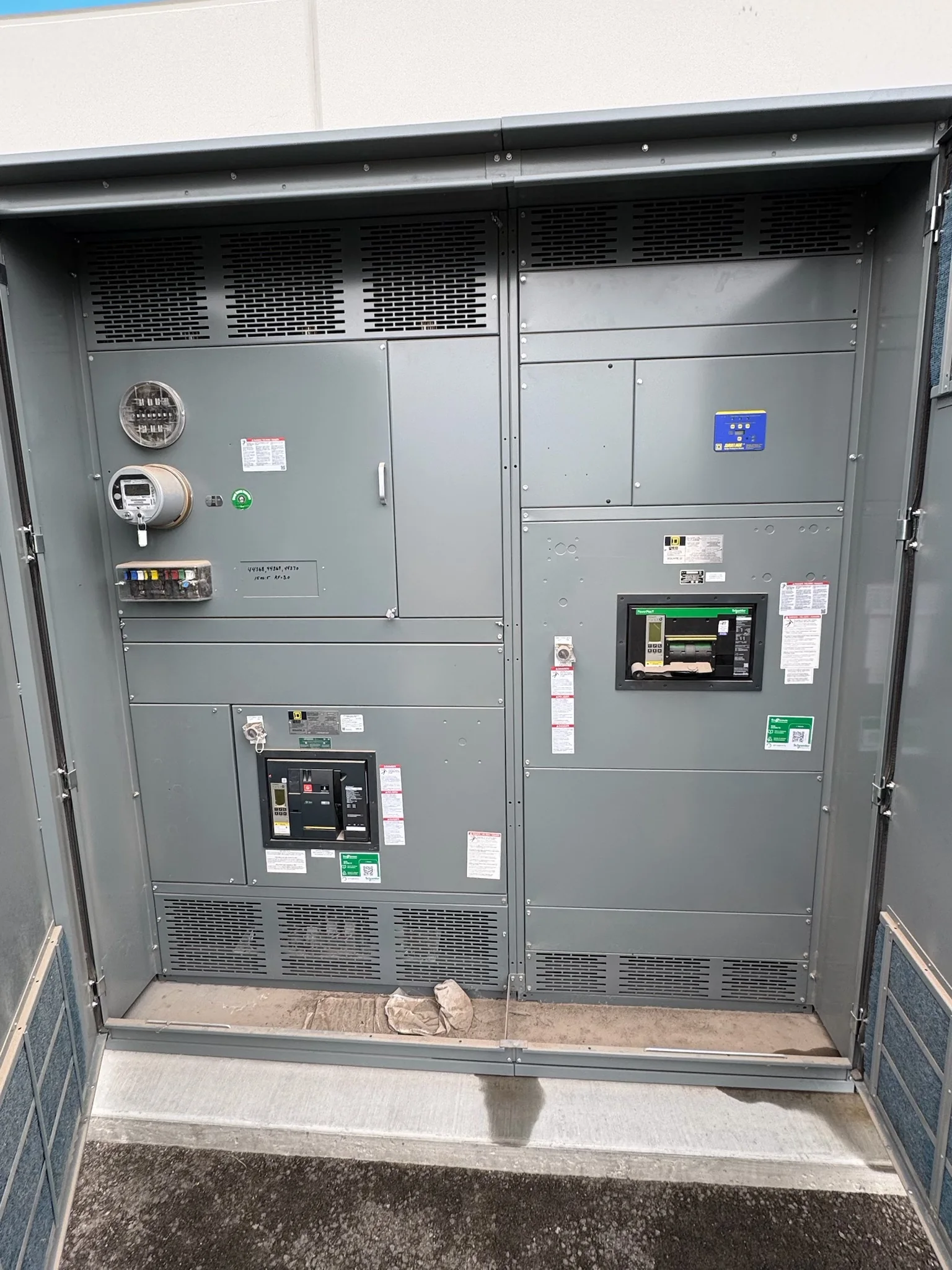
Define the Distribution Need Before Selecting Gear
Low-voltage switchgear selection starts with the electrical system it must serve, not a catalog description. For a Tomball facility, document the available service voltage, phase, frequency, grounding arrangement, source capacity, and the loads expected on the assembly. Identify whether the project involves new construction, a service upgrade, added process equipment, or replacement of aging distribution. These details affect bus configuration, protective-device coordination, metering, and the way incoming and outgoing circuits are arranged. A load list should distinguish continuous, intermittent, motor, and other significant loads so the engineering team can evaluate demand and expansion needs. Provide one-line diagrams, load calculations, and known utility information when requesting a quote. Final ratings and equipment suitability require project-specific engineering review; assumptions can lead to costly redesign or an assembly that does not fit the intended system.
Coordinate Protection, Fault Duty, and System Interfaces
Protective devices must be evaluated as part of the complete distribution system. The available fault current at the equipment, upstream protection, downstream device characteristics, conductor details, and applicable coordination requirements all influence the selection. A switchboard’s interrupting or short-circuit rating cannot be chosen from a facility’s normal operating load alone; it must be checked against the documented system conditions and the relevant assembly evaluation. Confirm which devices and settings are required, how selective coordination is addressed where applicable, and whether ground-fault protection or metering functions are part of the project. Existing equipment may impose interface constraints, but compatibility should be verified rather than assumed from brand or nominal voltage. Sharing current studies, one-lines, and device schedules early helps expose conflicts before fabrication. Ratings, protection approach, and standards are specific to the application and require review by qualified project professionals.


Plan the Layout Around Access and Future Work
An electrical room can accommodate equipment on paper yet create maintenance or installation problems in practice. Confirm the available footprint, ceiling height, working space, access to doors and service areas, cable-entry direction, and the route from the delivery point to the final location. In Tomball, a project may involve a compact tenant space, a production facility, or a site with limited staging; each condition changes how assemblies should be divided, moved, and positioned. Check door openings, corridors, turning clearances, floor conditions, and any restrictions on delivery vehicles before finalizing dimensions. Also consider how electricians will terminate conductors and how technicians will reach devices for inspection and replacement. Provide room drawings and photographs with the equipment inquiry. Resolving access and serviceability early reduces the risk of field modifications, schedule disruption, or a layout that obstructs safe work.
Request a Quote with Reviewable Project Documents
A useful quotation begins with a defined scope and enough information to identify open engineering questions. Include the requested quantity, service conditions, one-line diagram, panel or circuit schedule, enclosure and room constraints, metering needs, protection requirements, and any owner or engineer specifications. If the project replaces existing distribution, provide available nameplate information and dimensions, but have qualified personnel collect those details under safe, de-energized conditions. Mark which documents are preliminary and identify the person responsible for design decisions and submittal review. The manufacturer can use that package to discuss a new assembly, clarify exclusions, and identify information needed before an order is finalized. Do not treat an early budget quote as confirmation of final configuration, listing, or compatibility. Those points depend on the completed design and review. Clear document control also helps procurement compare scope rather than price alone.
Set a Realistic Schedule and Delivery Plan
Equipment timing depends on the approved design, component selection, review cycles, and current availability; a requested ship date should not be treated as guaranteed until the project scope and schedule are confirmed. Ask when drawings are expected, who must approve them, how revisions are handled, and which decisions could affect release for production. Coordinate the equipment schedule with construction milestones, shutdown planning, and the availability of the installing contractor. For Tomball deliveries, verify the site address and receiving contact, truck access, unloading equipment, dock or ground-level conditions, delivery-hour restrictions, and secure staging space. Confirm whether the route to the electrical room requires special handling or multiple moves. Nationwide shipping can support projects in the area, but site-specific receiving arrangements remain the customer’s responsibility to coordinate. Agreeing on these details before shipment helps avoid missed deliveries, extra handling, and equipment arriving before the site is ready.
Review Submittals, Standards, and Commissioning Interfaces
Before approving production, compare the equipment submittal with the contract documents and the design basis. Check voltage and current requirements, bus and circuit arrangement, protective-device information, metering, enclosure details, dimensions, cable access, and marked exceptions. Confirm that drawings show the intended connections to transformers, generators, utility sources, and downstream distribution where those interfaces apply. UL 891 may be relevant to appropriately evaluated low-voltage switchboard assemblies, but it is not a blanket certification for every product or for medium- or high-voltage equipment; confirm the required standard and evaluation for the specific assembly. Plan separately for installation, inspection, testing, and commissioning with qualified personnel. All electrical work must follow applicable safety procedures, including de-energizing equipment before work when required. Documented review of interfaces and responsibilities helps reduce startup delays and prevents procurement documents from being mistaken for a complete installation or commissioning plan.