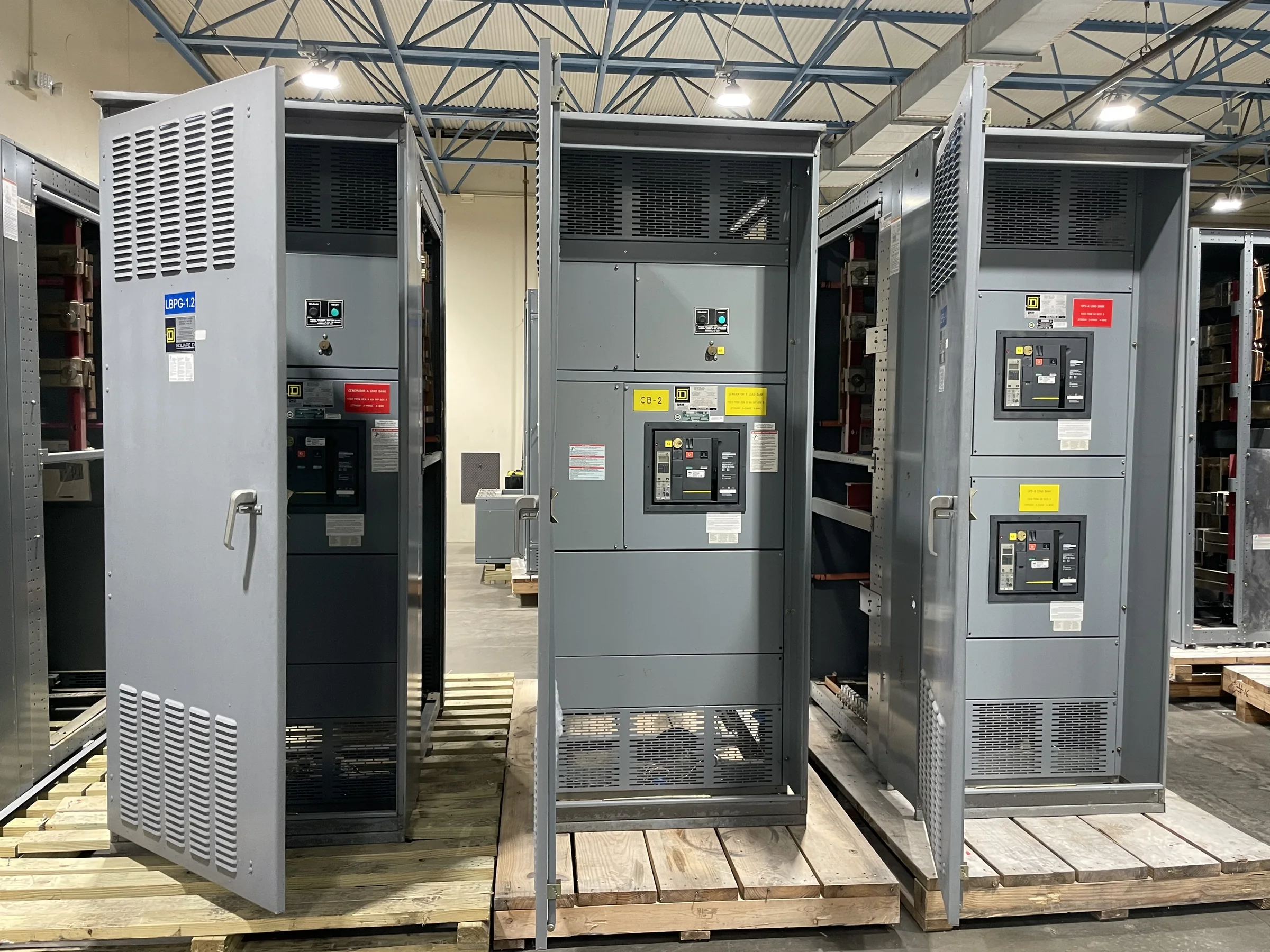
Define the Building’s Medium-Voltage Distribution Role
In a commercial building, medium-voltage switchgear may receive utility service, distribute power to transformers, or support multiple buildings from a shared campus system. Start by documenting the service arrangement, normal and alternate sources, transformer locations, and the loads that must remain available during planned maintenance. These decisions affect the lineup’s bus configuration, feeder count, protective-device approach, and space allocation; they cannot be settled from building square footage alone. Identify expected load growth, critical systems, and any utility requirements early, then have the project engineer and serving utility confirm the design basis. A clearly defined one-line diagram helps the manufacturer develop equipment around the actual distribution scheme and reduces late changes to feeder positions, interfaces, and room layouts.
Coordinate Ratings, Protection, and Connected Equipment
Switchgear selection depends on the electrical system and the equipment it must operate with, not simply on a nominal voltage designation. The project team should establish system voltage, available fault-current information, grounding method, insulation requirements, continuous-current needs, and the protective functions required by the coordination study. Confirm how relays, current and voltage transformers, breakers, cables, and downstream transformers fit the intended scheme. Interrupting and withstand capabilities, protection settings, and device compatibility require project-specific engineering review; do not assume a familiar product arrangement is suitable for a different utility source or fault level. Provide current utility data and connected-equipment information with the request for quote. Resolving these inputs before release helps avoid redesign, interface conflicts, and delays in approving submittals.


Plan the Electrical Room Around Real Access
A lineup that fits on a floor plan can still be difficult to install or maintain if the room lacks working clearance, cable access, or a viable route from the receiving area. Check equipment dimensions against door openings, corridors, elevator capacity, turning points, floor loading, and any restrictions on rigging or staging. The layout should also account for cable bending space, termination access, ventilation, future extension plans, and the manufacturer’s operating and maintenance clearances. Confirm which side receives incoming and outgoing cables and whether trenches, floor cutouts, or overhead entries are planned. These details matter because a late discovery may require building changes or a different equipment arrangement. Coordinate architectural, structural, electrical, and rigging plans before finalizing the lineup configuration.
Build the Submittal Package Around Review Needs
Procurement and engineering reviews move more smoothly when the specification describes the actual application and the submittal package answers the project’s approval questions. Send the one-line diagram, equipment schedule, site and room plans, utility criteria, protection requirements, cable information, and applicable project specifications with the inquiry. Identify required drawings, interface details, wiring information, manuals, and review milestones in the purchase documents. For commercial projects, also clarify who supplies and installs control wiring, terminations, grounding connections, and any auxiliary equipment. Review proposed exceptions against the project requirements rather than treating a general equipment description as confirmation of compliance. A complete, coordinated document set gives the manufacturer a sound basis to develop a project-specific proposal and helps the engineer identify mismatches before fabrication release.
Set a Realistic Schedule and Delivery Plan
A short equipment lead time can help a commercial project, but the usable schedule depends on approved design information, review cycles, material availability, and the agreed scope. Ask the manufacturer to discuss current timing for the specific configuration, including drawing approval, production, inspection requirements, and shipment—not just a general estimate. Establish who will return comments, how revisions are authorized, and what date the equipment must reach the site. Delivery planning deserves early attention in occupied buildings, downtown sites, and campuses where truck access, unloading hours, security check-in, or staging space may be restricted. Confirm shipment packaging, offloading responsibility, and the route to the electrical room. These arrangements affect installation sequencing and should be aligned with the contractor’s construction schedule.
Confirm Interfaces Before Ordering New Equipment
Replacement or expansion work often connects new switchgear to existing transformers, cables, protection schemes, and building controls. Before specifying the new assembly, document the existing equipment’s nameplate data, connection points, available drawings, operating sequence, and known condition; verify critical information in the field through qualified personnel. Determine whether the project requires a planned outage, temporary power, utility coordination, or phased cutover, and assign those responsibilities clearly. Compatibility should be confirmed for electrical ratings, terminations, interlocks, relay functions, and communications rather than assumed from brand or model family. The manufacturer can build new equipment to project requirements, but the engineering team must define the existing-system interfaces and acceptance criteria. Close coordination reduces the risk of fit-up problems, protection gaps, or an extended interruption during commissioning.