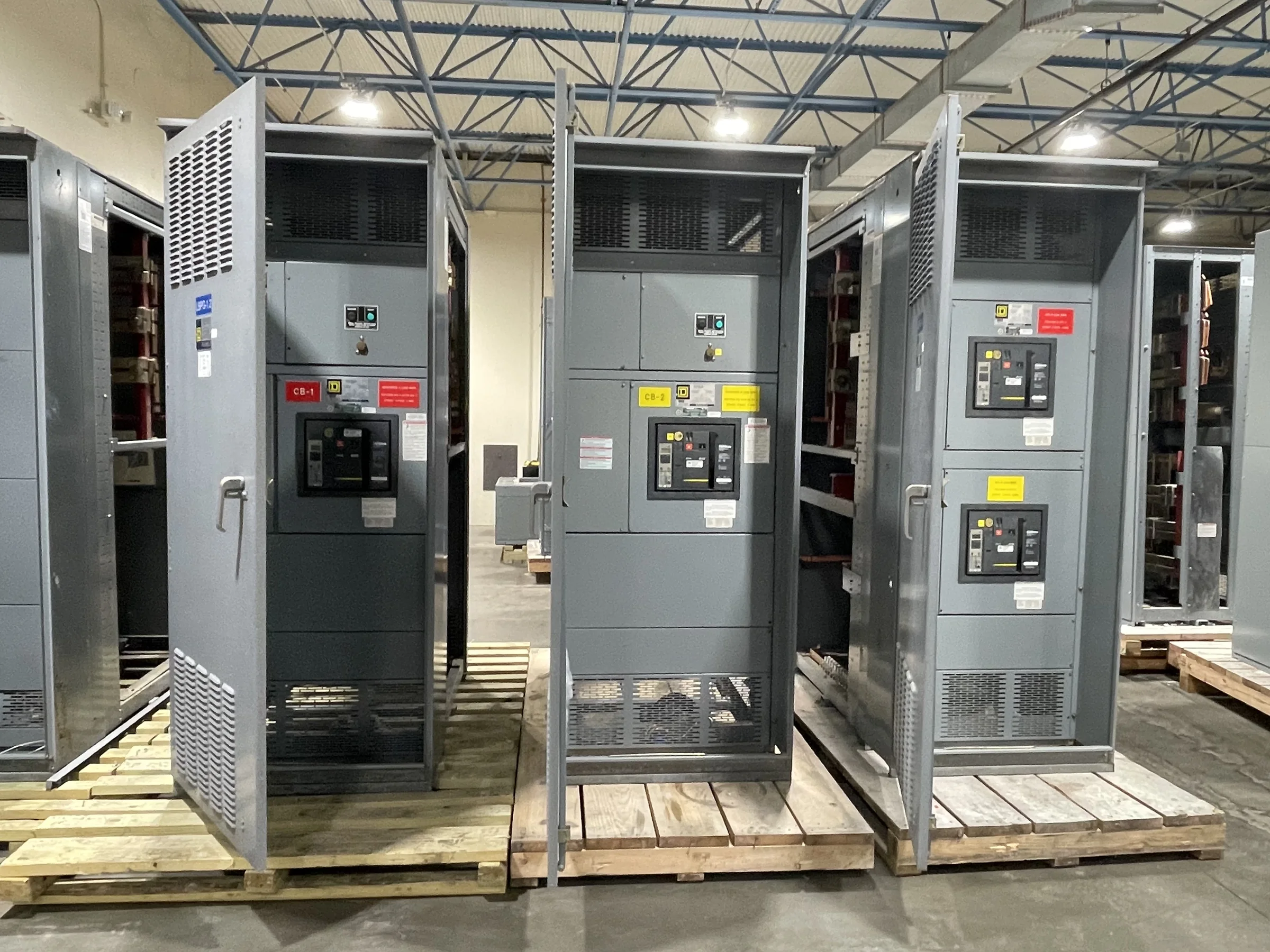
Define the Data Center Power Path Before Selecting Gear
Medium-voltage switchgear sits within a larger power path that may connect utility service, transformers, generators, and downstream low-voltage distribution. Before requesting a quote, map the intended normal and alternate sources, major loads, and switching points. This clarifies whether the project needs service entrance equipment, generator paralleling interfaces, feeder protection, or a combination—and helps prevent a procurement package from describing incompatible scopes. Share the one-line diagram, preliminary load information, utility requirements, and project design criteria with the manufacturer. The final arrangement, ratings, protective devices, and applicable standards depend on the specific system and must be confirmed through engineering review. Clear boundaries also show who supplies cables, terminations, controls, and related equipment, reducing gaps between switchgear procurement and the rest of the electrical package.
Coordinate Protection and Selectivity With the Full System
A data center’s continuity strategy depends on how faults are detected and isolated, not simply on adding redundant sources. Coordinate medium-voltage relay functions, breaker operation, transformer protection, and downstream devices against the project’s short-circuit and coordination studies. Ask the design team to identify required trip inputs, alarms, communications, and interfaces with the facility monitoring or control system; these details affect both equipment configuration and commissioning plans. Protection settings should be developed and validated by qualified project professionals using system data, rather than assumed from a product description. Confirm how the proposed lineup fits the approved one-line and control diagrams before release. This diligence matters because an incorrect interface or protection assumption can delay testing or cause an outage strategy to behave differently than operators expect.


Resolve Redundancy, Expansion, and Operating Access
Data center layouts often reserve capacity for future growth while requiring dependable operation during maintenance. Translate that intent into an equipment arrangement: identify which sources and feeders must remain available, whether future sections are planned, and what switching sequence operations personnel are expected to follow. Do not treat an “N+1” label as a complete switchgear specification; the actual topology, interlocks, protection, and operating procedures determine how redundancy functions. Review door and breaker access, working clearances, cable entry, lifting paths, and routes for removing major components. These constraints can be difficult to correct after electrical rooms and structural openings are fixed. Provide room plans and access requirements early so the manufacturer and project engineers can assess a practical configuration without assuming that every requested arrangement is feasible.
Prepare a Complete Submittal and Interface Package
A useful procurement package lets engineering review the equipment against the building design before fabrication. Include the one-line diagram, equipment schedule, system voltage and fault-duty information, metering and relay requirements, control power expectations, cable details, room elevations, and applicable utility criteria where available. Identify required communications protocols and points, but have the project team confirm the exact interface and responsibility for programming. Request drawings and documentation appropriate to the project review, such as arrangement information, connection details, schematics, and bill-of-material review documents, with submittal milestones stated in the purchase documents. Confirm which party provides field terminations, cable, grounding connections, and testing. Resolving these interfaces on paper reduces field changes, protects installation sequencing, and gives procurement a clearer basis for comparing technically compliant proposals.
Plan Schedule Around Approvals, Manufacturing, and Site Readiness
A short stated lead time is not a substitute for a project-specific schedule. Delivery timing can depend on completion of technical requirements, drawing review, approved submittals, component availability, manufacturing sequence, and changes made after release. Ask the manufacturer to discuss the current schedule for the proposed configuration and identify the information or approvals needed to keep it moving; do not assume a quoted duration is guaranteed. In parallel, coordinate room completion, housekeeping pads, access openings, cable routing, grounding provisions, and environmental conditions with the construction schedule. Confirm when the site can receive and safely store the equipment, and who will inspect it on arrival. Early alignment matters because a lineup delivered before its room or handling route is ready can create storage risk and disrupt installation.
Coordinate Delivery, Installation, and Verification
Medium-voltage lineups can be large, heavy, and sensitive to handling conditions, so shipping and receiving plans should be settled before dispatch. Confirm shipment configuration, unloading responsibility, access limits, staging space, indoor storage conditions, and the route from the receiving point to the electrical room. Nationwide shipping can support projects across the United States, but site access, carrier coordination, and delivery dates remain project-specific. Before installation, compare nameplate and shipping information with approved documents and report visible damage through the agreed receiving process. Installation, inspection, testing, energization, and any required acceptance activities must follow project documents, equipment instructions, and applicable requirements, with work performed by qualified personnel under appropriate safety controls. Discuss specifications, schedule, and delivery needs with the U.S. manufacturer while design decisions can still be coordinated.