Coordinate Switchgear with the Treatment Process
Wastewater facilities depend on electrical distribution that supports pumps, blowers, screens, mixers, and other process loads across changing operating conditions. Medium-voltage switchgear selection should begin with the facility’s one-line diagram and the operating consequences of losing each feeder—not with a catalog lineup alone. Identify which loads must remain available during maintenance, whether power comes from one or multiple sources, and how the proposed equipment fits the existing distribution arrangement. These decisions affect breaker functions, bus configuration, metering, protection, and provisions for future circuits. Provide the manufacturer with load data, source information, fault-current assumptions, and required operating sequences. A clearly defined process and electrical scope helps avoid equipment that meets a nominal voltage requirement but does not support the plant’s actual operating needs.
Specify Protection Around Motors and Utility Sources
Large wastewater pumps and aeration equipment can impose starting and operating demands that shape medium-voltage protection and switching requirements. The engineer should document motor voltage, horsepower, starting method, duty, and any variable-frequency-drive interface, then coordinate those details with the available utility or generator sources. Protection settings and device selection require project-specific engineering; they should not be inferred from motor size alone. Short-circuit calculations, coordination studies, and arc-flash analysis may inform the design, while utility requirements can affect metering, relaying, and incoming compartments. Confirm who is responsible for these studies and for supplying final settings before procurement. Resolving the interfaces early matters because changes to breaker arrangements, instrument transformers, or control wiring after release can disrupt both drawings and construction planning.


Account for Moisture, Corrosion, and Room Conditions
A wastewater site may expose electrical rooms to humid air, washdown practices, corrosive contaminants, or temperature swings, but conditions vary substantially from plant to plant. Describe the intended indoor or outdoor location, ambient temperature range, ventilation, condensation risk, and any known chemical exposure. Also identify room dimensions, door openings, floor elevations, cable-entry direction, and working clearances. These details influence enclosure construction, finish, ventilation provisions, lineup arrangement, and installation access; they do not establish a particular environmental rating without review. If switchgear will be near process areas, explain how the room is separated and maintained. Addressing actual site conditions during specification helps the manufacturer evaluate a suitable build and reduces the risk of an assembly arriving that cannot be moved into the room or installed as planned.
Resolve Retrofit Interfaces Before Ordering
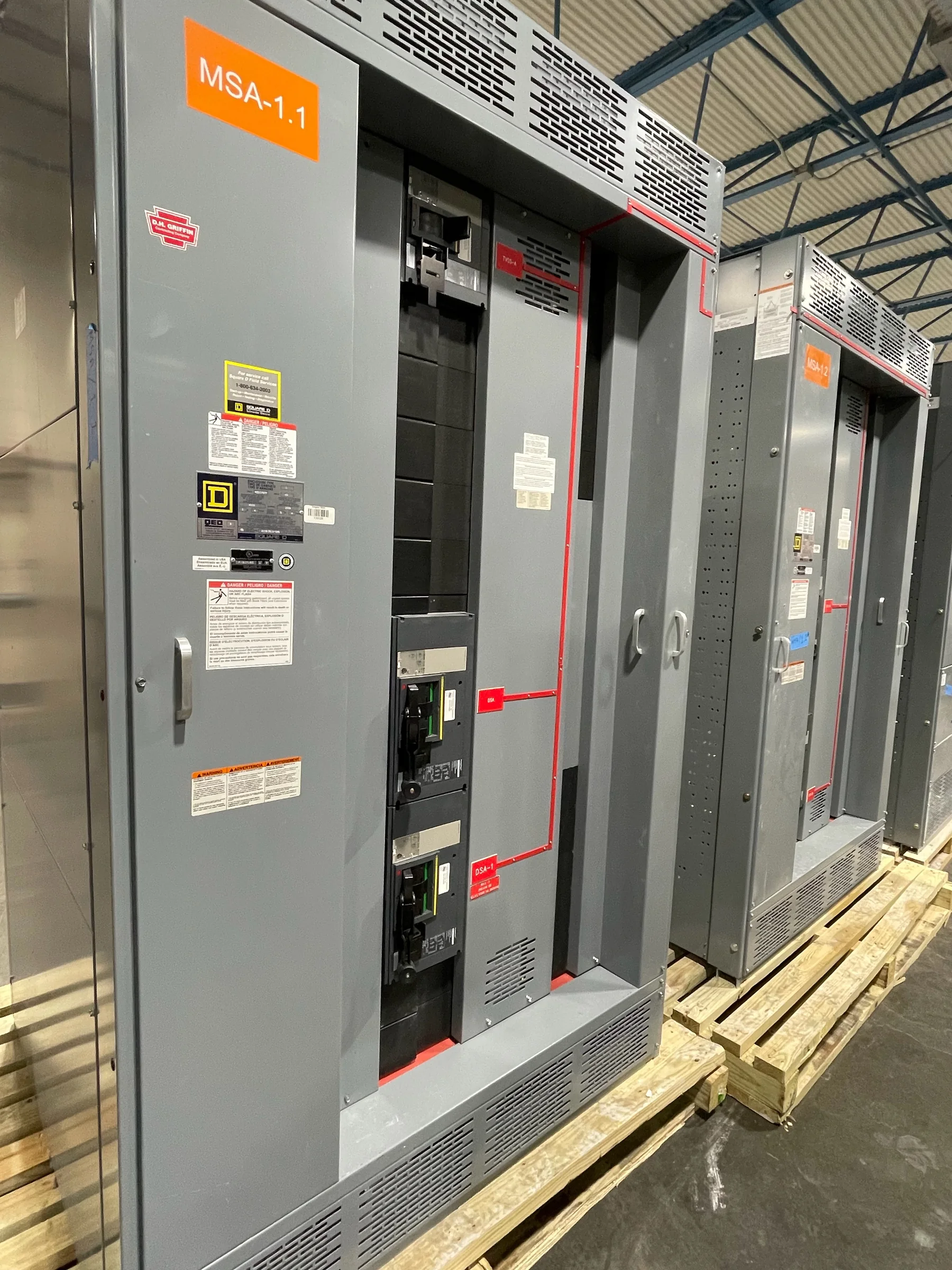
Replacing medium-voltage equipment in an operating plant requires more than matching the existing nameplate voltage. Existing cable termination locations, phase arrangement, bus connections, grounding, control circuits, protection scheme, and available space all affect whether a replacement can integrate with the distribution system. Provide photographs, field dimensions, equipment drawings, nameplate data, and available schematics, while clearly marking anything that has not been verified in the field. Confirm whether the work is a complete lineup replacement, a new feeder addition, or another defined scope; compatibility cannot be assumed from visual similarity. Plan outages and cutover responsibilities with the plant’s operations and electrical contractors. Early interface review matters because inaccurate legacy information can lead to redesign, field modification, or a shutdown plan that does not fit process needs.
Build a Submittal Package That Supports Review
Procurement documents should let engineering, operations, safety, and construction teams evaluate the same proposed equipment against the project requirements. Establish the required system voltage, continuous current, interrupting duty, bus arrangement, incoming and outgoing circuits, protective relays, metering, control power, and communication interfaces where applicable. Request drawings and documentation needed for review, such as a general arrangement, one-line diagram, elementary diagrams, bill of materials, and device data, with the exact submittal scope agreed for the project. Identify applicable standards and any required evaluation or labeling explicitly; UL 891 applies to appropriately evaluated low-voltage switchboard assemblies, not as a blanket designation for medium-voltage switchgear. Clear acceptance criteria matter because they help uncover scope gaps before fabrication and keep technical approval distinct from commercial approval.
Plan Timing, Delivery, and Site Readiness
A U.S. manufacturer can discuss a custom build, American components, short lead times, and nationwide shipping, but schedule and availability depend on the approved project scope and current component requirements. Ask for a project-specific schedule, clarify when complete technical approval is needed, and identify long-lead devices or owner-furnished items that could affect release. Wastewater facilities should also coordinate delivery with access roads, unloading capacity, rigging, indoor storage, and the route from receiving point to the electrical room. Confirm shipment configuration and receiving responsibilities before dispatch rather than assuming a lineup will fit through existing doors or arrive in a particular sequence. These checks connect procurement dates to real site conditions, helping teams organize installation and outage planning without treating a preliminary timing discussion as a delivery guarantee.