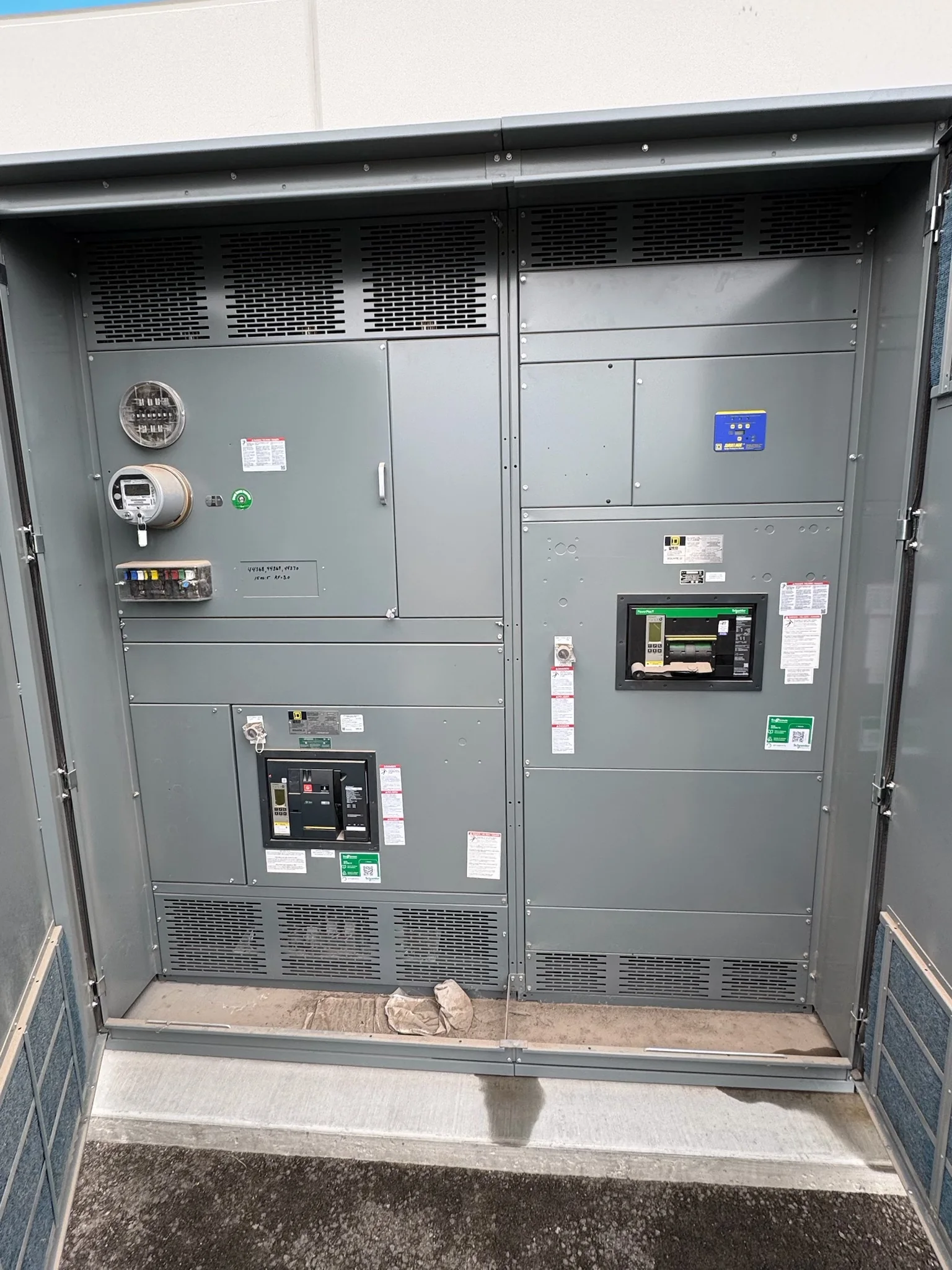
Define the Medium-Voltage Duty Before Requesting a Quote
For an Alvin facility, begin with the electrical duty the switchgear must perform, not just the nominal system voltage. Gather the one-line diagram, available fault-current information, grounding method, source details, load profile, and the intended role of each lineup section. These inputs help determine the equipment configuration, interrupting and withstand requirements, protection approach, and provisions for incoming and outgoing circuits. A lineup serving a process plant, utility interface, or large campus distribution system may face different switching and operating needs even at the same voltage. Identify future feeders, tie arrangements, and planned load growth early; adding provisions later can affect space, coordination, and cost. Final ratings and design remain subject to engineering review and the project’s applicable requirements.
Coordinate Protection, Switching, and System Interfaces
Protection settings and switchgear selection should be reviewed as one system. Provide the engineer with upstream and downstream device data, transformer information, motor or other significant load details, and the desired coordination objectives. A protection study can inform relay functions and settings, while arc-flash analysis and operating procedures address separate safety questions; neither should be inferred from a catalog description. Confirm how the lineup connects to existing transformers, cables, bus duct, or another switchgear section, including phase arrangement, termination space, and cable-entry direction. These interface details matter because a sound electrical rating does not guarantee a physically compatible installation. Where an existing installation will remain in service, document its verified characteristics and have qualified personnel establish safe work boundaries and de-energized conditions for installation work.


Check Alvin Site Conditions and Installation Access
Alvin-area projects may involve industrial sites, process facilities, agricultural operations, or commercial buildings, each with different access and environmental constraints. Document the proposed equipment-room location, indoor or outdoor exposure, ambient conditions, ventilation, elevation, contamination concerns, and any washdown or corrosive atmosphere. These conditions influence enclosure choices and may affect heaters, coatings, ventilation, or other project-specific features, which require confirmation rather than assumption. Measure the full route from the delivery point to the final pad or room: door and corridor clearances, overhead obstructions, turning space, floor capacity, and any crane or forklift limits. A lineup that fits the electrical room can still be difficult to move into it. Share current site plans and photographs so the manufacturer and installer can flag practical issues before release.
Prepare a Complete Specification and Document Package
A useful request for quotation makes requirements traceable and leaves fewer decisions to resolve after award. Include the one-line diagram, equipment schedule, applicable project specifications, site conditions, cable and bus interfaces, control-power requirements, metering needs, and requested accessories. Identify required submittals, drawing formats, review steps, operation and maintenance information, and any project-specific inspection or testing expectations. For low-voltage switchboard assemblies, UL 891 may be relevant when the assembly is appropriately evaluated for that standard; it should not be treated as a blanket certification for medium-voltage equipment. State the standards and acceptance criteria the project requires, then confirm their applicability for the proposed design. A U.S. manufacturer can discuss American components and custom-build options, but exact construction, evaluations, and documentation depend on the approved project scope.
Plan Schedule Around Reviews, Interfaces, and Site Readiness
Discuss timing with the manufacturer using the actual approval and installation sequence, rather than relying on an assumed lead time. The schedule can be affected by design complexity, component availability, drawing review cycles, unresolved interface data, and changes after approval. Ask which submittals are needed to start detailed engineering, who will consolidate comments, and what decisions must be closed before production. Short lead times may be available for some project scopes, but timing must be confirmed for the specific configuration and current requirements. In Alvin, coordinate delivery against room completion, foundation readiness, utility or process outages, installer availability, and any site access restrictions. If equipment arrives before the building can receive it, storage conditions and handling responsibility need to be agreed. A dated schedule with owners for open items reduces avoidable delays.
Coordinate Shipping, Receiving, and Commissioning Handoffs
Nationwide shipping can support delivery to an Alvin project, but the receiving plan should be specific to the site and shipment. Confirm the delivery address, receiving hours, truck access, unloading equipment, staging area, weather protection, and who will inspect and document the shipment on arrival. Coordinate shipment timing with the electrical contractor and facility team so the lineup can be moved and secured without blocking operations or exposing equipment to unsuitable storage conditions. Before release, verify that approved drawings match the installation location, feeder assignments, cable entry, and required clearances. Keep final field connections, protection settings, testing, and energization under the responsible project professionals and applicable procedures; equipment delivery does not replace installation review or commissioning. Clear handoffs among manufacturer, engineer, installer, and owner help resolve discrepancies before they affect startup.