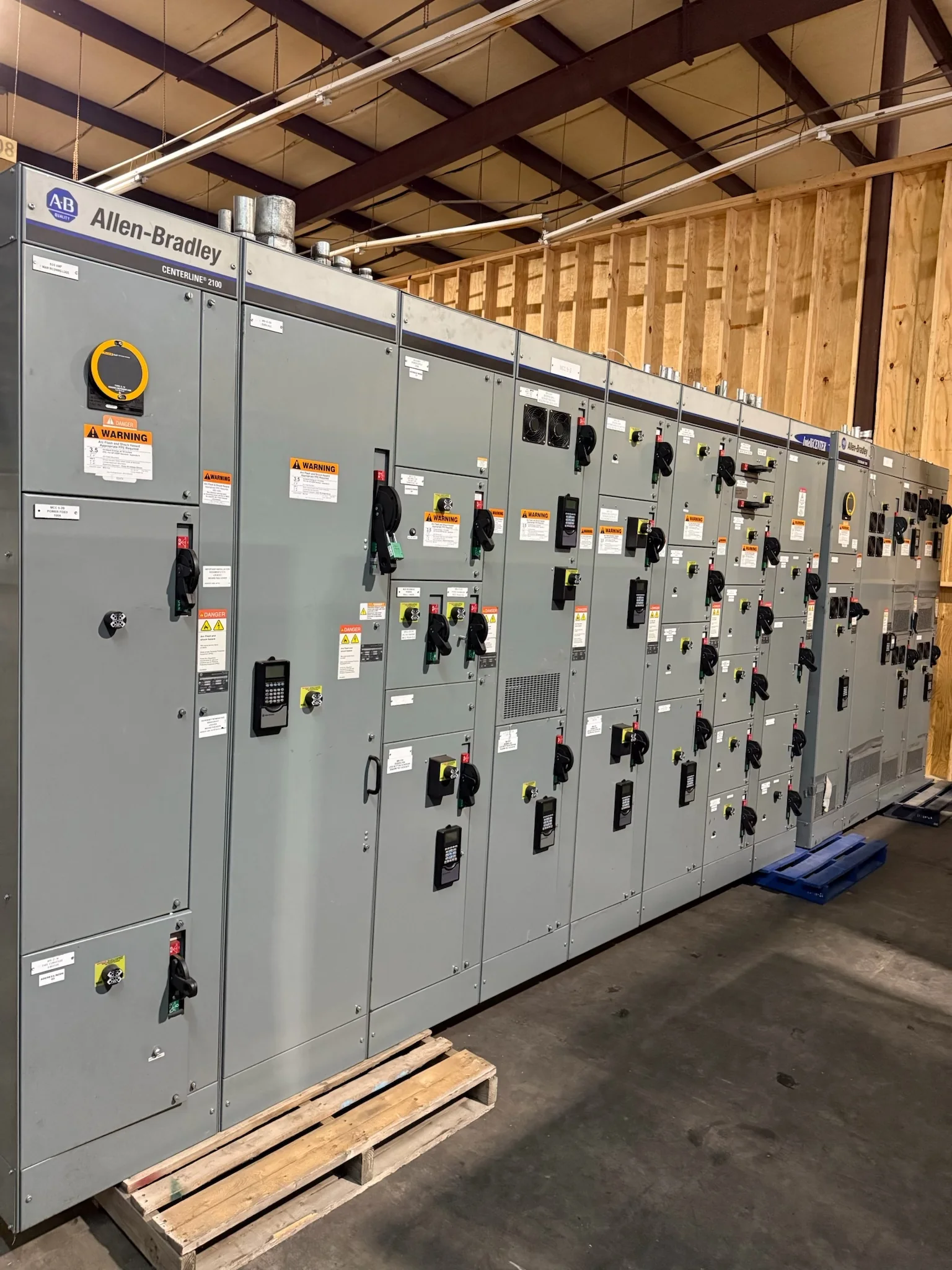
Define the Medium-Voltage Duty Before Requesting a Quote
Start with the electrical duty the equipment must serve, not a catalog label. Gather the one-line diagram, nominal system voltage, available fault-current information, grounding method, and the source and load arrangement. These details help establish whether the project calls for metal-clad or another switchgear arrangement, and what interrupting, continuous-current, and bus requirements need evaluation. Protection goals matter just as much: identify the circuits to be protected, existing relay functions, coordination constraints, and any utility or owner criteria. For a Cypress facility, confirm whether the gear serves a process load, campus distribution, utility interface, or standby source; each can create different operating and protection needs. A U.S. manufacturer can build to project requirements, but final configuration, ratings, and compatibility must be confirmed against engineering documents and applicable standards.
Check Existing-System Compatibility for Replacement Work
Replacing aging medium-voltage equipment is rarely a matter of matching cabinet dimensions alone. Record the existing lineup manufacturer and model where known, bus arrangement, phase sequence, cable entry and termination details, control voltage, grounding provisions, and the condition of connected equipment. Verify field measurements against drawings: undocumented changes can affect conduit routes, cable reach, anchorage, aisle clearance, and access to operating mechanisms. If the replacement must connect to existing transformers, protective relays, or upstream devices, document their ratings and interface requirements early. This is especially important when an outage window is limited, because discovering an incompatible termination or control circuit during installation can extend downtime. Treat retrofit feasibility as a design review, not an assumption; proposed interfaces, modifications, and field work require confirmation by qualified project professionals.


Plan the Cypress Site Around Access, Environment, and Installation
Cypress projects may involve occupied commercial sites, industrial campuses, or facilities with constrained access, so the installation route deserves attention before equipment is released for manufacture. Confirm receiving hours, truck approach, gate and turning restrictions, unloading method, floor or pad capacity, doorway dimensions, and the path from staging to the electrical room. Gulf Coast weather also makes moisture protection and secure, dry storage practical concerns during transport and construction; coordinate packaging, indoor staging, and exposure limits with the project team rather than assuming the equipment can wait outdoors. In the room, check working clearances, ventilation, cable bend space, egress, and space for future maintenance. Early review matters because a lineup that meets electrical requirements can still be difficult or unsafe to receive, position, terminate, or service at the actual site.
Build a Submittal Package That Supports Engineering Review
A useful request for quotation includes enough information to compare the proposed lineup with the project design. Provide the latest one-line diagram, equipment schedule, site or room layout, specifications, cable and control schematics when available, and any owner or utility requirements. Identify the requested voltage class, bus and feeder arrangement, metering and protection functions, control power, enclosure conditions, and interface points, while marking unresolved items for review instead of filling gaps with guesses. Ask the manufacturer to identify assumptions, exceptions, and items requiring customer confirmation in its proposal and submittals. For Cypress projects with several contractors or engineering disciplines, assign responsibility for drawing review and approval so comments are consolidated. Clear documentation reduces the risk of mismatched scope, late design changes, and procurement comparisons that appear similar but include different equipment or services.
Coordinate Schedule, Approvals, and Delivery as One Work Plan
Short lead times may be available for some custom builds, but timing depends on the approved design, component requirements, manufacturing capacity, and project conditions; request a project-specific schedule rather than relying on a general promise. Map the sequence from technical clarification and submittal review through approval, production, inspection requirements, shipping, site readiness, and installation. Identify which decisions could hold progress, such as relay selections, utility comments, cable-entry orientation, or late room-layout changes. Nationwide shipping can support a Cypress delivery, but receiving coordination remains the project’s responsibility: confirm the delivery address, site contact, unloading equipment, access hours, and safe staging location before dispatch. Compare the proposed delivery plan with the contractor’s outage and labor schedule. Aligning these milestones helps prevent equipment arriving before the room is ready or after installation resources have moved on.
Prepare for Safe Commissioning and Long-Term Operation
Before energization, the project team should verify that the installed lineup matches approved drawings and that required installation checks, protection settings, interlocks, grounding, and control functions have been reviewed by qualified personnel. Establish who is responsible for testing, relay coordination, utility acceptance, and operating authorization; these responsibilities vary by project and cannot be assumed from the equipment purchase alone. Ask for the documentation needed to support installation and future maintenance, such as final drawings, equipment identification, operating information, and applicable test records when included in the agreed scope. For facility managers, also plan access control, operator training, spare-parts strategy, and maintenance intervals according to the final equipment and site procedures. Medium-voltage equipment presents serious arc-flash and shock hazards, so work must follow the facility’s safety program and applicable requirements, with equipment de-energized whenever required.