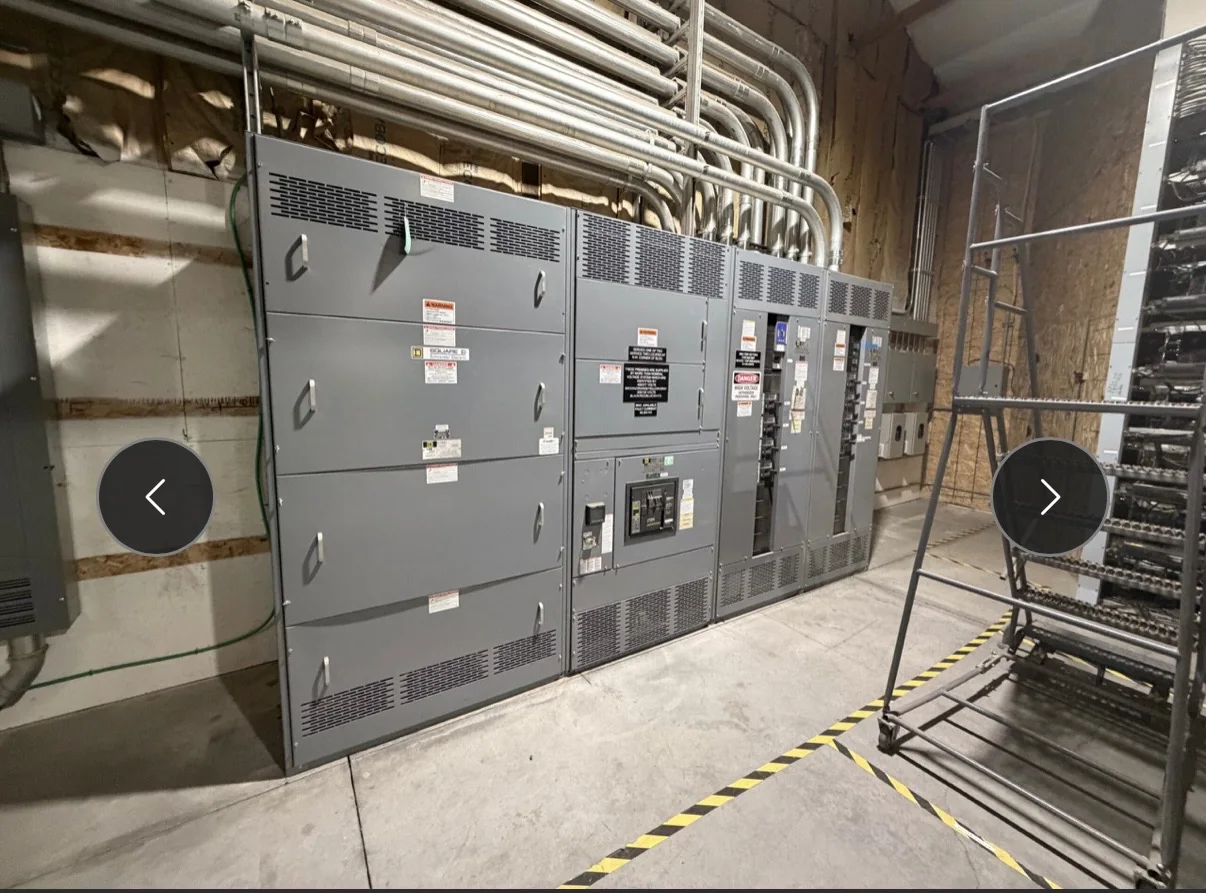
Define the Medium-Voltage Duty Before Requesting a Quote
For a Humble facility, begin with the electrical duty the new lineup must perform—not simply the voltage class of the equipment it will replace. Confirm the system’s nominal voltage, frequency, grounding arrangement, available fault current, and the utility or upstream protective-device information used for coordination. Identify whether the lineup serves incoming utility power, transformers, motors, generators, or multiple feeders; each arrangement affects bus configuration, switching functions, protection, and metering. Ask the engineer of record to establish required ratings and applicable standards for the actual system. A replacement that matches the old nameplate may still be unsuitable if the available fault current or operating scheme has changed. Providing a one-line diagram and known equipment data early helps the manufacturer identify open engineering questions before the specification is finalized.
Choose a Configuration That Fits the Operating Plan
Medium-voltage switchgear selection depends on how the facility needs to isolate faults, maintain service, and expand distribution—not just on the number of outgoing circuits. Discuss the required switching and interrupting devices, protective relays, instrument transformers, metering, control power, and interlocks with the project engineer. A process plant may prioritize continuity for selected loads, while a smaller service entrance may call for a simpler arrangement; neither should be assumed from the site address alone. Determine whether future feeders or space for expansion are needed, and document which functions must remain available during maintenance. Equipment type, ratings, and construction details must be confirmed against the application and governing requirements. Clear operating expectations help prevent a technically complete lineup from arriving with a control scheme that does not match facility procedures.


Resolve Replacement Interfaces and Existing Conditions
When new gear will replace existing equipment, the main risk is often the interface between the new lineup and the building’s actual electrical and physical conditions. Collect existing nameplates, wiring diagrams, control schematics, termination details, room dimensions, and photographs where permitted. Verify cable entry direction, conductor sizes, bending space, bus connections, grounding provisions, and the location of adjacent equipment. Existing drawings may not reflect field changes, so qualified personnel should verify critical dimensions and connections before the design is released. Medium-voltage terminations and protection interfaces require particular attention because mismatched details can delay installation or leave the system incompatible. Define what is included in the manufacturer’s supply versus work by the installing contractor, engineer, or utility. That scope boundary supports a more complete quote and a safer, better-coordinated replacement plan.
Coordinate Delivery for a Humble, Texas Site
Delivery planning in Humble should account for the actual receiving route and the site’s work sequence, not simply the final street destination. Before ordering, establish the delivery address, receiving hours, unloading responsibility, access restrictions, staging area, and whether the equipment can reach the electrical room in its shipping configuration. Confirm doorway, corridor, floor, and lifting constraints with the contractor; lineup sections may need a planned route and suitable material-handling equipment. Houston-area heat, heavy rain, and storm conditions can also affect outdoor staging and construction schedules, so specify how equipment will be protected and where it can be stored dry. Freight arrangements, shipment configuration, and timing are project-specific and should be confirmed in the quote and schedule. Early coordination helps avoid a truck arriving before the site can receive the equipment.
Align Drawings, Protection, and Submittal Reviews
A useful submittal package lets the project team check how the proposed lineup fits the electrical design before manufacturing proceeds. Request project-specific drawings and technical data appropriate to the scope, such as a general arrangement, one-line diagram, elementary diagrams, connection details, component information, and equipment ratings. The engineer should review relay functions and settings requirements, metering, control voltage, interlocks, and interfaces with upstream and downstream devices. Confirm who supplies coordination and arc-flash studies, who approves settings, and how revisions are handled; a relay’s presence alone does not establish a suitable protection scheme. Track open comments and approval status so unresolved changes do not carry into fabrication. Any requested standard or evaluation must be tied to the specific equipment and application. For low-voltage switchboard assemblies, UL 891 applies only where the assembly is appropriately evaluated; it is not a blanket designation for medium-voltage gear.
Compare Scope, Timing, and Commissioning Responsibilities
When comparing proposals, evaluate the included equipment and engineering scope alongside price and estimated schedule. Ask the U.S. manufacturer to identify assumptions, exclusions, required customer-furnished information, drawing-review milestones, and any options that affect the design. Short lead times may be available, but actual timing depends on the approved configuration, components, engineering decisions, and production conditions; request a project-specific schedule rather than relying on a general promise. Confirm shipping method, shipment breakdown, and the party responsible for unloading, installation, field wiring, testing, and commissioning. Before energization, qualified personnel must complete applicable installation checks and required testing with the system de-energized wherever that work requires it. The facility, engineer, contractor, and manufacturer should agree on documentation turnover and acceptance responsibilities. A clear scope makes delivery planning more useful and reduces late surprises.