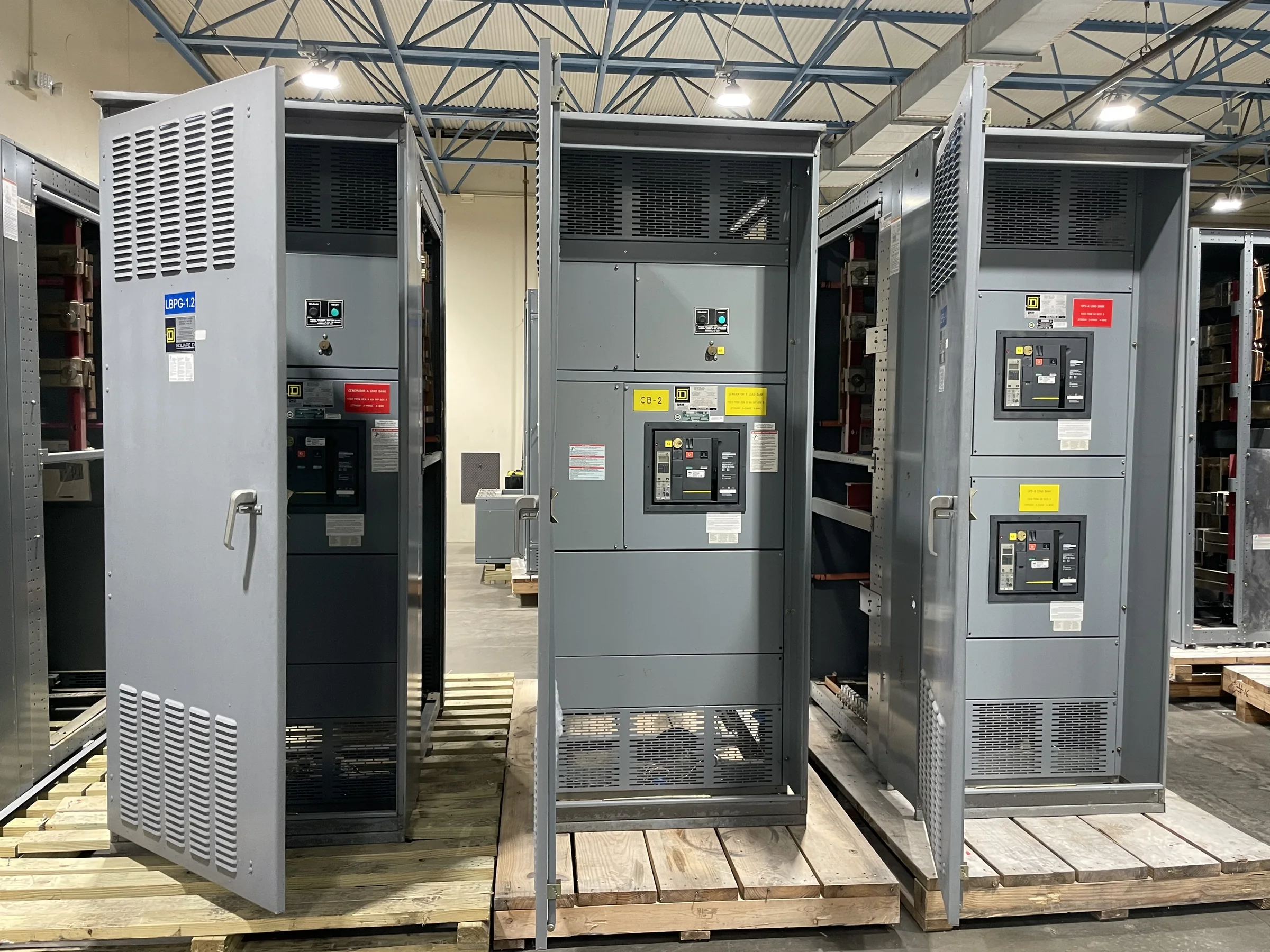
Define the Distribution Duty Before Selecting Medium-Voltage Gear
For a Tomball facility, begin with the electrical duty the switchgear must perform, not a catalog lineup. Gather the available system voltage, utility or upstream source information, transformer data, expected load, and any known fault-current study results. The design team can then evaluate bus arrangement, incoming and feeder functions, protective devices, metering, and required interrupting capability against the actual system. These choices affect equipment footprint, coordination, and how a fault is isolated; an assumed rating can create a mismatch with upstream protection or connected equipment. Include anticipated expansion, large motor starts, and critical loads in the discussion. Final ratings and configuration depend on project engineering, applicable standards, and the verified installation—not on a location name or a general product description.
Coordinate Protection, Controls, and System Interfaces
Protection settings and control interfaces deserve early attention because medium-voltage gear must work as part of a larger electrical system. Share the one-line diagram, relay philosophy, CT and PT requirements, trip and close control needs, and communications expectations with the manufacturer and project engineer. Confirm how the lineup will interface with transformers, generators, transfer schemes, motors, or building controls where those apply. A protection study may affect device selection and settings, while wiring and signal details influence panel layouts and commissioning plans. Avoid assuming that a relay, protocol, or scheme is included unless the project documents say so. For Tomball projects with phased construction or future feeders, document what must operate at initial startup and what provisions are needed for later work.


Build the Specification Around the Installation
A complete procurement specification should describe the environment and physical installation as carefully as the electrical ratings. Identify indoor or outdoor placement, enclosure requirements, ambient conditions, altitude if relevant, access restrictions, cable entry direction, and available working space. In the Tomball area, site planning may also need to account for severe-weather exposure, drainage, and the route from the receiving point to the electrical room; the project team should verify actual site conditions rather than rely on regional assumptions. Provide room plans, equipment elevations, conduit locations, and cable termination details when available. These inputs help reveal conflicts before fabrication, such as a lineup that cannot be moved through a doorway or positioned without blocking required access. Enclosure construction and environmental suitability remain project-specific.
Resolve Documentation and Review Items Before Release
Submittal review is the point to settle details that are costly to change after equipment enters production. Provide the latest approved one-line, elementary diagrams, physical dimensions, cable and termination schedules, device schedules, and applicable project specifications. Identify who reviews protection, controls, bus connections, and interfaces with adjacent equipment, and return consolidated comments through the agreed process. If a low-voltage switchboard is part of the project, UL 891 may be relevant to an appropriately evaluated assembly; it does not serve as a blanket certification for medium-voltage switchgear. State required standards and evaluation expectations explicitly, then confirm their applicability to the specified equipment. Clear document control matters on projects with multiple contractors or phased work: outdated drawings can lead to incorrect conduit placement, missed signals, or field rework.
Discuss Build Timing and Delivery as Project Variables
Discuss schedule with the manufacturer using the actual scope, approval path, and required-on-site date rather than relying on a general lead-time statement. Custom configuration, component selection, drawing reviews, customer approvals, and changes after release can affect the sequence. Ask what information is needed to establish a project schedule, which milestones require customer action, and how schedule changes will be communicated. Confirm whether the stated timing begins at order placement, receipt of approved drawings, or another defined event. For Tomball delivery planning, coordinate the receiving window, truck access, unloading equipment, laydown space, and the route into the building with the general contractor and facility team. Nationwide shipping is an available offering, but delivery arrangements and timing must be confirmed for the specific shipment and site.
Plan Installation, Testing, and Future Maintenance
Before the lineup arrives, assign responsibility for foundations or housekeeping pads, anchorage, conduits, grounding, cable installation, and required clearances. Compare approved equipment drawings with field dimensions and check that the planned path can accommodate the shipment and any handling equipment. Installation and commissioning should follow the project documents and equipment instructions, with qualified personnel and required safety controls; electrical work must be performed de-energized unless a narrowly justified, properly controlled exception is established by the responsible safety process. Define inspection, testing, protection verification, and energization prerequisites before startup so that missing records or unresolved interface issues do not delay turnover. Keep final drawings, settings, test records, and maintenance information with facility documentation. For future expansion, record spare provisions and restrictions rather than assuming capacity that was never specified.