Coordinate MCC Functions With the Data Center One-Line
A data-center motor control center should be defined by the loads it serves and its relationship to the facility’s electrical distribution—not simply by a lineup schedule. Identify each motor-driven system, such as cooling-tower fans, pumps, air-handling equipment, or other mechanical loads, and show its source, operating mode, and connection to standby or alternate power where applicable. This helps the design team distinguish essential loads from those that may be shed or sequenced during a transfer. Confirm the required motor-starting method, control interface, and protection approach for each feeder with the responsible electrical and mechanical engineers. These decisions affect lineup space, component selection, coordination studies, and control wiring. Final ratings and compatibility depend on the project’s system voltage, available fault current, and approved design.
Specify Equipment Around Operating and Maintenance Needs
Data centers often need mechanical equipment to remain available while other equipment is inspected or serviced. During specification, clarify whether the MCC must support redundant equipment trains, local operation, remote status monitoring, or integration with a building management or control system. Define who supplies control devices, network interfaces, field wiring, and programming, and identify the responsibility boundary between the MCC and external controls. A vague interface can lead to missing points, inconsistent alarm names, or commissioning delays even when the power equipment is correctly sized. Ask the project team to document operating sequences, interlocks, alarm requirements, and normal and emergency operating conditions. The manufacturer can review the specified configuration for the proposed assembly, but functional performance and system-level compatibility require project-specific coordination and approval.


Resolve Fault, Protection, and Coordination Inputs Early
Protection choices for motor circuits must fit the facility’s electrical system and the equipment’s intended duty. Provide the current one-line diagram, system voltage, available short-circuit information, grounding method, and applicable coordination requirements with the RFQ or submittal package. The engineer of record can use these inputs to determine suitable device ratings and settings and to evaluate coordination with upstream distribution and downstream loads. Data-center projects may also have generator, UPS, or transfer-switch operating modes that change fault-current conditions; identify these sources and modes rather than relying on a normal-utility scenario alone. Do not assume that a standard assembly rating or device combination will satisfy every operating case. Final selection, protective-device settings, and any required studies must be confirmed for the actual installation.
Plan the Lineup for the Electrical Room and Service Path
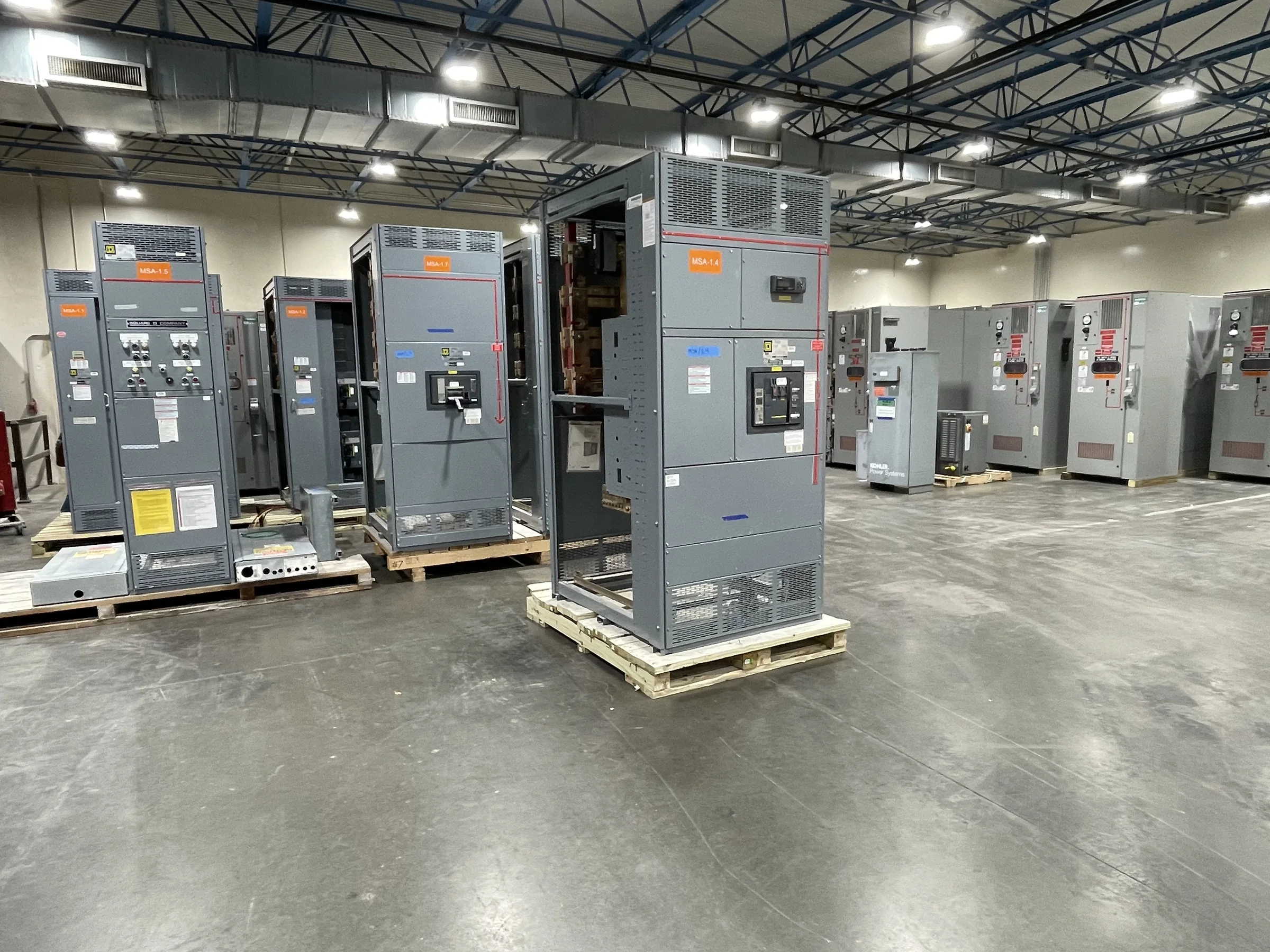
Room drawings should be reviewed against the proposed MCC dimensions, access needs, and route from receiving area to final location. Check door and corridor clearances, turning points, floor openings, overhead obstructions, housekeeping pads, and whether the equipment must be moved in sections. In a data center, the electrical room may share a constrained construction sequence with switchgear, transformers, piping, and cooling equipment; a lineup that fits on plan can still be impossible to maneuver into place. Confirm front and rear access expectations, cable-entry direction, working space, and the location of adjacent equipment with the design team. Provide the manufacturer with current room and site information before configuration is finalized. Exact dimensions, section arrangement, and installation clearances are project-specific and should be checked against approved drawings and applicable requirements.
Make Submittals and Controls Documents Commissioning-Ready
A complete procurement package reduces uncertainty before fabrication and gives installers and commissioning teams a consistent reference. Along with the one-line and load schedule, identify the required drawings, device and motor data, control schematics, terminal plans, nameplate information, and interface points. State the project standards and document format, review sequence, and required approvals; include any owner-specific labeling or equipment-tag conventions. For networked monitoring, provide the controls team’s point list and communication requirements early enough to resolve responsibility and compatibility questions. Review submittals for omissions, not just general appearance: an unassigned control voltage, unclear terminal destination, or inconsistent equipment tag can slow field wiring and functional testing. The exact document set depends on contract requirements and the selected equipment. Coordinate revisions so construction teams use the current approved information.
Align Build Timing, Delivery, and Receiving With the Site Plan
Discuss the required in-service date, approval milestones, site readiness, and receiving constraints with the U.S. manufacturer before placing an order. Short lead times may be available, but timing depends on the final design, component availability, approvals, and scope; request a project-specific schedule rather than assuming a guaranteed delivery window. Nationwide shipping also makes advance coordination important: confirm delivery access, unloading responsibility, storage conditions, shipment size, and whether construction can accept the equipment when it arrives. Data-center schedules can be especially sensitive to floor completion, room access, and the sequencing of electrical installation with cooling and controls work. Identify any phased delivery or staged installation needs during quotation. Confirm the approved configuration, shipping plan, and site responsibilities in writing, and do not schedule installation until the receiving and placement route is ready.