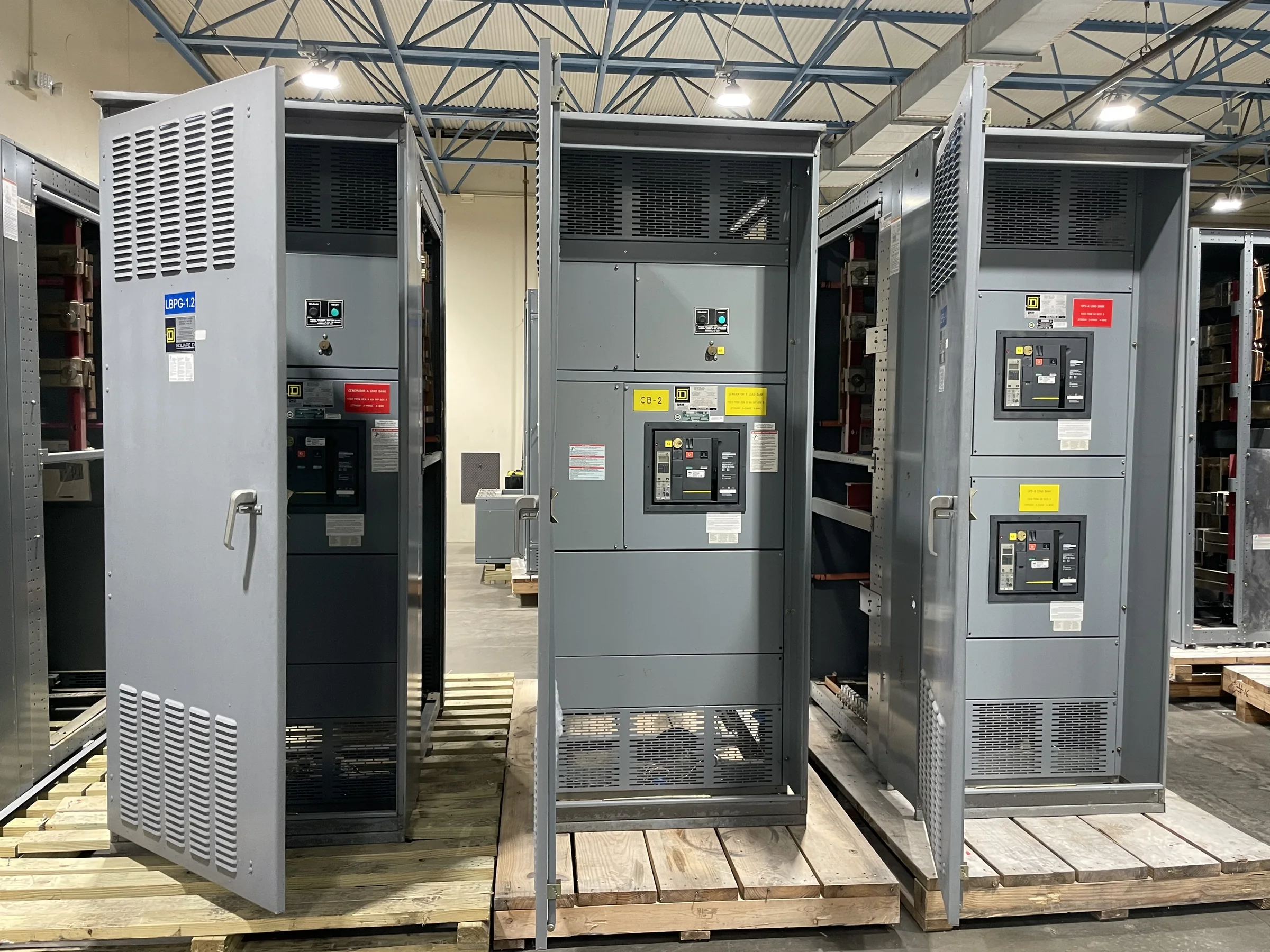
Define the MCC Around the Motor Loads
For a Freeport project, start with the motor list rather than a preferred lineup dimension. Record each motor’s horsepower, voltage, full-load current, starting method, duty cycle, and the process equipment it serves. Pumps, compressors, conveyors, and fans can impose different starting and operating demands, so grouping them without checking load behavior may affect feeder sizing, coordination, and available space. Identify which loads must restart after an interruption and which should remain off until operators authorize them. Those decisions inform the starter arrangement and control interfaces. Share the latest one-line diagram and load schedule with the manufacturer, noting any unresolved values instead of treating estimates as final. The resulting proposal can then identify assumptions for engineering review before equipment is released for production.
Select Starters and Protective Functions by Application
A motor control center is a collection of coordinated units, not a single interchangeable starter choice. Across Freeport-area industrial facilities, process needs may range from basic across-the-line starting to reduced-voltage starting or adjustable-speed control, but the correct option depends on the motor, driven equipment, operating profile, and control philosophy. Specify required overload protection, short-circuit protection, disconnecting means, control voltage, and any monitoring or interlocking functions. Where a variable-frequency drive is considered, confirm motor compatibility, cable routing, cooling, harmonic expectations, and the application’s speed range with the responsible engineer. Protection settings and device coordination must be checked against the actual system and fault-current information. Calling out these requirements early helps prevent a quoted unit from meeting a generic description while missing an important process or safety function.


Check the Electrical Room and Environmental Conditions
Before fixing the lineup, compare its proposed footprint and access clearances with a measured room plan. Record door and aisle locations, overhead obstructions, cable entry routes, housekeeping pads, and the space needed to remove or service units. In Freeport, coastal and industrial site conditions make it especially useful to document the equipment’s actual indoor or outdoor exposure, ambient conditions, and any corrosive contaminants identified by the project team. Do not assume a general-purpose enclosure or finish is appropriate without review. Also confirm ventilation and heat-dissipation needs, particularly when drives or other heat-producing components are included. These details affect enclosure selection, arrangement, and installation planning; discovering a conflict after shipment can force costly field changes or delay a planned outage.
Resolve Interfaces, Controls, and Drawings Before Release
The MCC must connect cleanly to more than the incoming power feeder. Identify control-system interfaces, communication protocols, hardwired signals, remote operating stations, emergency-stop requirements, and equipment supplied by other vendors. For a Freeport facility expansion, an interface matrix can distinguish existing plant conventions from new project requirements and reduce the risk of mismatched control voltages or conflicting tag names. Provide current one-lines, elementary diagrams, motor schedules, I/O lists, network information, and applicable site standards; mark each document with its revision and approval status. Ask the manufacturer to identify required customer decisions and drawing-review milestones in the proposal. Confirm the final arrangement, device selections, and interfaces before authorization to build. Clear document ownership matters because late revisions can affect both fabrication and commissioning.
Plan Schedule, Procurement, and Delivery as One Workstream
Discuss timing while the specification is still being developed, not after every detail has been treated as settled. Custom MCC construction and component availability can vary with the selected lineup, control devices, drawing approvals, and project changes; request a project-specific schedule and confirm what events start its clock. For procurement, state the required commercial documents, approved manufacturers or components, submittals, inspection expectations, and any contractual milestones. Then coordinate delivery to the Freeport site with the construction manager: verify the receiving address, site access, unloading equipment, delivery hours, laydown area, and protection from weather or construction dust. Nationwide shipping does not remove the need for a workable receiving plan. Confirm shipment configuration and handling requirements so the site can move the equipment to its final location without avoidable exposure or delay.
Prepare for Installation, Verification, and Handover
Before installation, align the delivered lineup with approved drawings and check the foundation, anchoring plan, cable pathways, and working clearances against the project documents. The electrical contractor and qualified personnel should follow applicable codes, manufacturer instructions, and site safety procedures; installation, inspection, testing, and commissioning plans should be established for the specific equipment and system. Keep the final one-line, wiring diagrams, device schedules, settings documentation, and approved submittals accessible to the commissioning team. Record deviations and resolve them through the responsible engineer rather than relying on field assumptions. Once the facility accepts the MCC, accurate as-built records help operators understand which units serve critical processes and support future maintenance or expansion. Coordinate outage and energization responsibilities in advance; all work must follow appropriate de-energization and safety requirements.