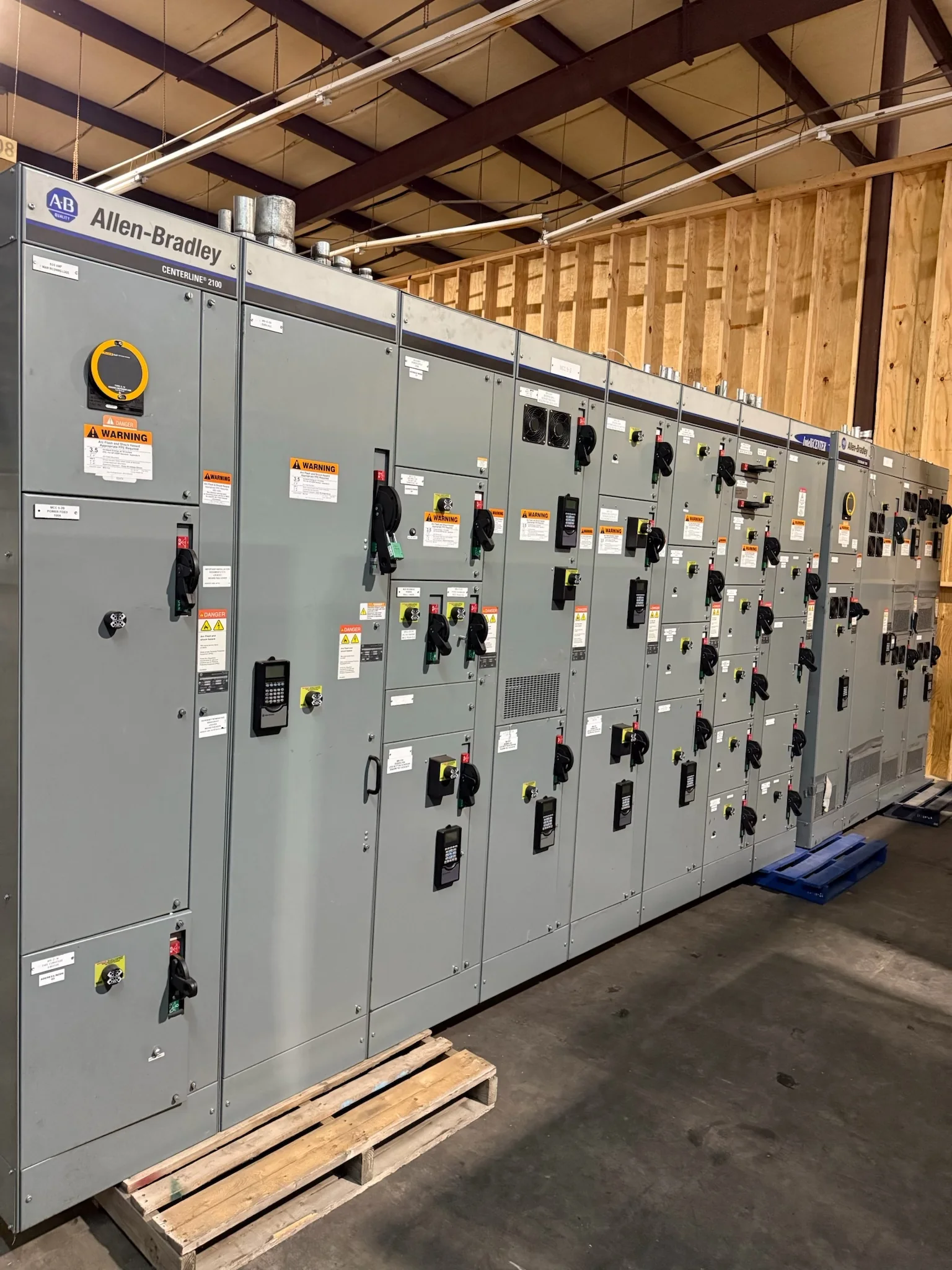
Define the Motor Control Center Around the Loads
A useful motor control center (MCC) specification starts with the driven equipment, not a presumed standard lineup. List each motor’s horsepower, voltage, full-load current, starting method, duty cycle, and control needs, then identify spare capacity and likely future additions. Pumps, fans, compressors, and conveyors can impose different starting and operating demands even when their nameplate ratings look similar. Those details guide decisions about feeder and starter arrangements, overload protection, control power, and the space needed for future units. For a Tomball project, include the actual process and operating sequence rather than relying on a generic facility description. An incomplete load schedule can lead to a lineup that does not fit the application or requires costly revisions after review.
Resolve Protection, Control, and Coordination Details
Protection and control choices should be checked against the facility’s electrical design and operating requirements. Provide available fault-current information, upstream protective-device data, grounding arrangement, and the intended method of motor starting so the engineering team can review coordination and equipment suitability. Specify whether each unit needs local controls, remote commands, status contacts, or integration with a plant control system; list the required signals and interface expectations. A starter selected without considering the upstream system may not coordinate as intended, while unclear control boundaries can leave commissioning teams debating who supplies wiring or logic. Final ratings, device selections, and compatibility depend on verified project data and design review. Document assumptions explicitly, especially where utility or upstream information is still pending.


Check the Room Before Approving the Lineup
An MCC that meets the electrical schedule still has to fit the room and remain serviceable. Confirm available wall length, ceiling height, equipment access, door and corridor clearances, floor conditions, and the route from the delivery point to the final location. Note nearby piping, ducts, drains, heat sources, dust, moisture, and any washdown or corrosive exposure; these conditions can affect enclosure selection and operating environment. In Tomball, Texas, project teams should also consider how seasonal storms or heavy rain could affect receiving areas and temporary staging, without assuming a particular site condition. A dimensioned room plan and photographs help uncover conflicts early. Verify working space and access requirements with the project’s qualified electrical professionals before approving the equipment arrangement.
Submit a Complete Package for a Useful Quote
A quote request is easier to evaluate when it includes a one-line diagram, motor schedule, control narrative, preliminary layout, and applicable project specifications. Identify the required equipment ratings and any preferred components, but distinguish firm requirements from options so the manufacturer can flag alternatives for review rather than silently changing the design basis. Include the project schedule, submittal milestones, ship-to location, receiving restrictions, and the person responsible for technical questions. If the work replaces existing equipment, provide available nameplate data, dimensions, cable-entry information, and interface details; do not assume an older lineup’s arrangement can be replicated without verification. This package supports a clearer scope, reveals missing information before order release, and helps procurement compare offers on equipment and documentation rather than price alone.
Coordinate Submittals, Manufacturing, and Delivery
Timing depends on the approved scope, component availability, engineering review, and the order of required approvals; a quoted schedule should be confirmed for the specific project rather than treated as a universal promise. Establish who reviews drawings, how comments are returned, and which revisions require formal approval before the build proceeds. For delivery to Tomball, coordinate the site contact, receiving hours, truck access, unloading equipment, staging area, and protection from weather. Confirm whether the shipment can reach the electrical room or must be transferred through a constrained route. These practical details matter because a completed lineup can be delayed or exposed to damage if the site is not ready. Align shipment planning with construction milestones and verify current availability and delivery terms when requesting a quote.
Plan Installation, Turnover, and Future Service
Before installation, compare approved drawings and equipment markings with the site design, then have qualified personnel verify placement, grounding, connections, and required clearances. Electrical work must be performed under appropriate safety procedures; circuits must be de-energized and verified before work begins. The turnover package should identify installed units, protective-device settings, control interfaces, wiring diagrams, and approved changes so operations staff can understand what was delivered and maintain it. Keep final documents accessible to technicians, and record any field changes in the as-built set. If the project calls for a low-voltage switchboard assembly, UL 891 may be relevant when the assembly is appropriately evaluated; it is not a blanket certification for MCCs or medium- and high-voltage equipment. Confirm standards and evaluation requirements for the exact scope.