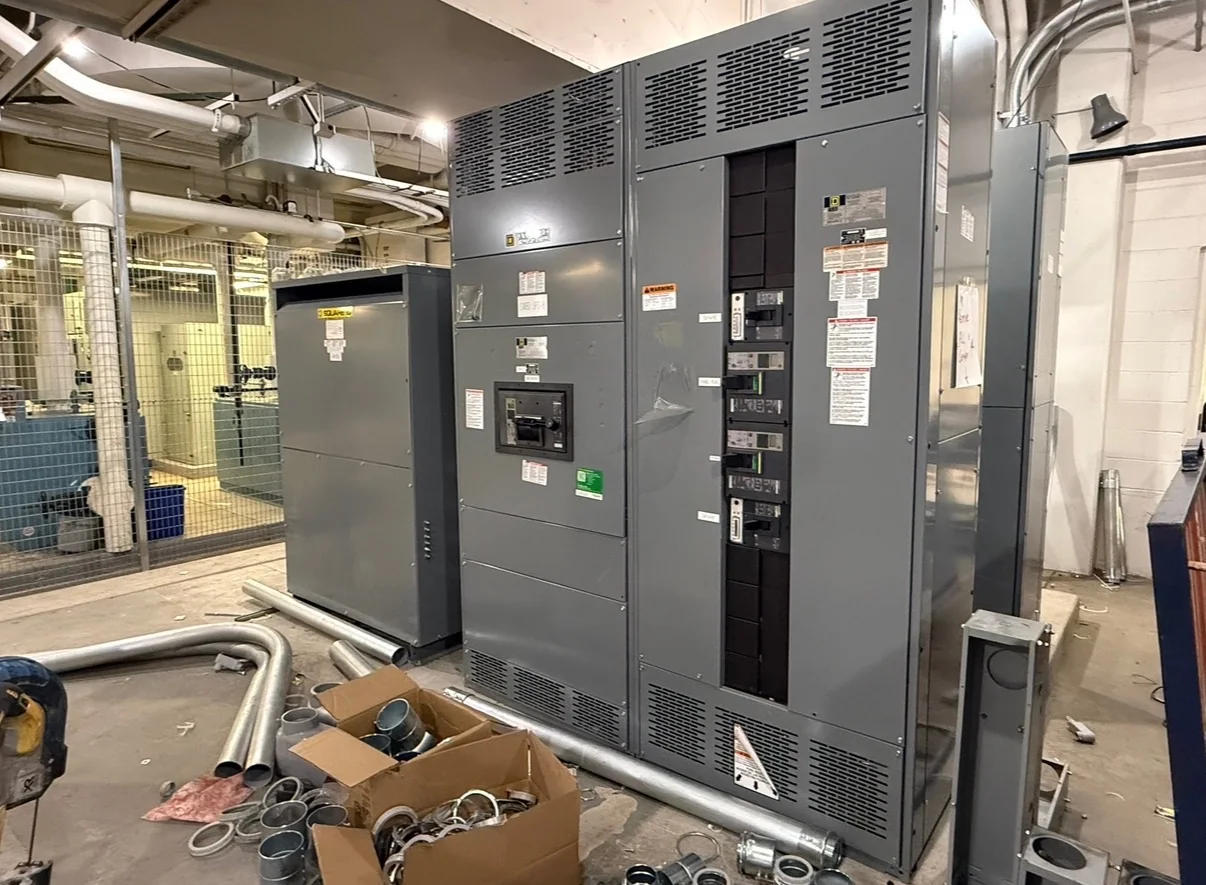
Define the Entrance Point and Distribution Scope
A service-entrance switchboard establishes where utility power transitions into a facility’s distribution system, so the one-line diagram should identify the source, service conductors, metering arrangement, main device, and downstream feeders before equipment is specified. Petrochemical sites often have multiple process areas, utility sources, or phased expansions; unclear boundaries can leave gaps in responsibility between the utility, EPC contractor, and owner. Confirm which loads the board serves, whether it is a new service or a replacement, and how the proposed arrangement fits the facility’s operating plan. The manufacturer can develop a new custom assembly around documented project requirements. Final ratings, construction details, and applicable code provisions depend on the service, site conditions, and authority having jurisdiction.
Coordinate Ratings, Fault Duty, and Protection
Available fault current, system voltage, service configuration, and protective-device coordination shape the switchboard design; assumptions in any one of these inputs can affect equipment suitability and downstream protection. Request current utility data and verify it against the facility’s electrical study, including any planned transformer or source changes. The engineer of record should establish interrupting and withstand requirements, protective settings, selective-coordination objectives, and arc-flash study inputs as applicable. For a petrochemical facility, coordination also needs to reflect process continuity: an upstream trip that shuts down multiple areas may have different consequences from a feeder-level interruption. Do not treat an assumed rating or a previous board’s nameplate as confirmation of a replacement design. The final configuration and compatibility require project-specific review.


Match Construction to the Site Environment
Petrochemical facilities can expose electrical equipment to corrosive agents, conductive dust, moisture, temperature extremes, vibration, or washdown, depending on the process area and installation location. Identify the actual environment and enclosure location early; a board installed in a protected electrical room faces different conditions from one exposed to outdoor weather or nearby process operations. Provide enclosure and room details, cable-entry direction, access clearances, ventilation constraints, and any owner requirements for materials or coatings. Hazardous-area classification is a separate design consideration: the board’s location and the equipment permitted there must be reviewed by qualified project personnel, rather than inferred from the facility’s industry alone. The specified enclosure, components, and installation approach must suit the documented site conditions and applicable requirements.
Plan Replacement and Tie-In Around Operations
Replacing a service-entrance board can affect an entire facility, so the purchasing scope should make the tie-in boundary and outage assumptions explicit. Confirm whether the work is part of a new build, a planned shutdown, or a staged replacement, and identify any temporary-power strategy the project team is considering. Record existing conductor sizes and termination details, available room for removal and installation, cable bending space, lifting access, and the route from receiving to the electrical room. These constraints can determine whether a proposed lineup can be installed without structural or cable changes. All installation, inspection, and connection work must follow an approved plan and be performed with equipment de-energized under applicable safety procedures. The manufacturer can review provided interface information, but field verification remains essential.
Build a Complete, Reviewable Submittal Package
A clear submittal package reduces late changes by allowing engineers, procurement, and site teams to check the same design basis. Provide the latest one-line diagram, load and feeder schedule, utility service information, fault-current data, protection requirements, metering needs, control and communications interfaces, and relevant owner specifications. Include room layouts, conduit or busway entry points, cable information, environmental conditions, and any dimensional limits. Ask the manufacturer to identify drawings and data needed for review, and route proposed deviations through the responsible engineer and owner before approval. For low-voltage switchboard assemblies, UL 891 may be relevant when the assembly is appropriately evaluated for that application; it does not establish a blanket listing for every configuration or for medium- or high-voltage equipment. Confirm applicable evaluation and documentation project by project.
Align Procurement Timing With Delivery Logistics
Lead time depends on the approved configuration, component availability, drawing review, and release of complete project information; request a schedule based on the actual scope rather than relying on a generic estimate. Identify approval milestones, required submittal dates, decision owners, and any long-lead components in the procurement plan. U.S.-manufactured custom equipment and American components may be specified as project offerings, subject to the confirmed design and sourcing requirements. Nationwide shipping does not remove the need to plan the final leg: petrochemical sites may require advance carrier coordination, security clearance, delivery appointments, restricted routes, off-loading equipment, and a prepared receiving area. Share the destination, site access rules, unloading responsibility, and storage conditions when requesting a quote. Confirm availability, shipping arrangements, and schedule against the approved order and current project conditions.