Define the Service Entrance Boundary Before Selecting Equipment
At a refinery, the service entrance switchboard sits at the boundary between the utility supply and facility distribution, so its duties must be clear before a manufacturer develops a configuration. Confirm the service voltage, available fault current, grounding method, number and arrangement of incoming sources, and whether metering or utility-owned equipment is part of the scope. Refinery projects may also involve tie breakers, standby generation, or connections to existing substations; these affect bus arrangement, protection coordination, and space needs. A one-line diagram that shows normal and alternate operating modes helps prevent a mismatch between the equipment and the actual system. Share the utility’s service requirements and the facility’s design criteria early, since assumptions about ownership or switching responsibilities can delay review and procurement.
Account for Corrosion, Heat, Dust, and Hazardous-Area Boundaries
Refinery environments can expose electrical equipment to salt-laden air, chemical vapors, elevated temperatures, dust, and vibration, but conditions differ from one installation to another. Identify the switchboard room or outdoor location, expected ambient temperature, ventilation approach, washdown or ingress concerns, and nearby process hazards. Hazardous-area classification must be established by the project’s qualified design team; a service entrance switchboard should not be presumed suitable for installation within a classified area. Where the equipment is in a protected electrical room, the room’s environmental controls still matter because heat buildup can affect operating conditions and maintenance access. Provide the applicable environmental criteria and enclosure requirements with the request for quotation so the proposed construction can be evaluated against the site rather than a generic refinery label.


Coordinate Protection, Metering, and Utility Requirements
A service entrance arrangement must work with both the utility’s interconnection rules and the refinery’s protection strategy. Request current utility criteria for metering, service disconnects, grounding, compartment access, and any required review drawings; requirements can vary by serving utility and project. The facility’s engineer should provide fault-current data, protective-device settings or study assumptions, and coordination boundaries with downstream feeders. These inputs influence breaker selection, bus design, instrument-transformer provisions, and available space for metering components. If the refinery has multiple sources or a planned expansion, document which devices are intended to isolate each source and how operating modes are controlled. Confirming these details before release for manufacture helps reduce redesign risk and supports a more complete technical submittal.
Match the Build to Site Access and Installation Constraints
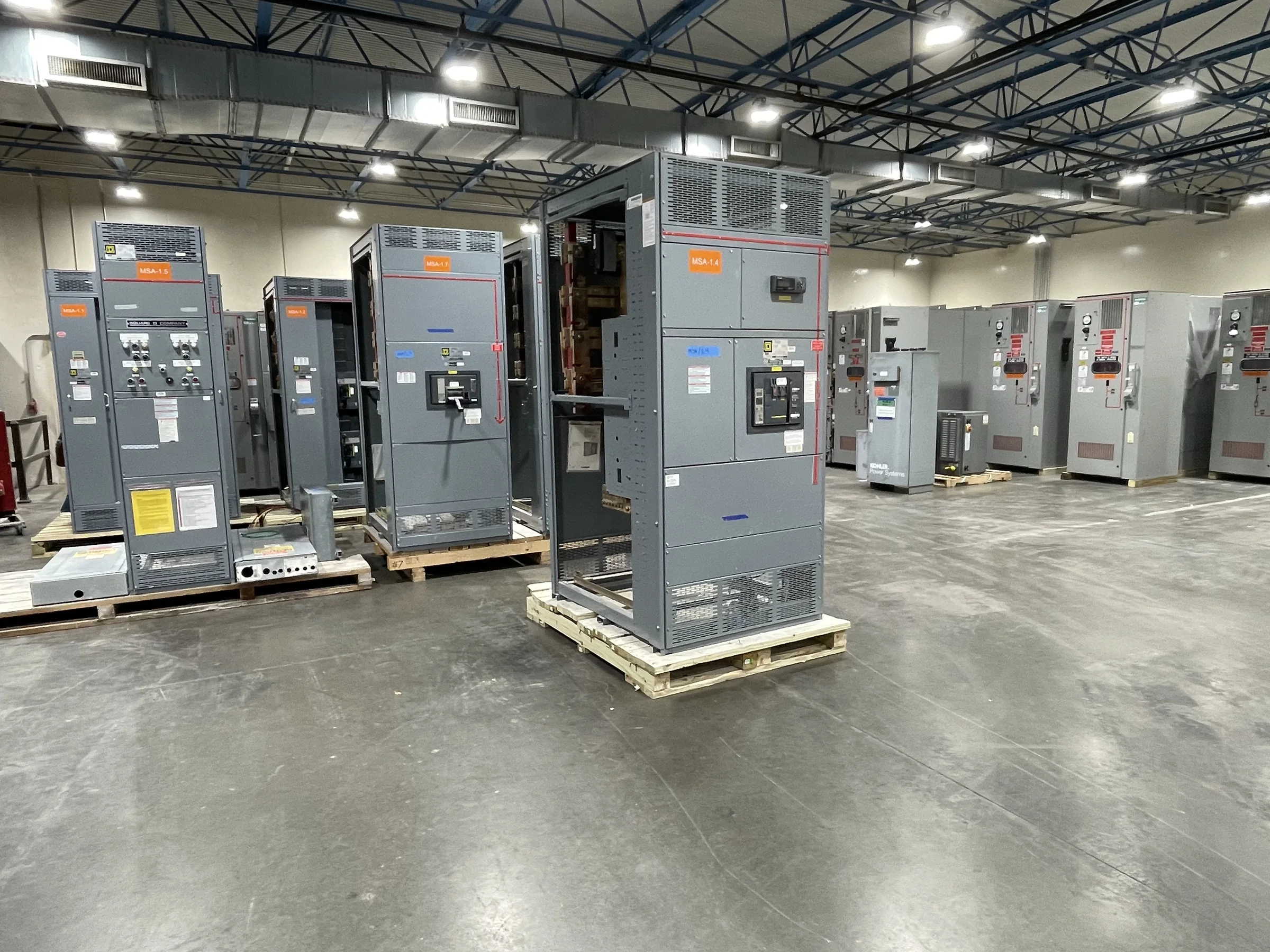
A refinery’s electrical room may have narrow doors, overhead piping, limited lifting capacity, or a route shared with operating process areas. Those constraints can determine whether the switchboard is shipped in sections, how sections are arranged for reassembly, and what lifting or rigging provisions are needed. Before equipment dimensions are finalized, verify the path from the delivery point to the foundation, including turning radii, floor loading, door clearances, and the location of cable trenches or floor openings. The installation team should also establish working clearances and the direction of cable entry from approved project drawings. Accurate site measurements matter because a board that fits the electrical room but cannot reach it safely can disrupt construction sequencing and increase handling costs.
Build Procurement Around Reviews, Interfaces, and Project Timing
A realistic purchasing schedule starts with complete technical inputs, not an assumed delivery promise. Refinery projects often require utility review, engineering approval, long-range outage planning, and coordination with civil, electrical, and controls contractors. Identify the dates needed for quotation, drawing review, approved-for-construction release, factory completion, shipment, and installation, then discuss current availability with the U.S. manufacturer. The schedule remains project-specific and depends on scope, component selection, approvals, and changes; confirm milestones in the commercial proposal rather than relying on a general lead-time statement. Clarify who reviews submittals, how comments are resolved, and whether the order depends on a shutdown window. Early alignment can expose missing decisions while there is still time to address them without forcing unsafe field compromises.
Specify Deliverables, Testing, and Delivery Coordination
A useful request for quotation identifies the required scope and the records needed for engineering, installation, and turnover. Typical project documents may include a one-line diagram, equipment layout, elevations, connection details, bill of materials, and control or metering requirements; confirm the actual submittal list with the project team. State applicable standards and any required inspection or testing criteria, then verify which requirements apply to the proposed assembly. UL 891 applies to appropriately evaluated low-voltage switchboard assemblies; it is not a blanket certification for medium- or high-voltage equipment. For delivery, provide the refinery’s receiving hours, gate and escort procedures, unloading resources, laydown limits, and requested shipment sequence. These practical details help coordinate nationwide shipping with site readiness and reduce the chance of equipment arriving before it can be received or protected.