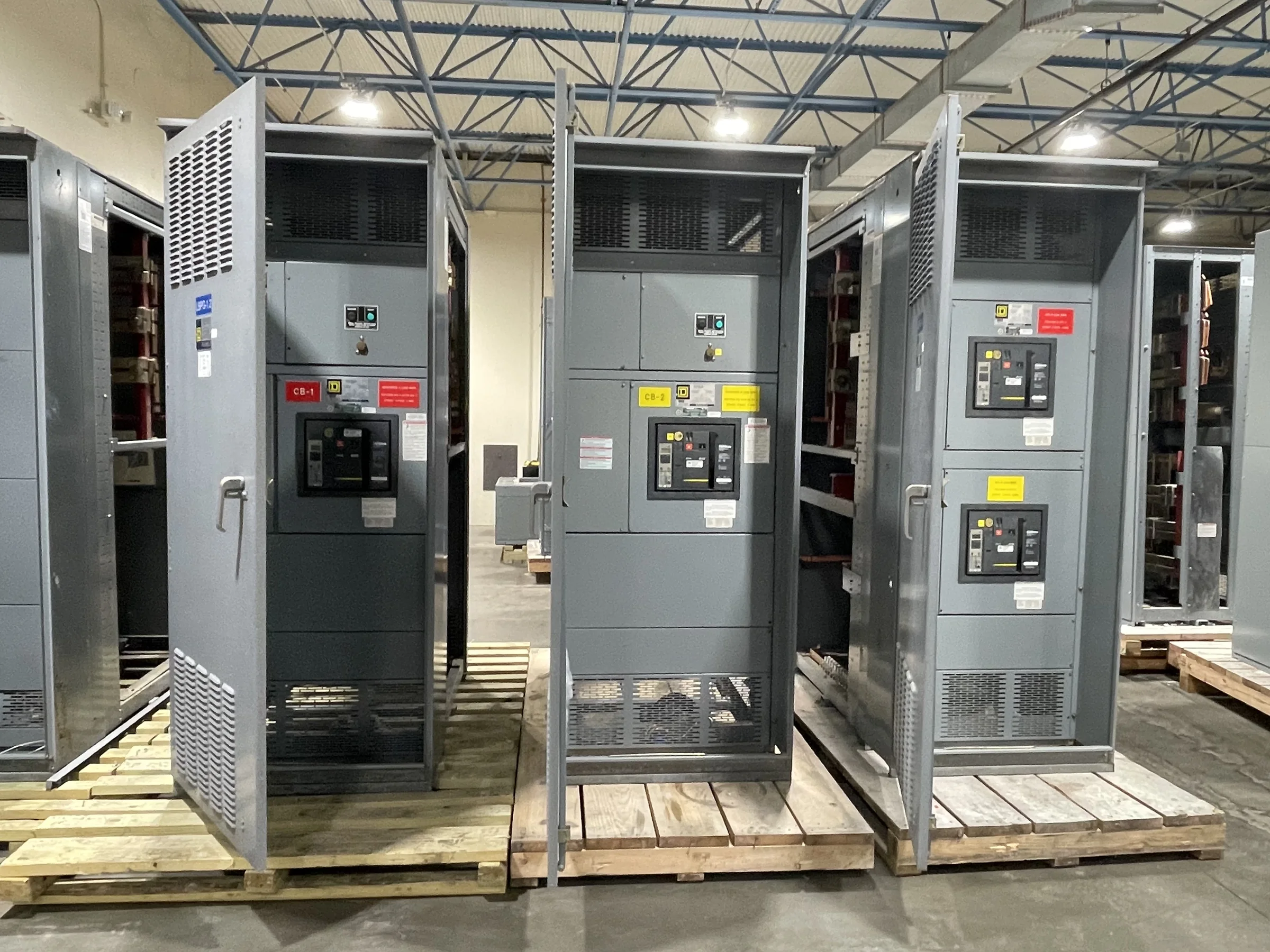
Plan Service Entrance Capacity Around Campus Demand
A university service entrance has to accommodate more than the peak load shown on a recent utility bill. Residence halls, research buildings, dining facilities, central plants, and classroom spaces can have different demand patterns, while planned renovations or new construction may change the load over the equipment’s service life. Start the specification with the available utility information, a documented load study, and the electrical engineer’s demand and growth assumptions. Identify the service voltage, phase, frequency, service conductors, and required ampacity, along with the metering and main-device arrangements required by the serving utility and project design. Those details influence bus configuration, enclosure layout, and connection space. Confirming them early helps avoid a switchboard design that fits today’s loads but conflicts with the campus expansion plan.
Coordinate Utility, Protection, and Switching Requirements
Service entrance equipment sits at the boundary between utility supply and campus distribution, so its requirements cannot be set by the switchboard schedule alone. The utility may have specific rules for metering, service disconnects, access, and incoming conductor termination; the engineer must coordinate these with the applicable electrical code, fault-current study, and protective-device coordination. Define the available fault current and required interrupting ratings from current project information rather than assuming an existing rating remains suitable after a utility or transformer change. Where the entrance serves multiple buildings or essential campus loads, document the intended operating arrangement and any selective coordination objectives. Clarifying who supplies utility-owned components, who provides terminations, and who reviews drawings prevents late scope changes and helps ensure the proposed equipment matches the approved service design.


Make Room for Access, Maintenance, and Future Work
A switchboard can satisfy its electrical schedule and still be impractical if it blocks a service corridor, conflicts with structural elements, or leaves too little working and maintenance access. Universities often renovate occupied buildings where electrical rooms share space with piping, communications systems, fire protection, or legacy equipment. Provide dimensioned room plans, door and corridor measurements, equipment orientation, cable-entry preferences, and known obstructions for design review. Check the complete path from the receiving dock to the final room, including turns, thresholds, elevators, and floor loading where relevant. Also consider how technicians will reach operating handles, removable covers, and cable compartments without disturbing adjacent services. Early review matters because room or access limitations can affect the lineup arrangement, installation sequence, and the feasibility of keeping nearby campus operations in service.
Specify Documentation for a Complex Campus Project
Clear project documents help the manufacturer build to the engineer’s intent and give campus teams a useful record after installation. A complete inquiry should include the one-line diagram, equipment schedule, site and room drawings, utility requirements, and applicable project specifications, with deviations or unresolved items identified rather than left implicit. List required options and interfaces, such as metering, control wiring, communication points, special enclosure conditions, and provisions for future sections, only where the design calls for them. Ask for submittals that support review of dimensions, ratings, device selections, and connection locations before release to production. For low-voltage switchboard assemblies, UL 891 may be relevant when specified and applicable to the evaluated assembly; it is not a blanket qualification for medium- or high-voltage equipment. Confirm exact standards and labeling requirements for the proposed design.
Discuss Schedule and Delivery Before Final Release
Campus construction calendars can be unforgiving: equipment may need to arrive ahead of a summer renovation, a semester break, or a carefully planned utility shutdown. Discuss the target dates, drawing-review milestones, approval responsibilities, and site-readiness assumptions with the manufacturer before treating a schedule as committed. Custom configurations, component selection, engineering changes, and approval cycles can affect timing, so request a project-specific schedule and identify decisions that could delay release. Nationwide shipping can support projects across the United States, but delivery planning still depends on the shipment, destination, receiving hours, unloading arrangements, and access to the electrical room. Confirm whether the site has a loading dock, suitable lifting equipment, restricted campus roads, or escort requirements. Coordinating these details early reduces the risk of equipment arriving when the building cannot receive or move it.
Prepare for Replacement, Installation, and Campus Continuity
Replacing a service entrance switchboard is an electrical and operational project, not simply an equipment exchange. The campus team should establish the approved outage plan, identify affected buildings and critical loads, and coordinate utility involvement, temporary power decisions, installation responsibilities, and commissioning requirements with qualified project personnel. Never assume the existing conductors, terminations, protective settings, or room conditions will transfer unchanged; have the responsible engineer verify compatibility and define any required modifications. Share available field measurements, existing equipment details, and photographs as supporting information, while recognizing that field verification may still be necessary. Before procurement, distinguish the new switchboard scope from demolition, feeder work, utility charges, and installation labor. A U.S. manufacturer can discuss a project-built replacement or retrofit approach, but exact fit, ratings, standards, availability, and delivery timing require review of the specific project.