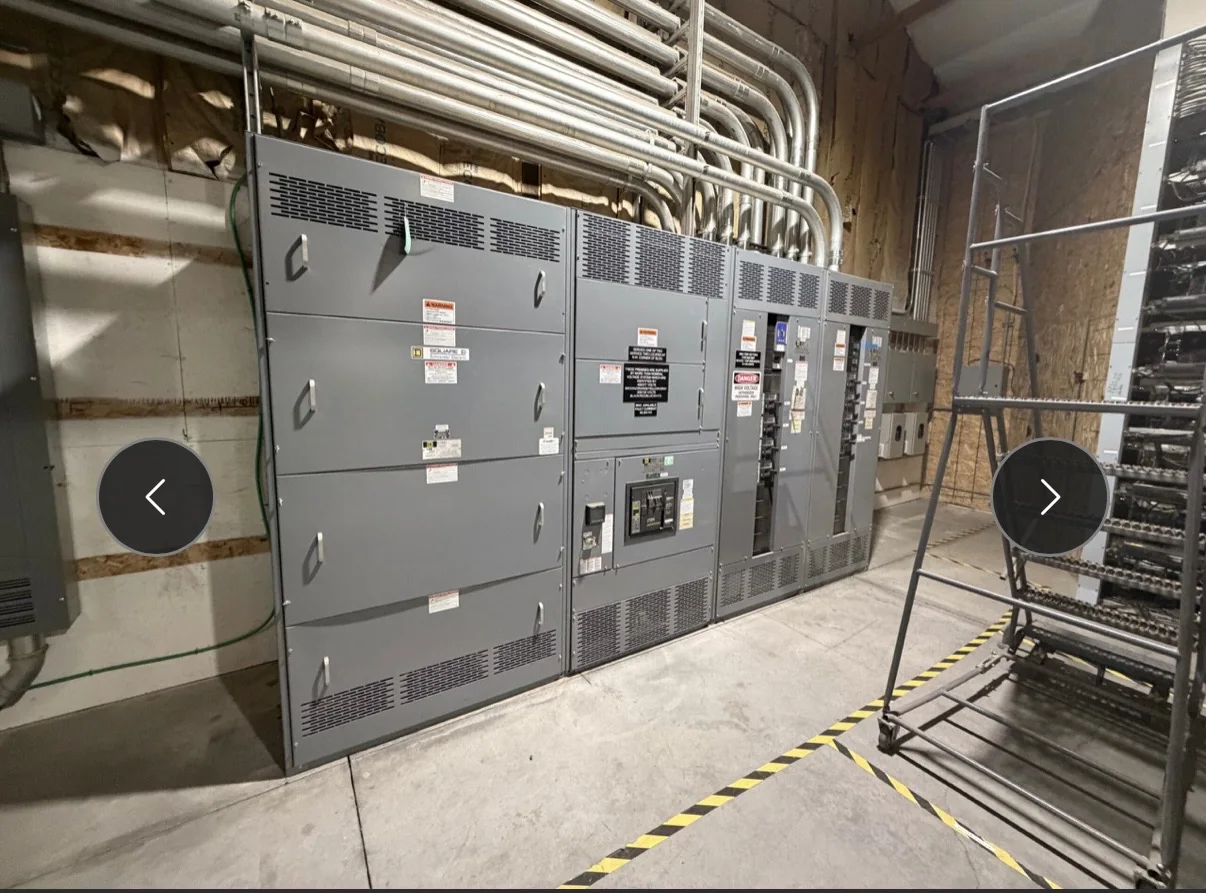
Define the Service Entrance Around the Facility’s Operating Load
A wastewater facility’s service entrance has to support more than its average demand. Influent pumping, aeration, solids handling, disinfection, ventilation, and building services may operate on different schedules, while standby generation or future process additions can change the distribution plan. Provide the manufacturer with utility service details, available fault-current information, load data, motor-starting requirements, and the intended source arrangement. Identify essential and nonessential loads, transfer equipment, and any separation required between normal and emergency distribution. These details help establish a suitable switchboard configuration and reveal coordination questions before fabrication. Confirm the service voltage, ampacity, enclosure requirements, and protective-device selections through project engineering; no rating or arrangement should be assumed from the facility type alone.
Account for Corrosion, Moisture, and the Installation Environment
Wet-process buildings can expose electrical equipment to humidity, condensation, washdown, chemical vapors, or corrosive atmospheres, but conditions vary substantially between a control room and a process-area installation. Specify the actual location, indoor or outdoor exposure, ambient conditions, cleaning practices, and known chemical or salt exposure so enclosure and material choices can be reviewed against the site. Also confirm room ventilation, drainage, door swing, working clearances, cable-entry direction, and access for inspection. Moisture intrusion or corrosion can impair connections and equipment over time; choosing an enclosure without understanding the environment can create avoidable maintenance and reliability concerns. Final enclosure construction and suitability must be established for the specific application, installation conditions, and applicable project requirements.


Coordinate Protection and Utility Requirements Before Ordering
Service-entrance equipment is a point where utility requirements, facility protection, and downstream distribution must align. Ask the serving utility for its current service rules, metering provisions, available fault current, and any requirements for service disconnecting means or access. The engineer of record can use those inputs with the facility’s one-line diagram and load information to develop protection and coordination requirements. For wastewater operations, review how a fault or planned outage could affect pumping, treatment continuity, and backup-power arrangements; the switchboard itself does not determine the facility’s emergency operating strategy. Confirm device functions, ratings, and coordination with the complete system design before release. Utility acceptance, code applicability, and protective-device suitability are project-specific and should not be presumed.
Prepare Drawings and Submittals That Resolve Site Questions
A useful procurement package gives the manufacturer enough information to identify interfaces and flag unresolved decisions. Include the latest one-line diagram, equipment schedule, load summary, utility service criteria, available fault-current data, specified standards, and project-specific submittal requirements. Show the electrical-room plan and elevations, incoming and outgoing conductor routes, termination space, access paths, and any connection to generators or transfer equipment. Identify who supplies metering, protective devices, controls, and field connections so scope gaps do not surface during installation. Review shop drawings for dimensions, entry locations, ratings, and coordination with adjacent equipment before approving fabrication. For low-voltage switchboard assemblies, UL 891 may be relevant when applicable to the design and evaluation; it is not a blanket claim for every assembly or voltage class.
Discuss Build Timing and Delivery Against Project Milestones
A new service entrance switchboard can sit on the critical path when a treatment-plant expansion, electrical-room renovation, or utility service upgrade depends on it. Share the required in-service milestone, approval sequence, expected drawing-review duration, and site-readiness assumptions when requesting a quote. Ask the manufacturer to discuss current scheduling and what information or approvals are needed to proceed; timing depends on the final configuration, component availability, and project status, so avoid treating an estimate as a guarantee. Confirm whether delivery must align with room access, contractor mobilization, outage planning, or other equipment arrivals. Early attention to these dependencies gives procurement and construction teams time to address missing decisions without implying that fabrication or delivery dates are fixed before scope is settled.
Plan Shipping, Receiving, and Installation for the Facility
Nationwide shipping can support projects in different regions, but the receiving plan still needs to reflect the actual site. Wastewater plants may have controlled entry, limited laydown space, narrow access roads, security procedures, or active construction traffic. Before shipment, verify the delivery address with the project team, receiving hours, unloading responsibility, equipment-handling plan, storage conditions, and route from the unloading point to the electrical room. Check package dimensions and handling requirements against doors, corridors, lifts, and staging space using approved project documents. Coordinate installation and any required outage with qualified contractors and the facility’s operations staff; electrical work must be planned and performed under applicable safety procedures, including de-energization where required. Confirm shipping scope and delivery arrangements for the specific order.