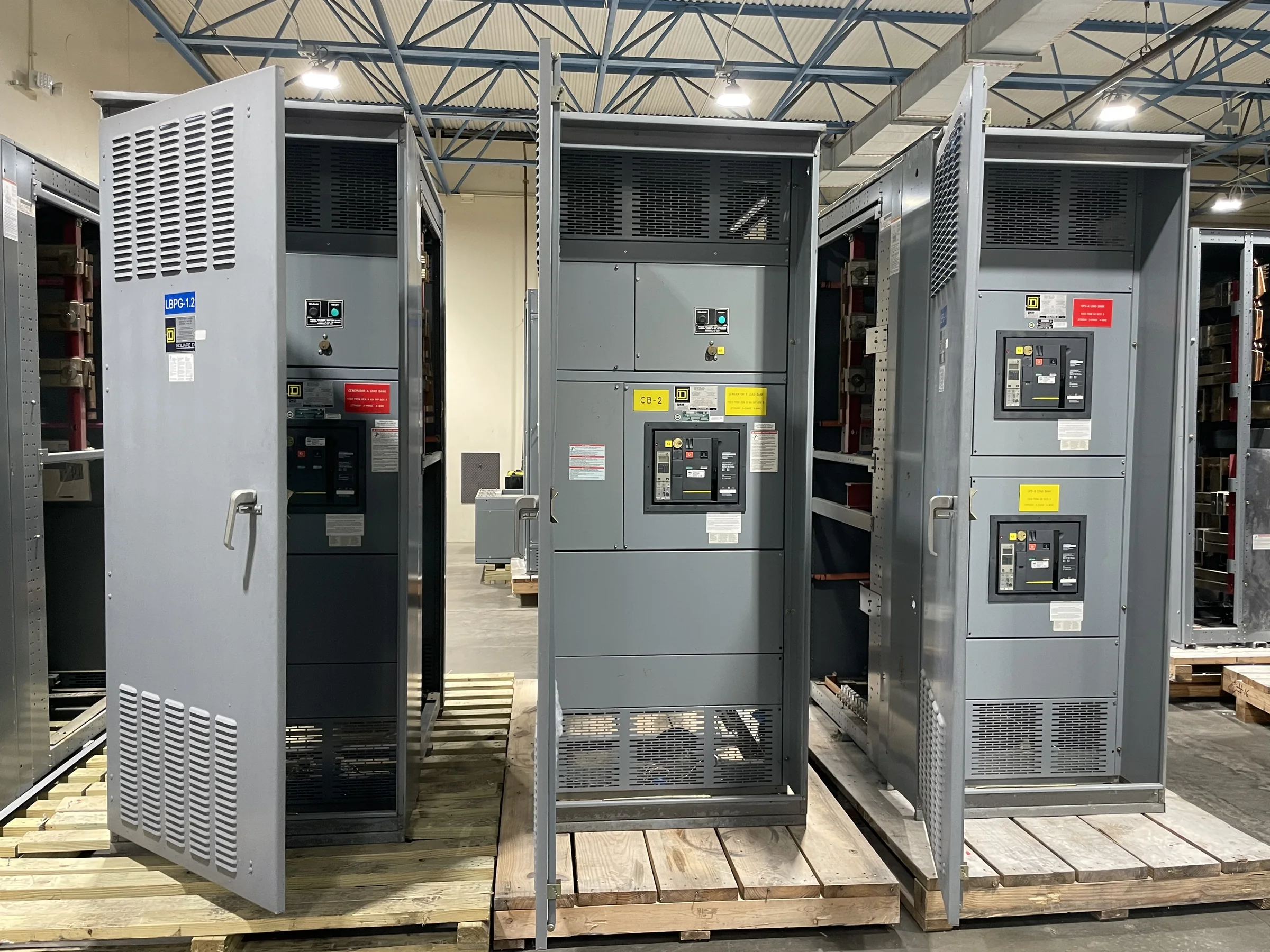
Define the Service Entrance Before Selecting the Board
A service-entrance switchboard is selected around the utility service and the facility’s distribution plan, not simply its desired ampere rating. For a Beaumont project, confirm the serving utility’s requirements, available service voltage, phase and wire configuration, and the point where ownership and responsibility transfer. The engineer should establish the calculated load, demand assumptions, fault-current information, grounding arrangement, and whether the equipment must accommodate service disconnects, metering, or downstream distribution. These details affect the lineup’s arrangement and the review needed before fabrication. Ask the manufacturer to identify open design questions early, rather than treating a preliminary equipment description as a final specification. The approved one-line diagram and project-specific utility criteria should govern final selection; ratings and configuration require engineering confirmation.
Account for Beaumont’s Heat, Humidity and Exposure
Southeast Texas conditions can make enclosure location and environmental exposure important selection issues. Beaumont-area facilities may have equipment indoors, under a canopy, or outdoors near process areas; each setting presents different concerns for rain, humidity, airborne contaminants, and maintenance access. Specify the actual installation environment and enclosure requirements instead of assuming a standard enclosure is suitable. High ambient temperatures can also affect equipment application and allowable loading, so provide the design conditions for engineering review. If the board is near corrosive process emissions, washdown, or other unusual exposure, describe the source and expected severity. That information helps determine whether enclosure materials, finish, ventilation, or placement need consideration. Do not infer a particular enclosure rating or environmental suitability without confirming the project conditions and the equipment’s evaluated application.


Coordinate Fault Ratings, Protection and Future Loads
The available fault current at the service determines whether proposed equipment interrupting and short-circuit ratings are adequate for the installation. Obtain the utility’s fault-current data and give it to the engineer and manufacturer; an assumed value can lead to a board that does not meet the project’s requirements. Protection coordination also matters: service overcurrent devices must be considered alongside downstream breakers, selectivity goals, and the facility’s operating priorities. For Beaumont industrial and commercial sites, planned motor additions, process expansions, or new building loads may influence spare spaces and distribution planning. Distinguish actual near-term loads from possible future allowances, and have each evaluated rather than adding capacity by guesswork. Final ratings, protective-device selections, and coordination remain project-specific and should be established through the design documents and qualified engineering review.
Prepare a Complete, Reviewable Purchase Package
A useful request for quotation includes more than a product name and target delivery date. Send the current one-line diagram, equipment schedule, applicable specifications, utility requirements, load and fault-current data, and any required metering or communications details. Identify the service entrance arrangement, incoming conductor approach, outgoing feeder quantities, enclosure location, and known space limitations. Also state which documents are needed for review, such as outline drawings, elevations, connection details, and submittal data. If the project requires a low-voltage switchboard assembly evaluated to UL 891, make that requirement explicit and confirm its applicability to the specified design; it is not a blanket standard for medium- or high-voltage equipment. Clear document control and timely approval reduce avoidable revisions, while final compliance and scope must be confirmed for the specific assembly.
Check the Site Before Committing to the Lineup
Physical access can constrain an otherwise sound electrical design. Before approving the equipment layout, verify the electrical room’s clear working space, door openings, ceiling height, floor condition, and the route from the unloading point to the final location. Compare the proposed lineup dimensions and section weights with that route, and identify stairs, turns, overhead obstructions, or restricted corridors. Confirm the intended cable entry and bending space against actual conduit or busway locations; mismatched entry points can complicate installation and inspection. In existing Beaumont facilities, planned outages and tie-in windows may also limit when replacement equipment can be installed, but the schedule must reflect the facility’s approved safety and work procedures. Share measured site information and photographs with the project team, and resolve handling and access questions before the equipment is released for manufacture.
Plan Delivery Around the Project’s Real Milestones
A manufacturer’s stated short-lead-time offering is not a project-specific delivery commitment. Timing depends on the final scope, approved drawings, component selection, material availability, and when the order is released; confirm the current schedule with the manufacturer after requirements are reviewed. For Beaumont delivery, provide the exact receiving location and site contact, preferred delivery window, truck access limits, unloading responsibility, and any appointment or security procedures. Coordinate shipment with room readiness and the construction sequence so the switchboard is not exposed to weather or stored in an unsuitable area. Ask how shipping condition, handling, and any requested documentation will be addressed, and align the delivery date with the electrical contractor and facility representative. Nationwide shipping may be available, but route, freight arrangements, and timing should be confirmed for the particular order.