Define the Service-Entrance Function Before Selecting Equipment
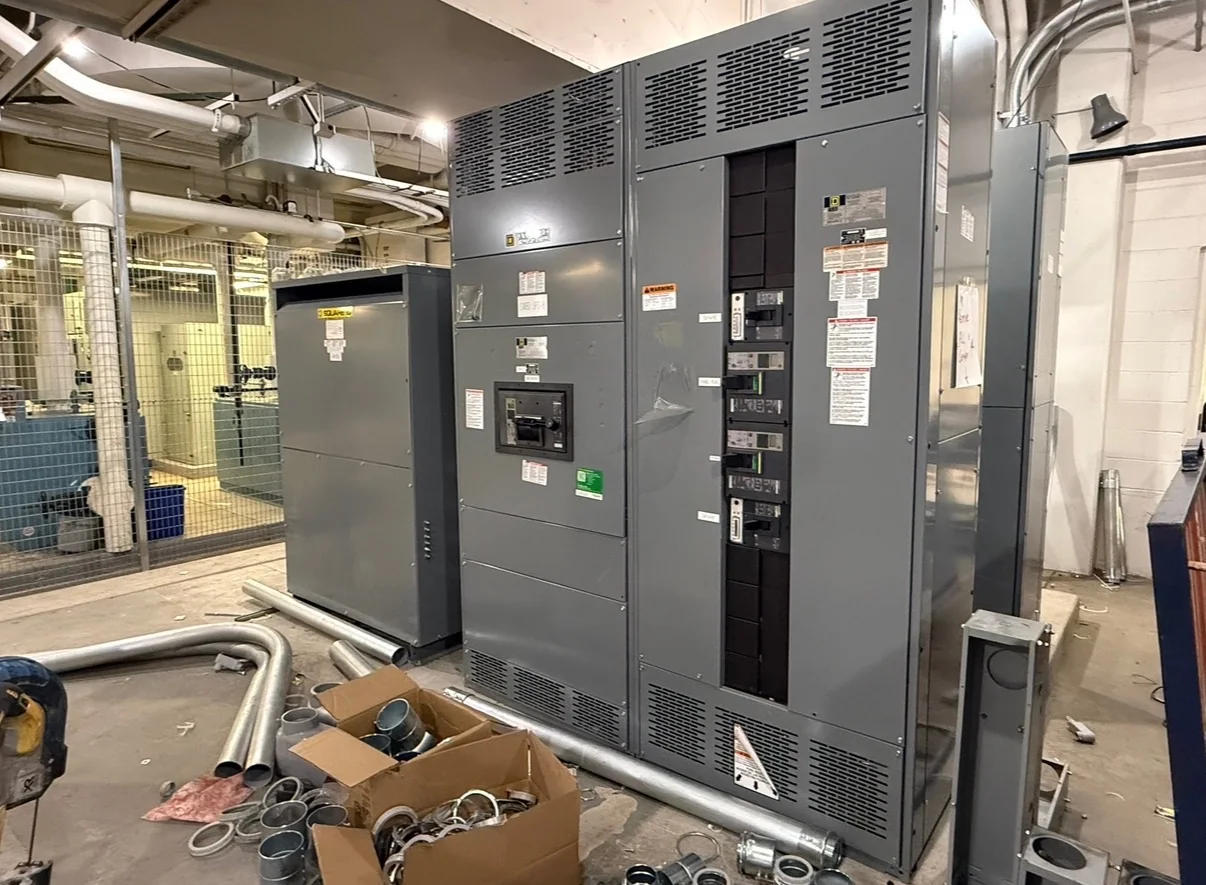
A service-entrance switchboard is the point where utility-supplied power enters a facility’s distribution system, so its configuration affects both utility coordination and downstream protection. Start by identifying the service voltage, phase, available fault current, service conductors, metering arrangement, and the loads the board must support. Confirm whether the project calls for a main breaker or another approved service disconnect arrangement, and establish how feeders will leave the assembly. These choices influence enclosure layout, bus design, protection, and working clearances; changing them late can require utility revisions or costly field modifications. Share the one-line diagram and utility service requirements with the manufacturer early. Final ratings, configuration, and code applicability depend on the project documents and review by the responsible design professionals and utility.
Coordinate Cypress Site Conditions and Equipment Access
Cypress projects can involve a mix of commercial buildings, industrial facilities, and expanding sites where electrical rooms, outdoor pads, and delivery access are planned at different stages. Verify the intended installation location before finalizing the switchboard: indoor versus outdoor exposure, room dimensions, access-door swing, housekeeping pad, conduit entry zones, and required working space can all affect the build. For a replacement, record the existing equipment’s footprint and cable approach rather than assuming a new assembly will fit the old space. Delivery planning matters too. Confirm truck access, gate restrictions, unloading equipment, receiving hours, and the route from drop-off to the electrical room. Houston-area heat, humidity, heavy rain, and storm-related site disruptions make weather protection and a realistic receiving plan practical parts of procurement.


Specify Protection, Metering, and Future Distribution Needs
Protection and metering details should follow the system study and utility requirements, not a generic equipment template. Identify the service disconnect arrangement, breaker functions, trip-unit needs, metering provisions, and any coordination constraints documented by the engineer. Available fault current and the required short-circuit rating must be established for the actual installation point; a rating cannot be assumed from the building’s size or the utility service voltage. Consider present loads alongside credible planned additions, such as process equipment, HVAC capacity, or electric vehicle infrastructure, while avoiding unnecessary oversizing that can complicate cost and space. Feeder count, conductor sizes, lug requirements, neutral treatment, and cable access also need review. Confirm these items against drawings and utility criteria before release, because late changes may affect layout, components, and schedule.
Prepare a Complete RFQ Package for Accurate Review
A useful request for quotation gives the manufacturer enough information to identify the intended assembly and flag open engineering questions. Include the latest one-line diagram, panel or feeder schedules, service specifications, equipment location, available fault-current information, and any utility metering or service-entrance requirements. Note whether the switchboard is part of new construction, a capacity expansion, or a replacement, and identify what existing conductors or downstream equipment must remain compatible. Provide enclosure and access constraints, preferred cable-entry direction, and the project’s required submittal and delivery milestones. If a specification references UL 891, clarify the applicable low-voltage switchboard requirements and evaluation expectations; that standard is not a blanket listing for medium- or high-voltage equipment. Resolve exceptions and assumptions in writing before approving the order.
Review Drawings, Interfaces, and Installation Responsibilities
Submittal review is the point to catch interface problems before fabrication details become difficult to change. Compare the proposed arrangement with the approved one-line, equipment schedule, room plan, and utility requirements, checking breaker positions, metering space, bus connections, wireway access, and feeder exits. Verify dimensions against the actual room and pad, including the access needed to install, operate, inspect, and maintain the assembly. Establish who is responsible for utility coordination, incoming conductors, grounding and bonding connections, field terminations, and any required testing or inspections; responsibilities can otherwise fall between trades. For an existing facility, plan outage windows and temporary operating arrangements with the owner and qualified electrical contractor. Installation and servicing require appropriate de-energization and safety procedures; energized work should not be treated as a convenient substitute for planning.
Discuss Build Timing, Shipping, and Receiving Early
A U.S. manufacturer can build new switchgear around project requirements, but timing depends on the approved configuration, component availability, engineering review, and release of complete information. Ask for a current project-specific schedule and identify the date when approved drawings, utility decisions, and final scope are needed to support it. Avoid tying a construction sequence to an assumed lead time before those dependencies are confirmed. For Cypress delivery, coordinate the ship-to location, receiving contact, site access, unloading plan, and any restrictions on delivery hours or vehicle size. Confirm packaging and protection requirements for the route and storage conditions, especially if equipment may wait outdoors or in an unfinished building. Nationwide shipping supports projects beyond the immediate area, while exact availability, freight arrangements, and delivery timing remain subject to confirmation for the order.