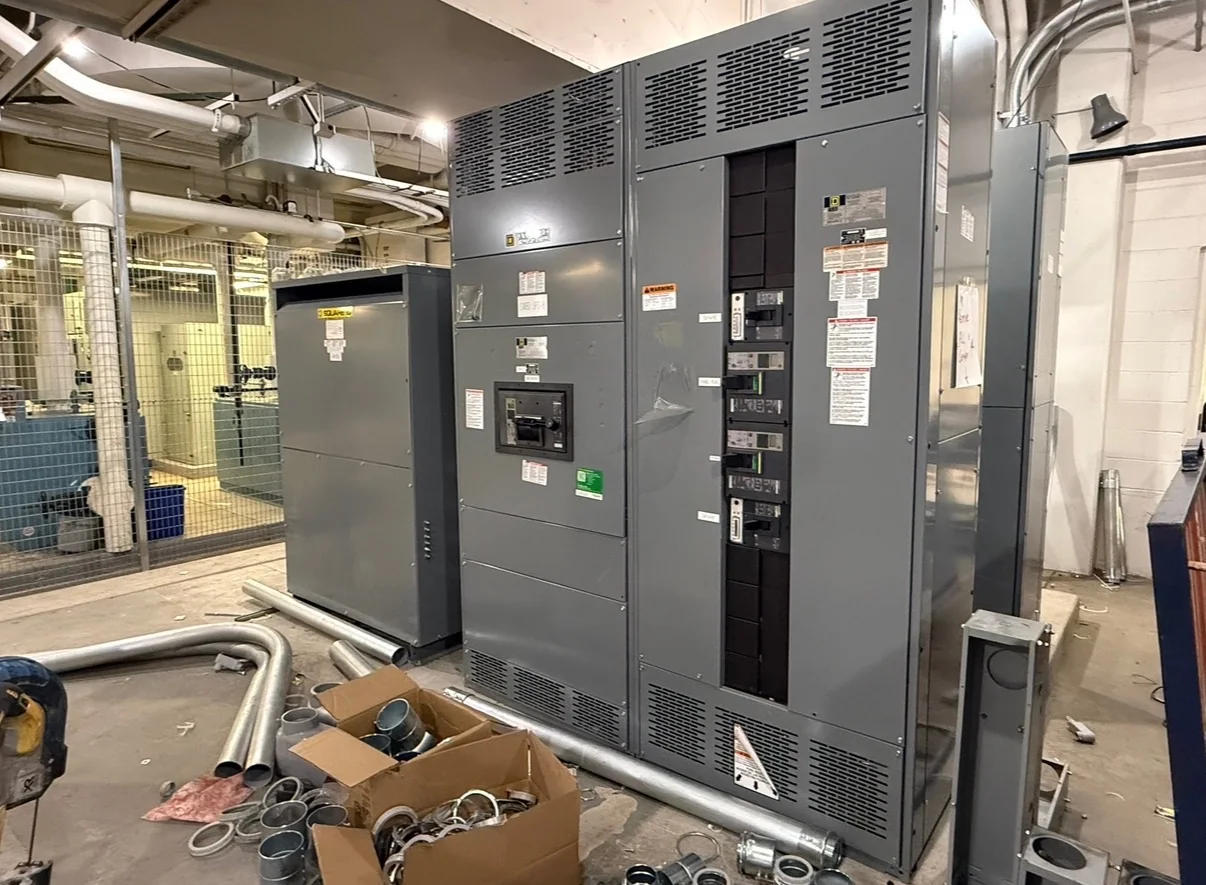
Why Condensation Develops Inside Switchgear
Condensation forms when moist air contacts an enclosure surface that is colder than the air’s dew point. In switchgear rooms, that temperature difference can follow overnight shutdowns, seasonal weather changes, nearby chilled-water lines, or air conditioning that cools equipment unevenly. Moisture may collect on bus supports, insulation, terminals, or enclosure surfaces even when there is no roof leak or visible flooding. Repeated wetting can contribute to corrosion, tracking, insulation deterioration, and unreliable operation. The risk depends on the equipment design and the room’s temperature and humidity history, so a single ambient-temperature reading may miss the conditions that matter. Identify when and where moisture appears before selecting controls; otherwise, a remedy may address the symptom while leaving the underlying temperature or moisture source unchanged.
Capture Room Conditions Before Specifying Controls
Useful project data includes room temperature and relative humidity across operating and shutdown periods, not just a reading taken during a site walk. Note seasonal extremes, ventilation schedules, door openings, water sources, and whether equipment is near exterior walls, loading areas, or cooling equipment. Where condensation is suspected, trend measurements over representative conditions and document any visible moisture, corrosion, or insulation concerns for qualified review. Compare the observations with equipment operating conditions and the enclosure manufacturer’s instructions. This record helps the engineer decide whether the problem calls for room-level humidity management, enclosure-specific measures, operational changes, or further investigation. It also gives procurement a sound basis for a defined scope, rather than relying on a generic request for “anti-condensation” equipment that may not suit the actual installation.


Specify Heaters and Other Moisture Controls Carefully
Enclosure heaters can help keep internal surfaces above the conditions that promote condensation, but they are not a universal fix. Selection depends on enclosure dimensions, heat loss, ambient conditions, available power, control approach, and the equipment’s evaluated design. A thermostat or humidistat may be appropriate in some applications, while continuous operation or room-level humidity control may be considered in others; the responsible engineer should determine the strategy. Include any required heater, sensor, wiring, terminal, or control provisions in the equipment specification and clarify who supplies and installs each item. Avoid adding components in the field without confirming compatibility, clearances, and applicable evaluation requirements. For low-voltage switchboard assemblies, UL 891 applies only where the assembly is appropriately evaluated; it is not a blanket certification for every product or voltage class.
Coordinate the Equipment Package With the Room
Condensation control can be undermined by site conditions outside the switchgear enclosure. Review HVAC operation, air circulation, drainage, roof penetrations, nearby piping, and the location of doors or air-discharge vents. Avoid directing cold supply air at equipment or allowing humid outdoor air to enter a room unchecked; any building-system changes should be coordinated with the facility engineer. Confirm the specified enclosure construction and environmental conditions are suitable for the installation location, including any exposure to dust, washdown, or corrosive atmospheres. If the project replaces existing equipment, document the room’s current moisture pattern and determine whether it will persist after installation. Clear responsibility for building modifications, equipment provisions, and commissioning checks helps prevent gaps between the switchgear scope and the site work needed to manage moisture.
Make Moisture Requirements Part of Procurement
A useful RFQ describes the equipment application, voltage class, available fault-current information, service conditions, installation environment, and observed condensation concern, subject to engineering confirmation. Attach relevant drawings, one-line diagrams, room data, interface requirements, and the project’s applicable standards or specifications. Ask the manufacturer to identify proposed moisture-control provisions, their power and control interfaces, and any assumptions or exclusions requiring approval. Clarify whether field wiring, sensors, room-level controls, and installation are by the equipment supplier or another contractor. U.S.-manufactured equipment, American components, custom builds, and short lead times may be available offerings, but configuration and availability depend on the project. Evaluate the complete scope and approved submittals rather than assuming a feature, listing, or delivery date from a general product description.
Plan Delivery, Installation, and Verification
Shipping and installation planning should protect both the equipment and the project schedule. Confirm access routes, door and ceiling clearances, unloading capability, rigging limits, storage conditions, and the sequence for moving sections into the electrical room. Keep equipment protected from rain, standing water, and prolonged exposure to uncontrolled humidity while it is stored, following the supplier’s handling instructions. Before energization, qualified personnel should inspect for signs of moisture or damage and verify that installed controls and wiring match approved documents; any wet or compromised equipment requires evaluation and corrective action before service. Coordinate shipment timing with site readiness, contractor availability, and building-system work rather than assuming a fixed delivery window. Nationwide shipping can support projects across the United States, while routing, packaging, and timing remain specific to the equipment and destination.