Start With the Load You Expect to Add
Future capacity planning starts with a credible picture of how the facility will operate, not simply a larger ampere rating on a drawing. List existing loads and likely additions by type, expected demand, operating schedule, and whether they run at the same time. A production line, fleet charging area, or building expansion can change both peak demand and the pattern of use. Distinguish approved projects from possibilities so the design team can evaluate useful scenarios without treating every idea as a committed load. Have the electrical engineer review demand assumptions, utility service limits, and applicable code requirements. These details shape the equipment specification and help avoid paying for capacity that cannot be served or is unlikely to be needed.
Choose Where to Leave Room for Growth
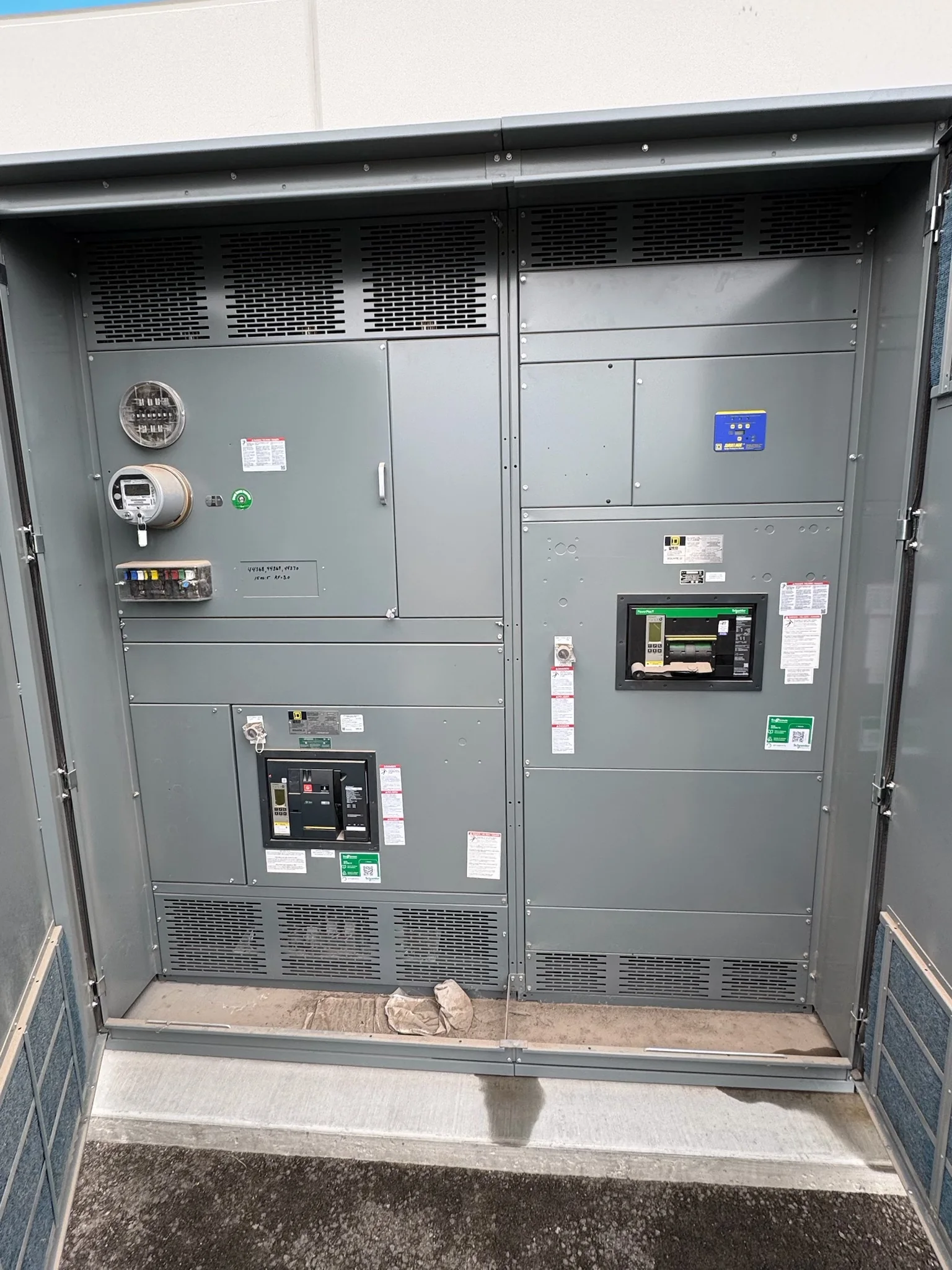
A capacity reserve can take several forms, and each affects the assembly differently. Planning may involve space for future feeder devices, provisions for additional sections, a larger bus, or reserved room near the equipment for later expansion. These are not interchangeable: an empty device position does not by itself establish that the bus, service, protection, or available fault-current rating can support a future load. Ask the engineer to identify which provisions are part of the initial scope and which require later equipment or construction. The manufacturer needs the intended lineup arrangement, electrical ratings, connection details, and relevant future scenarios to assess a build. Confirm dimensions and access early; a physically reserved space is useful only if the future work can be installed safely and practically.


Define Electrical and Protection Requirements
A future load can affect more than the switchgear’s nominal capacity. Review the service voltage and configuration, continuous and noncontinuous loads, available fault current, protective-device coordination, and any required metering or control functions with the responsible electrical engineer. Changes in utility service or upstream equipment may alter assumptions made during initial planning. Specify the intended environment and operating conditions, including indoor or outdoor placement, ambient conditions, and exposure to dust, moisture, or corrosive materials. These inputs help determine what equipment arrangement and enclosure are appropriate; they should not be inferred from a general request for “expandable” gear. Applicable standards and evaluation are specific to the equipment type and project. UL 891 applies to appropriately evaluated low-voltage switchboard assemblies, not automatically to medium- or high-voltage equipment.
Coordinate Replacement Timing With Site Work
The purchase schedule depends on more than the date equipment is needed. Establish when engineering documents must be approved, when existing gear can be removed, how long the facility can tolerate an outage, and which construction activities must finish before delivery. A replacement or expansion may require changes to feeders, conduits, foundations, cable access, or upstream protection. Those dependencies can make an apparently simple equipment date impractical. Discuss the project sequence with the engineer, contractor, utility where applicable, and manufacturer before fixing milestones. Short lead times may be available for some builds, but configuration, component availability, design review, and project-specific requirements affect timing; confirm current availability for the specified scope rather than relying on an assumed duration. Keep contingency in the plan for site conditions and approvals.
Check the Room, Route, and Delivery Plan
Future capacity has little value if the equipment cannot be placed, accessed, or extended in the building. Verify the equipment footprint, working clearances, door and corridor dimensions, floor and rigging constraints, ceiling height, and route from unloading point to final location. Record obstructions and existing cable entry locations, then have the project team check them against the proposed lineup drawings. For a future section, consider whether the wall, adjacent equipment, or required access space will remain available after the first installation. Nationwide shipping can support projects across the United States, but delivery coordination remains site-specific. Confirm receiving hours, unloading responsibility, staging space, weather protection, and whether the site can accept the planned shipment dimensions before equipment is released.
Document Assumptions Before Requesting a Quote
A useful quote request gives the manufacturer enough project information to evaluate the intended build without treating uncertain future loads as fixed requirements. Provide the one-line diagram, load schedule, service and fault-current information, equipment location and environmental conditions, preferred lineup arrangement, and known interface details. Mark what is required at initial installation, what is a future provision, and what remains undecided. Include target design-review, shipment, and installation milestones, while noting dependencies such as utility approval or building work. Ask which assumptions need engineering confirmation and which proposed provisions affect present equipment dimensions, ratings, or cost. American components and custom builds may be available, but exact requirements, compatibility, evaluation, and availability depend on the project. Clear documentation reduces avoidable revisions and gives procurement, engineering, and facility teams a shared basis for comparing proposals.