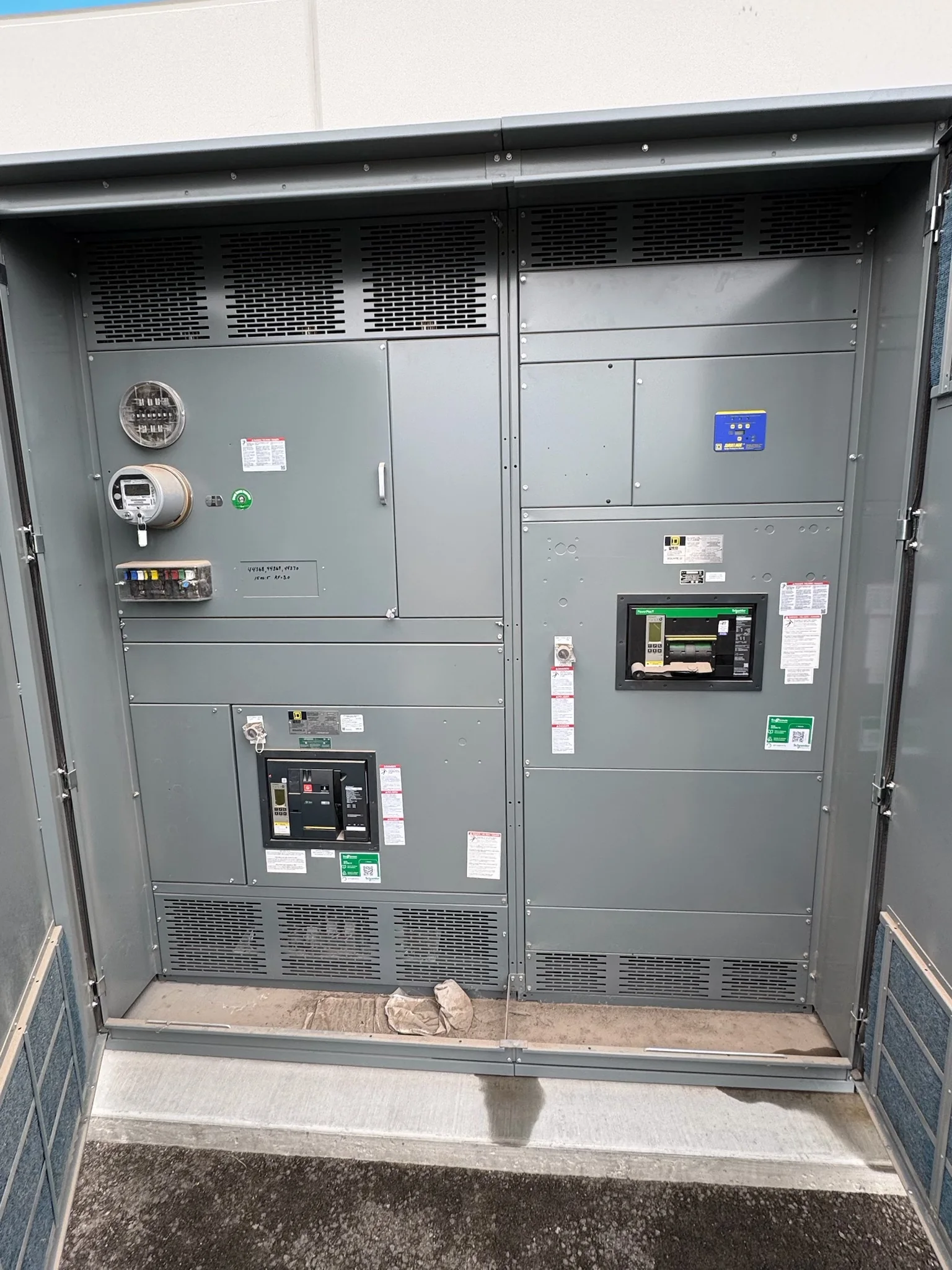
Start With the Load and Fault Study
Main bus sizing begins with the electrical duty the assembly must carry, not a convenient catalog dimension. Gather the one-line diagram, connected and demand loads, expected operating modes, transformer data, protective-device information, and available fault-current study. The bus must be evaluated for continuous current under the specified conditions and for the thermal and mechanical effects of a fault, using the applicable equipment standards and manufacturer design. A future load allowance can be useful, but an arbitrary percentage may increase cost and footprint without solving the actual expansion need. Identify large motor starts, nonlinear loads, emergency sources, ties, and anticipated operating configurations because they can affect current flow or fault duty. The engineer of record should resolve gaps in load and fault data before the manufacturer finalizes the design.
Define the Bus Rating in Its Actual Enclosure
A bus rating is meaningful only with its stated conditions and assembly configuration. Specify the required continuous-current rating, voltage, frequency, neutral arrangement, and any project-required temperature-rise or short-circuit withstand criteria; then confirm how the proposed assembly is evaluated for those conditions. Ambient temperature, enclosure construction, ventilation, mounting, conductor joints, and adjacent heat-producing devices can influence thermal performance. Do not assume that a bus with a particular material or cross-section automatically has the required ampacity in every lineup. Likewise, a short-circuit rating must align with the available fault current and protective-device clearing conditions, not simply appear adequate in isolation. Document indoor or outdoor placement, room conditions, and any unusual environmental exposure. The manufacturer and responsible design professionals should review the complete assembly and project requirements together before ratings are treated as final.


Choose Copper or Aluminum With the Whole System in View
Copper and aluminum bus can both be appropriate, but the choice should be based on the specified assembly, electrical duty, installation conditions, and project preferences rather than a blanket claim that one is always superior. Compare the manufacturer’s offered construction, connection details, maintenance expectations, space implications, and material documentation. The same nominal current rating does not make different bus constructions interchangeable; joint design, contact surfaces, plating where applicable, and assembly evaluation matter. Establish whether the project requires American components or particular sourcing documentation, and state those requirements in the bid package so proposals can be compared consistently. Also identify restrictions on mixed materials or field transitions before layout is approved. A clear material specification helps prevent procurement substitutions that create review delays or require engineering approval after equipment drawings are already under consideration.
Coordinate Sections, Ties, and Future Expansion
The main bus is part of a lineup, so its sizing must account for how sections connect and how the system is expected to operate. Show incoming sources, feeder distribution, bus ties, generator connections, and normal or alternate operating states on the one-line diagram. A tie that is normally open may carry substantial current during a transfer or contingency, so its intended duty should be explicit. If future sections are planned, define what expansion means: reserved physical space, provision for bus extension, spare devices, or simply capacity in the present bus. These are different requirements and may involve different equipment arrangements. Record lineup orientation, section sequence, access clearances, cable-entry preferences, and room limitations. Resolving these details early helps the manufacturer develop coordinated drawings and reduces the chance that a technically suitable bus arrives in a configuration that cannot be installed as planned.
Make Ratings and Submittal Requirements Comparable
Procurement documents should separate mandatory performance requirements from preferences and identify the standards that apply to the specified equipment. For low-voltage switchboard assemblies, UL 891 may be relevant when the project requires an appropriately evaluated assembly; it is not a blanket certification for medium- or high-voltage equipment. State required labels, documentation, inspection, and acceptance criteria without assuming every proposed product carries a particular listing. Request drawings and data that let reviewers verify bus ratings, section arrangement, device interfaces, dimensions, cable space, and connection points against the project documents. Include the fault-current basis, protective-device coordination information, and any project-specific environmental or seismic criteria when applicable. A complete, consistent bid package makes offers easier to evaluate on engineering scope as well as price, and it gives the manufacturer a sound basis to identify exceptions before an order is released.
Plan Production, Site Readiness, and Delivery Together
A custom-built lineup needs coordinated decisions well before shipment. Confirm which approvals are required before production, who reviews drawings, and how revisions will be handled; unresolved dimensions or ratings can disrupt the project schedule even when equipment availability is favorable. Ask the manufacturer to discuss current timing and shipping arrangements for the specific scope rather than treating short lead times as a guaranteed delivery date. Verify receiving access, unloading responsibility, rigging plans, indoor storage, and the route from the delivery point to the electrical room. Check doorway and corridor dimensions, floor loading, staging space, and whether the lineup must be moved in sections. Nationwide shipping does not remove the need for site coordination. Keep the approved one-line, equipment schedules, floor plan, and installation requirements aligned so the delivered assembly matches the project’s electrical and physical conditions.