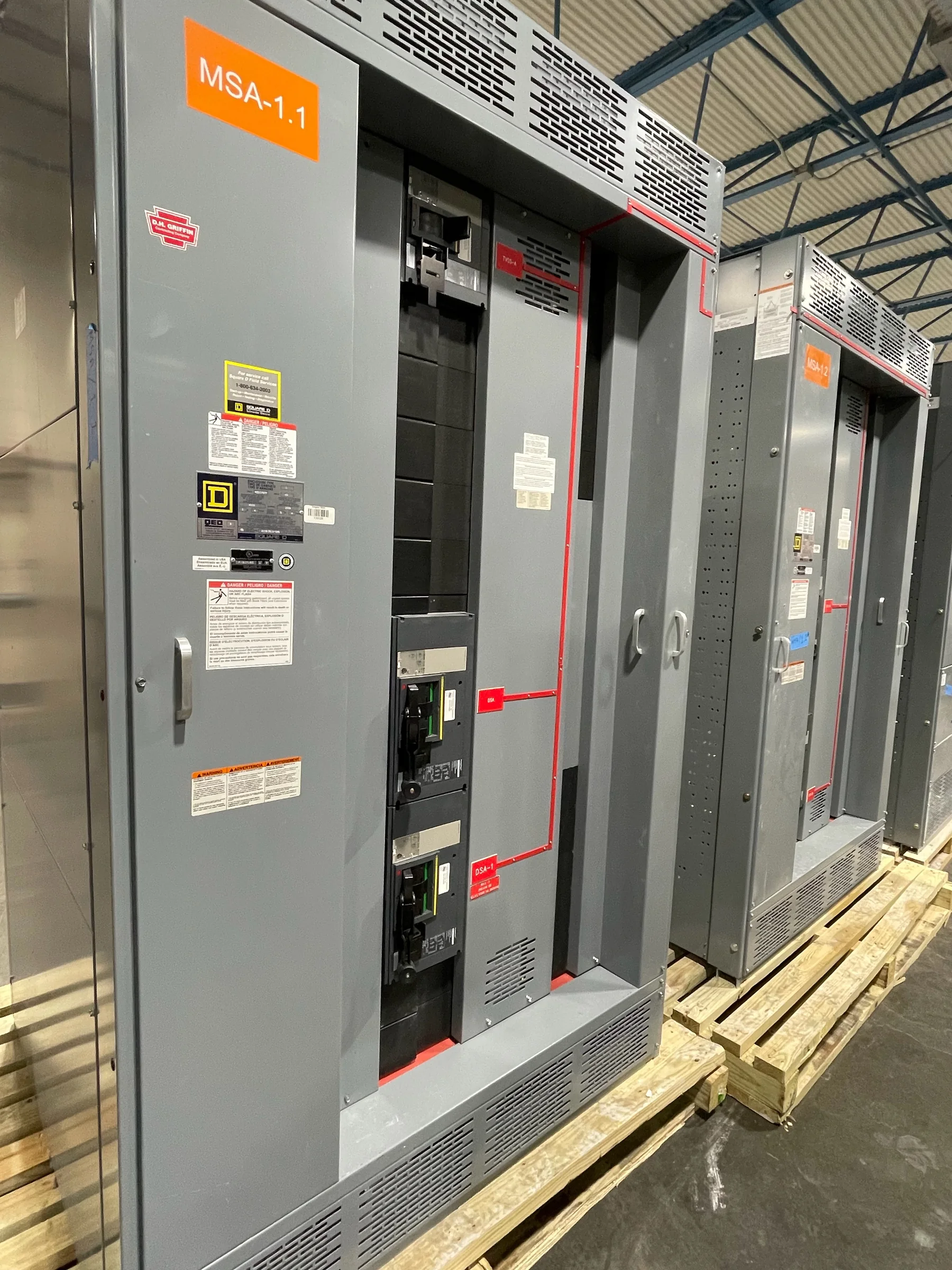
Modernization Starts With the Refinery’s Operating Priorities
A refinery switchgear project has to account for more than equipment age. Determine which process units, utility systems, and support loads depend on each lineup, then identify the consequences of losing those loads during changeover. A board serving pumps or control-system auxiliaries may have a different outage window and restoration sequence from one serving a less critical area. Capture normal and alternate sources, tie-breaker arrangements, load-shedding priorities, and any operating restrictions in the project basis. This information helps the engineer distinguish equipment that can be replaced as a defined package from equipment tied to a broader distribution redesign. It also gives procurement a defensible scope for comparing proposals, clarifying exclusions, and planning installation around refinery operations rather than assuming a convenient plant-wide shutdown.
Verify Existing Equipment and System Interfaces
Legacy drawings are useful, but refinery modifications often leave discrepancies between documents and installed conditions. Before releasing a new lineup for design, reconcile one-lines and schematics with available nameplates, protective-device information, cable schedules, bus connections, and field measurements. Record enclosure dimensions, access clearances, conduit or cable entry points, grounding connections, and the location of adjacent equipment that cannot move. The replacement design must also account for system voltage, available fault current, continuous load, operating sequence, and coordination with upstream and downstream devices; these values require project-specific engineering, not assumptions based on the old gear’s labels. A documented interface review can expose a mismatch early, when a drawing revision is manageable, instead of during an outage when fit, termination, or protection questions can delay restoration.


Specify Equipment for the Actual Process-Area Environment
Refinery locations vary substantially: an indoor electrical room, a sheltered utility building, and an exposed installation present different demands on an enclosure and its interfaces. Define the installation environment, including temperature range, humidity, dust, corrosive exposure, washdown expectations, elevation, and any area-classification boundaries that affect equipment location or design. Identify whether the lineup will sit near vibration sources, hot process equipment, or routes used for maintenance access. These conditions can influence enclosure construction, finish, ventilation, space planning, and the division between electrical and process-area responsibilities. Do not infer a hazardous-location rating from the word “refinery”; establish boundaries and applicable project requirements with qualified engineering and safety personnel. Clear environmental criteria help the manufacturer develop a suitable proposal without implying a universal configuration or certification.
Plan Protection, Control, and Future Integration
A modernization can preserve an established operating philosophy or provide an opportunity to revise it, but the choice should be explicit. Define protection functions, metering needs, control power, alarms, interlocks, communication interfaces, and any remote monitoring requirements in the project specification. Confirm how new devices will coordinate with existing relays, breakers, transformers, generators, and process controls, and identify who is responsible for settings, logic, and end-to-end verification. If plant systems use established naming conventions or communication protocols, include the required interface documents and points lists rather than relying on a general request for integration. Future spare capacity should be discussed against credible load growth and physical space constraints. These decisions affect equipment arrangement, wiring, testing scope, and commissioning records, so resolving them before purchase reduces late changes and ambiguous responsibility.
Coordinate Outage, Construction, and Delivery Constraints
Refinery schedules depend on process availability, permit planning, contractor access, and the sequence of isolation and restoration—not solely on manufacturing duration. Provide the manufacturer with the required on-site date, decision milestones, approval process, and any planned outage or turnaround window, then confirm project-specific timing rather than treating a short-lead offering as a guarantee. Review shipping access, unloading capacity, laydown space, transport dimensions, route restrictions, and protection from weather or contamination before finalizing the delivery plan. A large lineup may require staged delivery or installation sequencing, but that approach must match the design, site handling capability, and outage plan. Nationwide shipping can support projects across the United States; the refinery team still needs to coordinate carrier access, receiving hours, lifting resources, and custody of equipment after arrival.
Build a Purchase Package That Supports Installation and Acceptance
A clear request for quotation should include the one-line diagram, equipment schedules, electrical ratings, required protective functions, enclosure and environmental criteria, connection details, and referenced standards. Add interface drawings, approved deviations, scope boundaries, requested submittal dates, shipping destination, and the documents needed for installation and turnover. Ask bidders to identify assumptions and project-specific options so differences in scope are visible during technical review, not discovered after award. For low-voltage switchboard assemblies, UL 891 may be relevant when applicable to the specified assembly and its evaluation; it is not a blanket certification for medium- or high-voltage equipment. Confirm the required evaluation, labeling, and acceptance criteria for the actual design. Before procurement, align engineering, operations, safety, and purchasing on the final submittal and field-verification process.