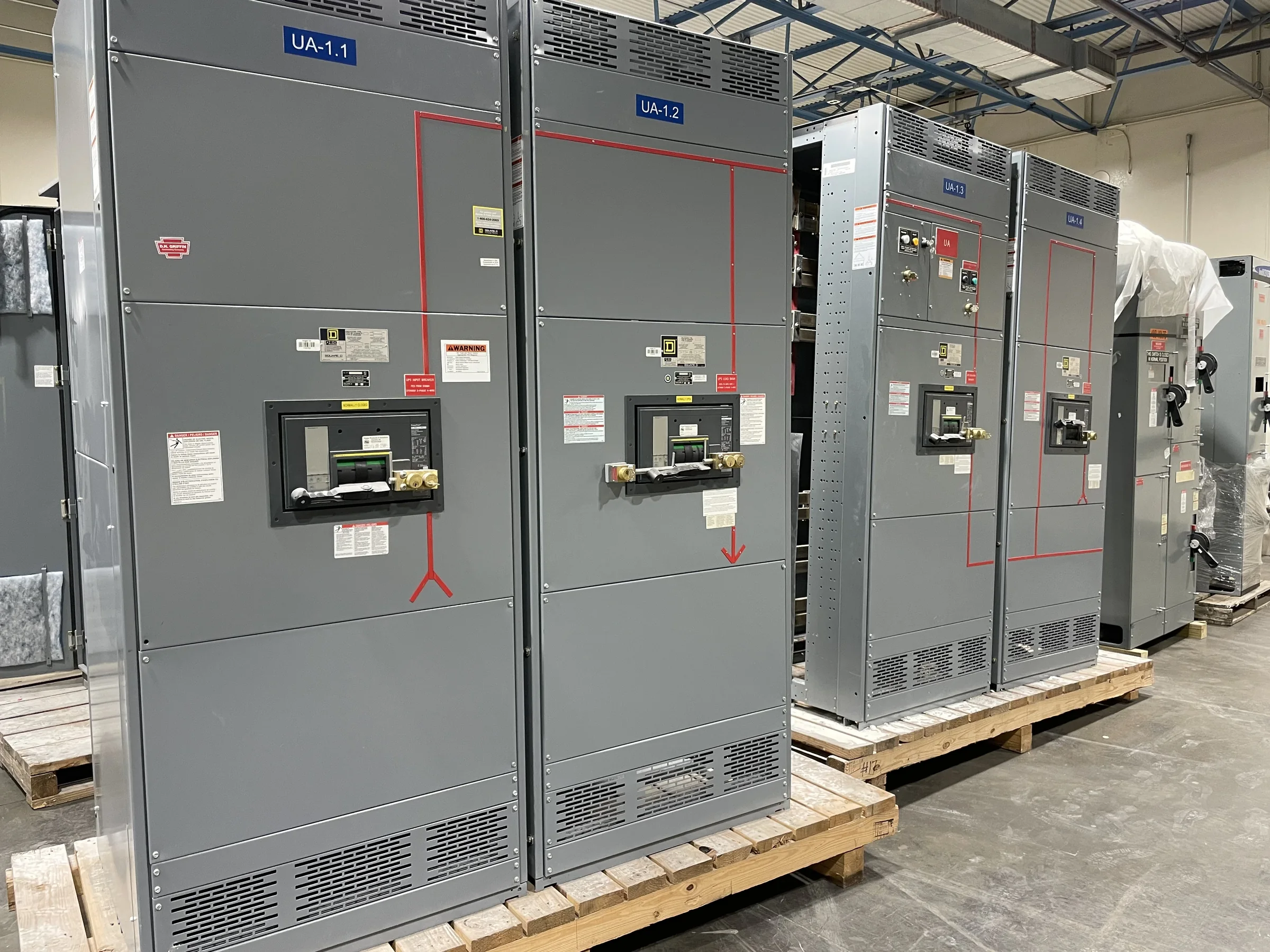
Start With the Campus Distribution Plan
A university modernization project rarely affects just one building. The equipment under review may feed research spaces, residence halls, dining facilities, classrooms, central plants, or downstream distribution serving multiple uses. Begin by documenting the existing one-line diagram, source and tie arrangements, connected loads, protective devices, and known operating constraints. Compare those records with field conditions; undocumented feeder changes or mislabeled circuits can undermine an otherwise sound equipment specification. Identify which loads require continuity, which can be interrupted, and whether temporary power or staged cutovers need separate engineering. This early coordination helps the design team define the replacement boundary and avoid treating a campus-wide dependency as a simple cabinet swap. Final ratings and configuration depend on verified system data and project review.
Specify for Present Loads and Planned Expansion
New switchgear should be selected around the electrical system it will serve, not solely around the nameplate on aging equipment. Provide the manufacturer and design engineer with available fault-current information, voltage and frequency, service configuration, feeder details, protective-device requirements, and the expected load profile. Universities may be adding laboratory equipment, electric heating, charging infrastructure, or building upgrades that change future demand; however, projected growth should be distinguished from confirmed connected load. Ask the engineer to assess coordination, interrupting capability, bus requirements, metering, and space for future provisions as applicable. For low-voltage switchboard assemblies, UL 891 may be relevant when specified and appropriately evaluated; it is not a blanket certification for medium-voltage equipment. Confirm applicable standards and acceptance requirements for each project.


Plan the Outage Around Academic Operations
A technically compatible lineup does not by itself make a workable campus replacement. Installation may require a planned outage, a temporary source, or sequenced work, and each option has operational and cost implications. Map critical dependencies such as research freezers, ventilation, information technology, access control, elevators, and life-safety systems with facilities staff before setting the cutover approach. Academic calendars can offer quieter periods, but summer occupancy, research schedules, and construction activity still need review. The electrical contractor and qualified campus personnel must establish approved shutdown, isolation, verification, and re-energization procedures; energized work must not be treated as a routine shortcut. Agree on outage assumptions, decision authority, and contingency planning early so procurement timing supports a safe, coordinated installation rather than compressing essential planning.
Resolve Room and Access Constraints Before Release
Existing electrical rooms can constrain a replacement more than the single-line diagram suggests. Measure doorways, corridors, turning points, floor openings, ceiling clearances, housekeeping pads, and working space, then confirm the route from the receiving area to the final location. Document cable entry direction, conduit locations, bus connections, and whether adjacent equipment must remain in service during removal and installation. Older campus buildings may have limited freight access or shared service corridors; coordinating deliveries around classes, events, and other construction can reduce conflicts. Share verified dimensions, photographs, and layout drawings with the project team before equipment design is released. Any proposed sectional arrangement, shipping split, or field connection must be reviewed for electrical, structural, access, and installation compatibility rather than assumed feasible from a floor plan.
Make the Specification and Submittal Package Useful
Procurement teams can reduce avoidable revisions by issuing a complete, coordinated bid package. Include the one-line diagram, equipment schedules, load and fault-current data, required protective functions, enclosure conditions, control and metering needs, cable termination details, and any project-specific inspection or testing requirements. Clearly identify what is existing, what is new, and what the contractor or engineer must verify. Request drawings and submittals that let reviewers check dimensions, component arrangement, connections, and interfaces with upstream and downstream equipment. Include required documentation for operation, maintenance, and turnover, and establish who reviews deviations. A U.S. manufacturer offering custom builds and American components can discuss the specified application directly; exact component selection, compatibility, evaluation, and availability remain subject to the approved design and project requirements.
Coordinate Manufacturing, Delivery, and Turnover
Short lead times and nationwide shipping are offerings to discuss during quotation, not guaranteed dates for every configuration. Establish the required-on-site date, submittal and approval milestones, shipping destination, receiving hours, unloading responsibility, and storage conditions while the scope is being finalized. Campus sites may have restricted truck routes, security check-in, limited staging, or narrow delivery windows, so the construction manager and facilities team should confirm logistics before dispatch. Tie schedule discussions to approved drawings and any dependencies such as utility coordination, site readiness, and contractor sequencing. At turnover, organize final drawings, equipment identification, settings and test records required by the project, and operating documentation so campus staff can maintain the installation. Request a project-specific quote to review the intended scope, schedule assumptions, and delivery coordination with the manufacturer.