Define the Modernization Scope Before Selecting Equipment
In Beaumont, a switchgear modernization project may involve replacing an aging assembly, adding distribution capacity, or coordinating new equipment with a planned facility expansion. Those are different scopes, and treating them as interchangeable can lead to a quote that misses critical interfaces. Start by identifying the equipment being replaced, the loads it serves, the available fault-current information, and the operational changes the project must support. Record the existing lineup’s manufacturer and model where known, but do not assume a new assembly can match its footprint or connections without engineering review. A U.S. manufacturer can build new equipment around project requirements; final ratings, configuration, and compatibility depend on the application. Clear scope definition helps procurement compare proposals on equivalent equipment and gives engineering a sound basis for evaluating risks before the design is released.
Resolve Electrical and Mechanical Interfaces Early
Modernization is often constrained less by the new lineup itself than by what it must connect to. Confirm the system voltage, phase and wire arrangement, bus requirements, protective-device needs, incoming and outgoing cable locations, and coordination with upstream and downstream equipment. Verify the available fault-current study and protection assumptions with the project engineer; interrupting ratings and other selection criteria cannot be inferred from the building address or the old equipment label alone. Mechanical details matter just as much: measure the room, access openings, working clearances, floor conditions, and the path from the delivery point to the installation area. Beaumont facilities may have industrial process equipment and limited outage windows, making early interface checks especially useful. Resolving these details before fabrication reduces avoidable field modifications and helps teams plan a safer, more predictable changeover.


Plan for Beaumont’s Site and Delivery Conditions
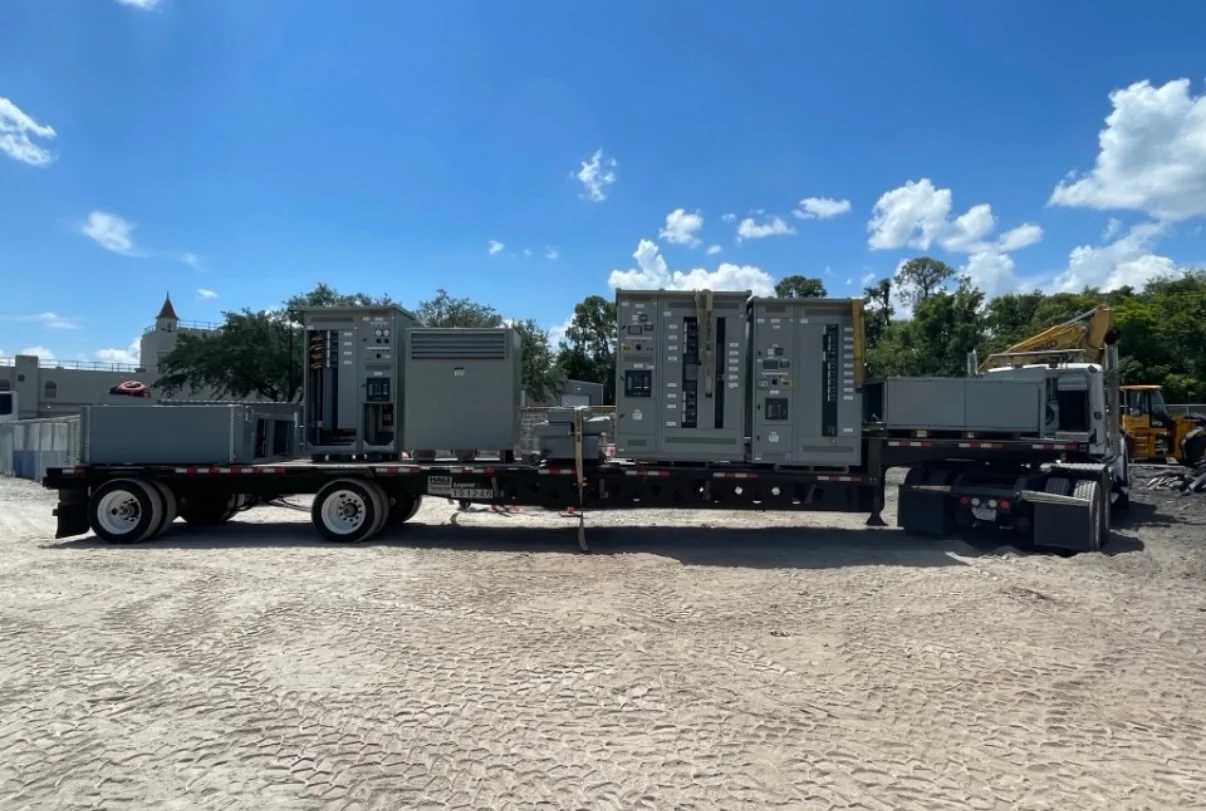
A delivery plan should connect the equipment dimensions and shipping configuration to the actual route into the facility. For a Beaumont project, coordinate the receiving contact, truck access, unloading method, staging area, and restrictions on delivery hours with the site team; industrial campuses can have controlled gates, active traffic routes, or limited laydown space. Check whether the lineup can move through doors, corridors, or elevators, and whether the floor and lifting provisions suit the selected sections. Nationwide shipping is available, but the route, carrier arrangements, packaging, and schedule are project-specific and should be confirmed in the quote and submittal process. Include the delivery sequence in the outage and installation plan, rather than scheduling a shipment independently of site readiness. This prevents equipment from arriving before it can be safely received, inspected, and protected from construction activity.
Build the Schedule Around Engineering and Outage Needs
A short lead time is valuable only when the project has defined what must be engineered, reviewed, built, and delivered. Provide the manufacturer with the required in-service date, planned outage window, approval milestones, and any constraints on temporary power or load transfers. Ask procurement and engineering to distinguish estimated production timing from time needed for submittal review, revisions, shipping, site preparation, installation, and commissioning. A late change to breaker arrangement, cable entry, metering, or enclosure details may affect design and schedule, so establish who can approve changes and how revisions will be controlled. Do not treat a quoted date as a guaranteed installation date; availability and timing depend on the final scope and project conditions. For Beaumont operations where interruption affects production or environmental controls, align the sequence with facility operations and the responsible electrical contractor.
Use Submittals to Verify the Complete Assembly
Before approving a purchase, review the proposed drawings and schedules against the project’s electrical documents and site survey. Confirm lineup dimensions, section arrangement, bus and termination provisions, device types, control power, metering, labels, and the interfaces required by adjacent equipment. Check that the documents identify assumptions and open items, especially where existing drawings are incomplete or field conditions have not been verified. UL 891 applies to appropriately evaluated low-voltage switchboard assemblies; it is not a blanket certification for medium- or high-voltage equipment, and a product’s applicable evaluation or labeling must be confirmed for the specific assembly. Request clarification when a proposal uses terms such as “replacement” or “compatible” without showing the relevant interface. A disciplined submittal review gives engineering, procurement, and the installation team one controlled design to use for approval, coordination, and field preparation.
Coordinate Replacement, Installation, and Closeout
A successful modernization includes more than manufacturing and delivery. Identify who is responsible for utility coordination, permits, shutdown authorization, removal of existing gear, installation, testing, and return-to-service approval. Work on electrical equipment must be planned and performed by qualified personnel under applicable safety requirements, with equipment de-energized and verified before work begins; the project plan should not assume energized work is optional or necessary. Prepare for the transition by documenting feeder and control connections, confirming device settings and coordination responsibilities, and arranging any required inspection or commissioning activities. Keep approved drawings, equipment schedules, change records, and final test documentation with the facility’s maintenance records. For a Beaumont site, coordinate these tasks with production, receiving, contractors, and any gate or access procedures well ahead of the outage. Clear responsibilities reduce handoff gaps and help the facility operate and maintain the new distribution equipment with accurate records.