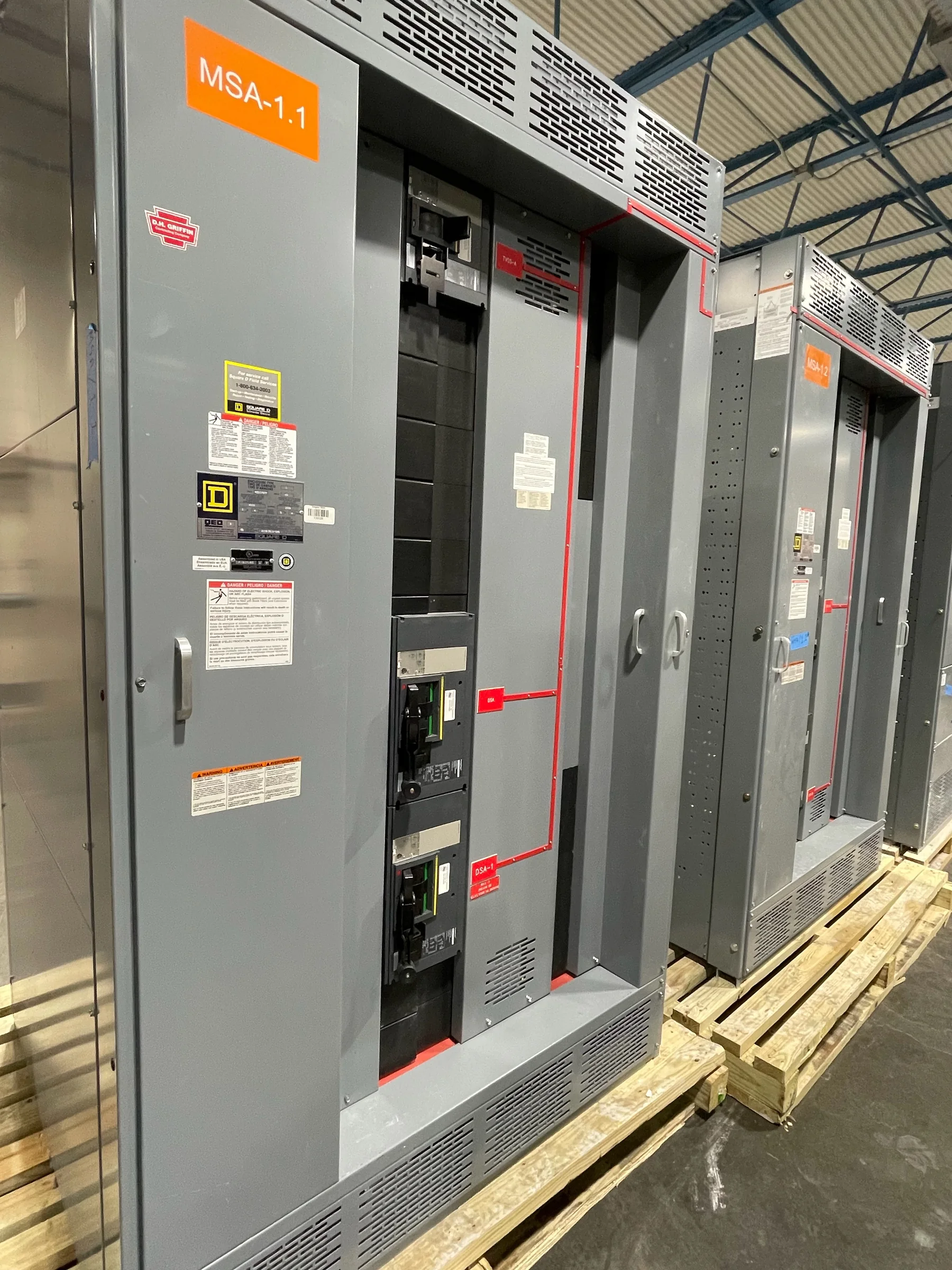
Define the Modernization Scope Before Selecting Equipment
A switchgear modernization project in Cypress can mean replacing a complete assembly, renewing selected sections, or installing new distribution equipment while retaining compatible upstream or downstream components. Those choices affect cost, outage planning, protection coordination, and the space available for installation. Start by documenting the existing equipment’s function, voltage, bus arrangement, ratings, protective devices, and connection points; verify nameplates against current drawings because field changes may not appear in the records. Identify the loads that must remain available and the systems that can be shut down. A U.S. manufacturer can build new equipment around defined project requirements, but final design, ratings, compatibility, and any applicable evaluation depend on the actual application. Clear scope reduces late engineering changes and helps procurement compare proposals on equivalent terms.
Use Field Conditions to Guide the Electrical Design
The replacement design should reflect measured site conditions, not assumptions based on the old lineup. Confirm room dimensions, access openings, floor and housekeeping-pad elevations, anchorage locations, cable entry directions, bend space, and the route from the delivery point to the electrical room. In Cypress, summer heat and humidity make room ventilation, equipment exposure during unloading, and protection from moisture worth checking during planning; they do not by themselves establish a required equipment rating. Record available fault-current information, grounding arrangement, system voltage, load data, and upstream protective-device details for engineering review. These inputs help determine which configurations are feasible and whether existing conductors or terminations can be reused. If measurements or system studies are missing, flag them early rather than treating preliminary selections as final.


Coordinate Protection, Controls, and Connected Loads
Modernized distribution equipment must work as part of the facility’s electrical system. Provide the latest one-line diagram, protective-device settings, available fault-current study, grounding information, and details of any generator, transfer equipment, UPS, or parallel sources. Engineers need these records to evaluate interrupting and withstand requirements, selective coordination, arc-flash inputs, and the behavior of connected loads. Control power, metering, communications, interlocks, and remote indication also deserve explicit review: retaining an existing interface may require a defined signal list and confirmation of voltage, protocol, and wiring practices. Do not assume that a new section will mate electrically or mechanically with existing gear simply because the nominal voltage matches. Resolve interfaces during design, and document any field verification or study needed before equipment ratings and device selections are finalized.
Plan Outages, Removal, and Installation Around Operations
The installation sequence can determine whether a technically suitable replacement is practical. Map the shutdown boundary, identify critical loads, and coordinate the outage window with operations, utilities, contractors, and any controls or life-safety stakeholders. Establish who will isolate, verify absence of voltage, apply required protective measures, and authorize return to service under the facility’s safety program; energized work should not be treated as an assumed shortcut. Confirm temporary-power needs, cable cutover responsibilities, removal clearances, lifting access, and space for staging new sections. In an active Cypress-area facility, weather-sensitive receiving and traffic around the site may also affect the unloading plan. A written sequence with assigned responsibilities exposes conflicts before delivery and helps avoid equipment arriving before the room, foundation, or outage is ready.
Build a Complete Submittal and Purchasing Package
A useful request for quotation gives manufacturers enough information to price a defined assembly and identify open decisions. Include the one-line diagram, existing equipment data, required section arrangement, incoming and outgoing connections, metering and control needs, applicable project specifications, and requested submittal format. Note whether the scope includes engineering, drawings, protection devices, installation support, testing documentation, or field services, and ask bidders to identify exclusions. Specify the project schedule milestones—such as drawing review, approval, release, site readiness, and required-on-site date—without relying on an unverified delivery promise. American components and custom builds may be considered when they fit the project requirements; component origin, availability, construction, and schedule should be confirmed in the proposal. For low-voltage switchboard assemblies, UL 891 applicability and labeling must be confirmed for the specific evaluated assembly.
Coordinate Delivery and Verify Readiness Before Energization
Nationwide shipping makes delivery planning part of the project design, not a final administrative task. Confirm the receiving address and contact, truck access, unloading equipment, delivery restrictions, indoor storage, and protection from water, dust, and impact. Compare shipping-section dimensions and weights with the route, doors, turns, floor capacity, and available lifting equipment; the actual arrangement must be confirmed from approved drawings. Before shipment, align delivery timing with room completion, foundations, cable preparation, contractor availability, and outage approval so equipment does not sit exposed or block other work. At receipt, inspect for transit damage, reconcile the shipment with its packing documentation, and preserve the manufacturer’s storage and handling instructions. Installation checks, testing, protective-device settings, and commissioning records should be agreed in the project scope before the system is placed in service.