Start With the Electrical Basis of Design
A nationwide switchgear shipment begins with a complete electrical scope, not a shipping estimate. Identify the service voltage, phase and frequency; system configuration; available fault-current information; grounding method; and the intended role of the equipment. Record the required ampacity, bus arrangement, incoming and outgoing connections, and metering or protective-device functions. These details affect enclosure layout, component selection, coordination with upstream and downstream equipment, and whether a proposed assembly fits the application. Include applicable project specifications and standards, but have the engineer of record confirm which requirements govern. Ratings, compatibility, evaluation and availability depend on the specific design. Resolving missing or conflicting information before release helps prevent redesign, schedule disruption and equipment that cannot be integrated as intended.
Coordinate the Equipment With the Existing System
For replacement and expansion work, the critical question is often whether new equipment can connect to what remains in service. Provide the existing switchgear’s manufacturer, model, nameplate data, dimensions, connection details, and available drawings when they can be obtained. Confirm cable entry and exit directions, bus interface requirements, conduit locations, and the space needed for doors, barriers and maintenance access. A dimensional match alone does not establish electrical compatibility: fault ratings, protective-device characteristics, grounding and system configuration also require review. Where legacy records are incomplete, plan for field verification by qualified personnel and engineering review before finalizing the design. This diligence is particularly important when procurement, installation and outage planning are handled by separate teams.


Build a Realistic Schedule Around Decisions
A short quoted lead time is not a substitute for a schedule based on an approved scope. Track when drawings must be reviewed, when selections and submittals need approval, which project data are still pending, and when the site can accept delivery. Changes to breaker functions, metering, enclosure arrangements or connection details may affect engineering and fabrication, so identify decision owners and approval deadlines early. Ask the manufacturer to explain the schedule assumptions and confirm current timing for the particular build; timing varies with design, component availability and order details. Include time for review, manufacturing, freight coordination and site readiness rather than treating shipment as the finish line. If an outage or construction milestone is fixed, communicate it before the order is finalized.
Specify Documentation Before the Order Is Released
Procurement documents should give the manufacturer and project team a shared record of what is being built. Submit the project specification, one-line diagram, equipment schedule, site conditions and any required control, metering or communications details. State submittal format, drawing-review responsibilities, required document milestones and the names or roles authorized to approve changes. Request the documentation the project needs for installation, operation and maintenance, and confirm its scope before purchase. For low-voltage switchboard assemblies, UL 891 may be relevant when the assembly is appropriately evaluated to that standard; it should not be assumed to cover medium- or high-voltage equipment or every configuration. Confirm applicable standards, evaluation and labeling requirements for the specific assembly during design review.
Plan Freight for the Actual Site
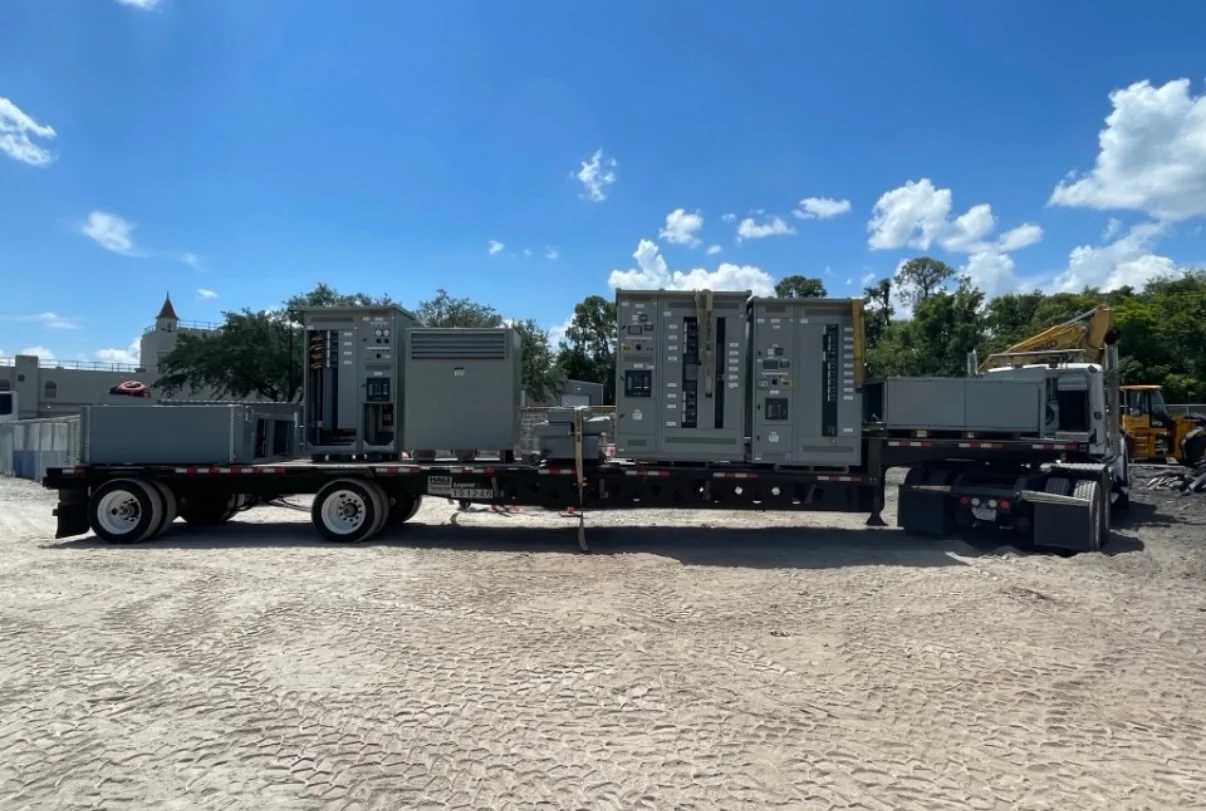
Nationwide shipping reaches many kinds of facilities, but a delivery point on a map does not confirm that equipment can reach its final position. Before scheduling freight, verify receiving hours, truck access, turning space, road or dock restrictions, unloading equipment, lift capacity and the route through the building. Establish who will receive the shipment, inspect it, document visible damage and move it from the delivery point. Compare the planned delivery method with the equipment’s shipping dimensions and weight once those are confirmed; do not assume a loading dock, forklift or crane is available. For remote, congested or active industrial sites, coordinate gate access, escorts, staging and construction traffic in advance. Clear responsibility prevents freight from arriving before the site is ready.
Prepare for Delivery, Inspection and Installation
Treat arrival as a project handoff, not merely a freight event. Arrange for the receiving team to compare packages and equipment identification against the order documents, record condition, and promptly report shortages or visible damage through the agreed process. Protect equipment from moisture, dust, impact and unauthorized access while it is staged, following the manufacturer’s handling and storage instructions. Before installation, confirm foundations or mounting provisions, clearances, grounding, cable routes and access for maintenance against approved drawings and actual site conditions. Have qualified personnel verify the installation and complete required checks before energization; de-energized work and applicable safety procedures remain essential. Closeout planning should include approved drawings, device information and operating documentation so facility staff can maintain the equipment responsibly.