Treat Lead Time as a Project Input, Not a Placeholder
Switchgear procurement lead time is shaped by the decisions that must be resolved before a manufacturer can release a design, source components, build the equipment, and prepare it for shipment. A schedule built around a preliminary one-line diagram can change when fault-current data, device selections, enclosure requirements, or utility interfaces are clarified. Start by identifying the required in-service date, then work backward through engineering review, submittals, approvals, production, shipping, receiving, and installation. Include time for the project team to answer technical questions and return approved drawings; these steps can affect the release date as much as fabrication. When comparing proposals, ask what event starts the quoted schedule and which customer approvals or supplied information must be complete first.
Resolve the Electrical Basis Before Requesting a Firm Schedule
A useful procurement package gives the manufacturer enough information to evaluate the intended application without guessing. Provide current one-line diagrams, system voltage, phase and frequency, available fault-current information, main and feeder requirements, load data, and the grounding arrangement when known. Identify whether the equipment is a low-voltage switchboard, medium-voltage gear, or another assembly; construction and evaluation requirements differ. Note the intended service, distribution, tie, or generator functions, along with any metering, protective relaying, communications, or special interlocking needs. Missing or changing information can trigger drawing revisions, component substitutions for review, or a different equipment arrangement. If studies or utility data are still pending, identify them explicitly so the team can separate confirmed design inputs from assumptions and track what remains open.


Use Submittal Reviews to Protect the Release Date
Approved drawings are not just a paperwork milestone: they confirm how the equipment must fit and function before the build proceeds. Review lineup dimensions, access and working clearances, cable entry and termination space, conduit zones, device arrangement, control schematics, labeling, and interface points against the latest architectural and electrical documents. Confirm who has authority to consolidate comments and return one coordinated response; conflicting markups can create another review cycle. A change to breaker functions, compartments, metering, or external connections may affect both design and sourcing, so flag required changes promptly and request an updated schedule when scope moves. For low-voltage switchboard assemblies, UL 891 may be relevant when specified and applicable to the evaluated assembly; it is not a blanket designation for every equipment type.
Check Component Choices and Substitutions Against the Application
Component selection can influence both procurement timing and whether the finished equipment meets the project’s operational needs. Specify required protective devices, trip functions, control power, metering, relays, communications protocols, and coordination with upstream and downstream equipment as precisely as the design allows. If a named component is preferred, distinguish a mandatory requirement from an acceptable equivalent and define who must approve substitutions. American components may be available for a project, but the exact device, configuration, and sourcing status must be confirmed against the specification and current availability. A substitution should not be treated as a simple purchasing change if it affects ratings, coordination, space, wiring, controls, or testing documents. Resolve those interfaces before release to reduce redesign and avoid receiving equipment that cannot integrate as intended.
Coordinate Site Readiness, Receiving, and Delivery Access
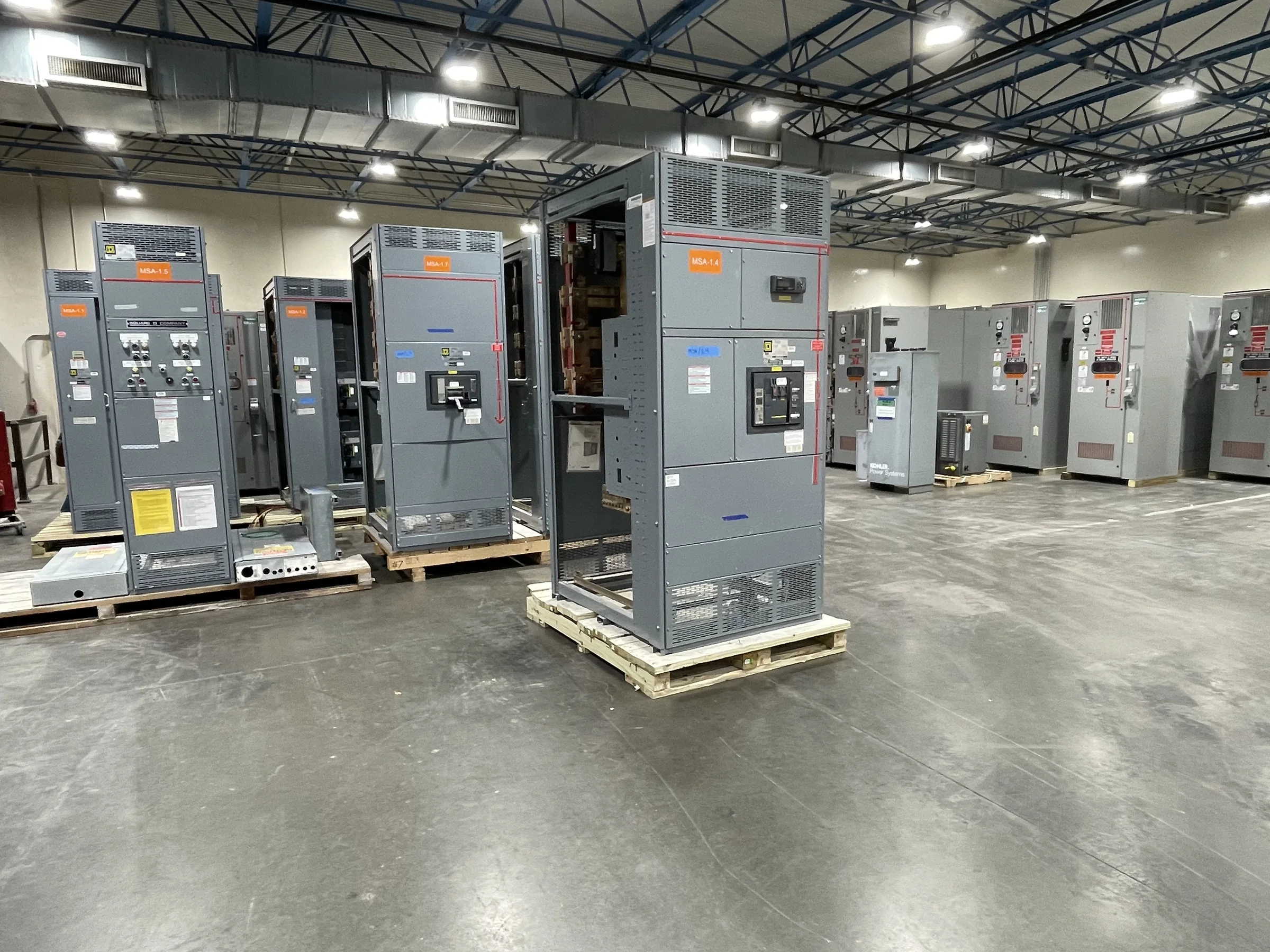
A shipment is useful only if the site can receive, move, store, and install the equipment safely. Verify delivery access, unloading responsibility, dock or crane arrangements, turning space, floor loading, doorway and corridor dimensions, and the route from receiving to the electrical room. Compare shipping sections and handling constraints with actual site conditions; a lineup that fits the room may still be difficult to move through a narrow entrance. Protect a suitable staging area from weather, construction dust, water, and unauthorized access, and establish who will inspect packaging and report visible damage. Align the delivery window with site staffing, equipment-handling resources, and construction sequencing. Because shipping dates and transit conditions are project-specific, confirm the current plan with the manufacturer and carrier rather than relying on an early estimate.
Track Decisions, Approvals, and Schedule Changes Together
A practical procurement schedule assigns an owner and due date to each item that can hold up design release or delivery. Track outstanding technical data, submittal reviews, utility coordination, approved changes, site-readiness checks, and shipping arrangements in one project record. Ask the manufacturer to distinguish estimated milestones from confirmed commitments and to identify assumptions that could change them. When a project revision arrives, document its scope, approval path, and schedule effect before treating it as part of the order; late changes can require renewed engineering review or affect component sourcing. Keep the purchasing team, engineer, contractor, and facility representative aligned on the same approved documents and revision status. This discipline does not eliminate uncertainty, but it makes risks visible early enough for the team to adjust sequencing or discuss options.