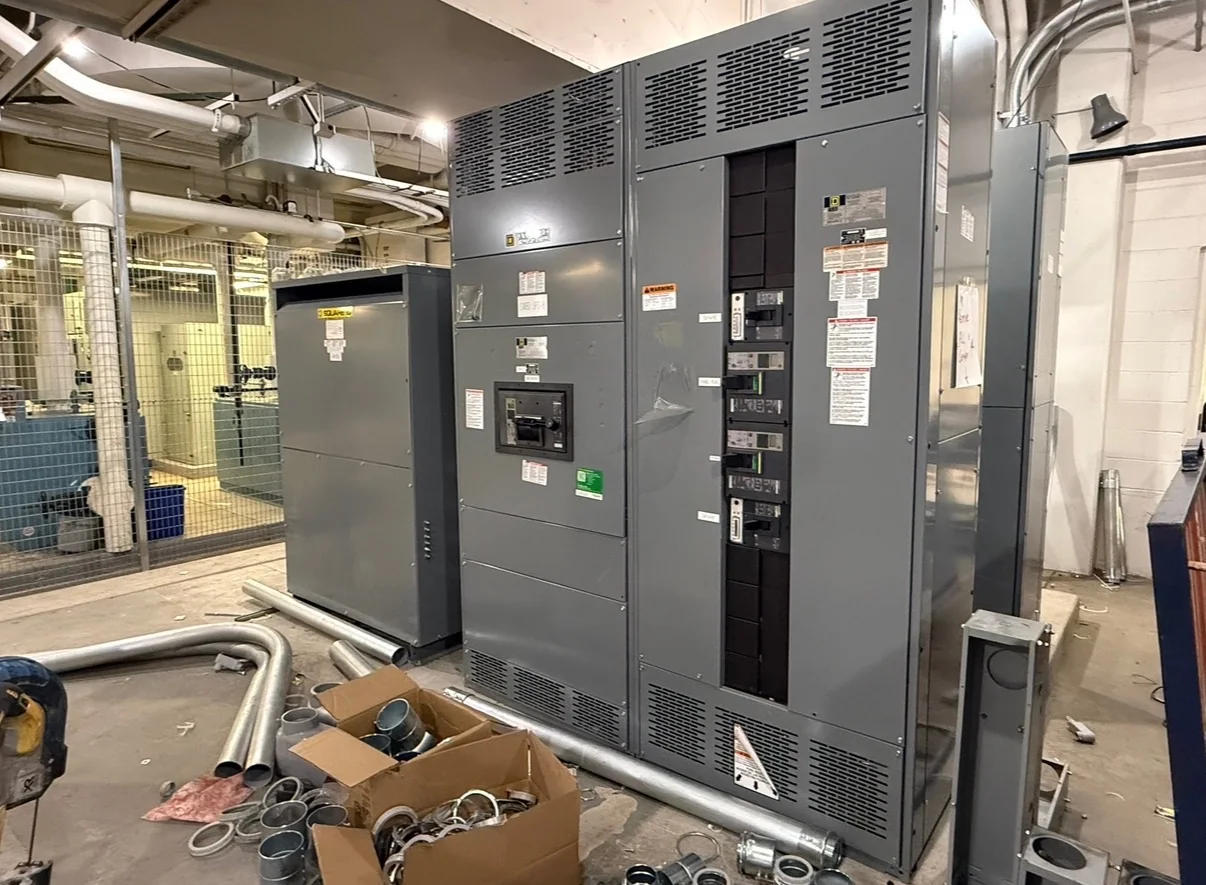
Define the Alvin Project Before Requesting a Quote
A useful switchgear quote starts with the job conditions, not a guessed equipment size. Identify whether the request is for a new facility, an expansion, a replacement, or a retrofit, and describe the load served and the equipment’s role in the distribution system. Include the service voltage, phase, frequency, available fault-current information, and required ampacity when those values have been established by the project engineer. If they are not yet confirmed, mark them as pending rather than treating an estimate as final. For an Alvin site, note the facility type and operating schedule, since industrial process loads, commercial occupancy, and planned outages create different selection and coordination needs. Clear inputs help the manufacturer flag open decisions before they affect price, design, or schedule.
Coordinate Ratings, Protection, and System Interfaces
Switchgear must work as part of the electrical system, so equipment ratings cannot be selected in isolation. The design team should review the source, transformers, downstream distribution, protective-device coordination, and available fault current together. Provide one-line diagrams and existing equipment data where applicable; mismatched or incomplete information can lead to revisions after submittal review. Specify the required main and feeder arrangement, metering, control power, communications, and provisions for future circuits, while distinguishing firm requirements from preferences. For replacement work, document the existing lineup’s dimensions, bus arrangement, cable entry, and connection points. A physically similar assembly may still be electrically or mechanically incompatible. Final ratings, protective-device selections, interfaces, and applicable standards require project-specific engineering review rather than assumptions based on a prior installation.


Plan the Enclosure for Alvin’s Site Conditions
The installation environment affects enclosure selection, maintenance access, and long-term reliability. Describe whether the gear will be indoors or outdoors, the room’s ventilation and temperature conditions, exposure to dust or moisture, and any corrosive or washdown processes. Alvin-area facilities can include industrial operations where process activity, heat, and airborne contaminants deserve attention; the site survey should establish actual conditions rather than rely on a regional assumption. Confirm working space, access routes, door swing, housekeeping pads, ceiling height, and cable-trench or conduit locations against the equipment layout. These details matter because a lineup that meets electrical requirements can still be difficult to install or service if the room or route is constrained. Enclosure type and environmental suitability should be confirmed for the specific location and design.
Make the Quote Comparable and Actionable
Procurement teams can reduce quote ambiguity by separating required scope from alternates. List the lineup sections, incoming and outgoing arrangements, breakers or other specified devices, metering, accessories, spare provisions, and requested documentation. Identify whether the scope includes drawings, submittals, startup support, or field services; do not assume these are included unless the quote states so. A manufacturer can build new equipment to project requirements, and American components may be specified where offered and suitable, but component selection and availability depend on the design. For low-voltage switchboard applications, UL 891 may be relevant when the assembly is appropriately evaluated; it is not a blanket claim for every product or for medium- or high-voltage gear. Ask that exceptions, assumptions, and unresolved inputs be clearly listed so bids can be compared on the same basis.
Align Submittals and Timing With the Project Schedule
A requested ship date is only useful when it is tied to a defined project milestone and a complete scope. Share the required on-site date, approval deadlines, planned outage window, and any sequence dependencies, then ask the manufacturer to confirm current timing for the quoted configuration. Custom builds, component selection, engineering review, and changes after drawing approval can affect the schedule; short lead times are an offering, not a guaranteed delivery period. Establish who reviews submittals and how comments will be consolidated, since late or conflicting feedback can trigger redesign and delay release. For replacement projects, coordinate delivery with demolition, temporary power, and the approved de-energized work plan. Confirm schedule, shipment terms, and any storage or staging assumptions in writing before making commitments to facility operations.
Coordinate Delivery and Replacement Work in Alvin
Nationwide shipping can support an Alvin project, but delivery planning still depends on the receiving site. Verify truck access, turning clearance, unloading equipment, dock or laydown availability, delivery hours, and who will inspect and accept the shipment. Large assemblies may need a planned route from the unloading point to the electrical room, including doorway dimensions, floor capacity, and any temporary obstructions. These checks matter because a shipment can arrive on schedule yet remain unusable if the site cannot unload or move it safely. For changeouts, reconcile the new equipment’s connections and footprint with field measurements, then align removal and installation with the facility’s outage and electrical-safety procedures. Final compatibility, shipment timing, and handling requirements are project-specific; document responsibilities and open conditions before release.